False Shamrock
Oxalis triangularis
Overview
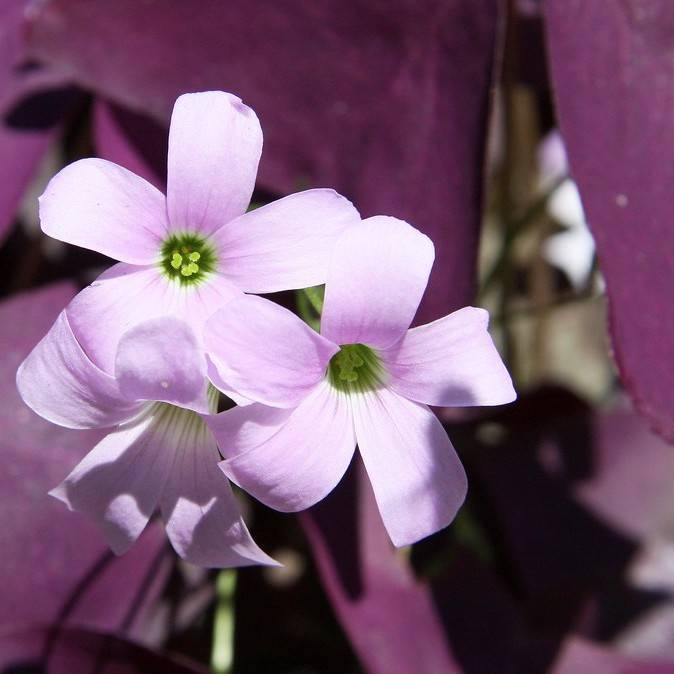
False shamrock, often called love plant or purple shamrock, is beloved for its distinct trifoliate leaves that resemble three-leaf clovers, which open in bright daylight and fold closed at dusk or during periods of stress. It produces delicate, five-petaled pink or white flowers that bloom in flushes from spring through fall, rising on thin stems above the foliage. Though not a true clover (Trifolium genus), it is frequently associated with St. Patrick’s Day decor for its shamrock-like appearance. Grown both as a houseplant and an outdoor ornamental in mild climates, it dies back to underground bulb-like rhizomes during dormant periods before re-sprouting.
Care Guide
Watering
Allow the top 1 inch of soil to dry out between waterings, then water thoroughly until excess drains from the pot’s bottom. Reduce watering significantly during the plant’s dormant period, when foliage dies back, to prevent rhizome rot. Avoid overwatering, as soggy soil is the most common cause of health issues for false shamrock.
Light
Thrives in bright, indirect light when grown indoors; a spot near an east-facing window is ideal, as it provides gentle morning sun without scorching the leaves. Outdoors, it prefers partial shade, as direct midday sun can burn the delicate foliage and cause leaf edges to brown. Too little light will result in leggy growth and faded leaf color.
Soil
Requires well-draining, loamy soil with a slightly acidic to neutral pH between 6.0 and 7.0. A standard houseplant potting mix amended with perlite or coarse sand works well to improve drainage and prevent water from pooling around the rhizomes. Avoid heavy, clay-heavy soils that retain excess moisture.
Fertilizer
Feed with a balanced, water-soluble houseplant fertilizer diluted to half strength every 2 to 4 weeks during the active growing season (spring through fall). Do not fertilize during the dormant period, as this can damage the resting rhizomes and lead to salt buildup in the soil. Over-fertilization may cause excessive foliage growth at the expense of flowers.
Temperature
Prefers average indoor temperatures between 60–75°F (15–24°C) and can tolerate brief dips down to 50°F (10°C) without damage. Frost and temperatures below 32°F (0°C) will kill the foliage, so outdoor plants in cool climates should be brought indoors before the first frost. Avoid placing the plant near cold drafts, heating vents, or air conditioners, which can cause leaf drop.
Pruning
Trim away yellowed, brown, or damaged leaves at the base of their stems to keep the plant looking tidy and encourage new, healthy growth. Deadhead spent flower stems regularly to promote repeated blooming throughout the growing season. If the plant becomes leggy or overgrown, you can cut the entire foliage back to 1–2 inches above the soil line; it will re-sprout from the rhizomes within a few weeks.
Propagation
Easiest to propagate by dividing the rhizomes during the plant’s dormant period, when foliage has died back. Gently dig up the rhizome clump, separate into smaller sections each with at least one healthy growing point, and replant sections in fresh, well-draining potting mix. You can also propagate from seed, but this method is slower and less reliable for preserving the distinct leaf color of purple cultivars.
Humidity
Adaptable to average household humidity levels between 40–60%, which is sufficient for healthy growth. If your home is very dry, especially during winter heating months, you can boost humidity by placing the pot on a tray filled with pebbles and water, or by using a small room humidifier nearby. Avoid misting the leaves directly, as excess moisture on foliage can increase the risk of fungal diseases.
Repotting
Repot every 2–3 years during the dormant period, or when the plant becomes root-bound, which is indicated by roots growing out of the drainage holes or water running straight through the pot when watering. Choose a pot that is 1–2 inches larger in diameter than the current one, with drainage holes, and use fresh potting mix when repotting. Take care not to plant the rhizomes too deep; bury them just 1–2 inches below the soil surface to prevent rot.
Uses & Symbolism
False shamrock is primarily grown as an ornamental houseplant for its vibrant foliage and delicate flowers, and it is a popular choice for tabletop displays, hanging baskets, and St. Patrick’s Day decorative arrangements. In mild, frost-free climates, it is used as a ground cover in shaded garden beds or border edges, where it spreads gently without becoming invasive. Historically, small amounts of Oxalis leaves have been used in some cuisines as a tangy addition to salads, though consumption is not recommended due to its oxalic acid content.
Diseases & Pests
Overwatering and poorly draining soil frequently lead to rhizome rot, a fungal condition that causes yellowing foliage, wilting, and a soft, mushy texture at the base of the plant. Common pests include spider mites, aphids, and whiteflies, which suck sap from the leaves and cause stippling, yellowing, or leaf drop; these can be treated with insecticidal soap or neem oil. Fungal leaf spot may occur if foliage stays wet for extended periods, so avoid overhead watering and ensure the plant has good air circulation to prevent this issue.
Related plants
Other plants you might like if you grow False Shamrock.