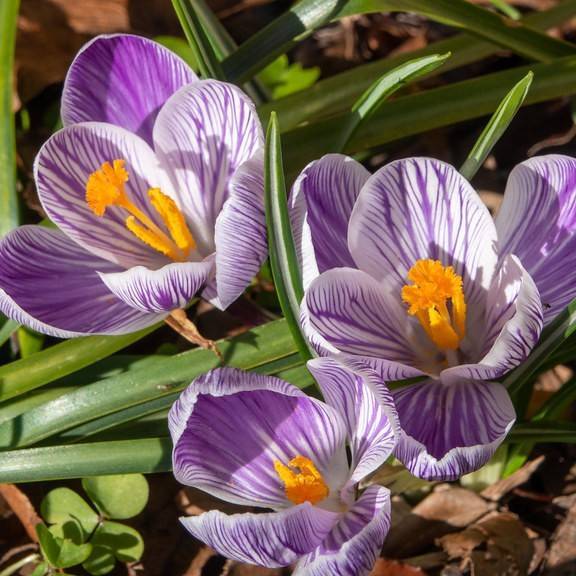
Fall Flowering Crocus
Crocus sativus, Crocus speciosus
Overview
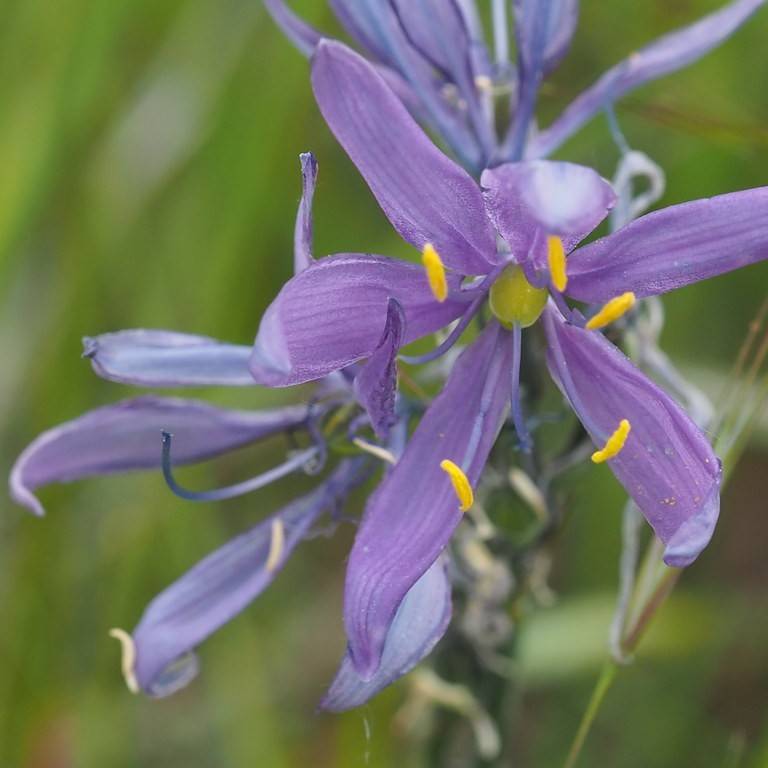
Fall flowering crocus are hardy, bulbous perennials that emerge and bloom in late autumn, long after most summer plants have faded. Their cup-shaped flowers come in shades of purple, white, lavender, and bi-colored patterns, often with contrasting yellow or orange stamens. Unlike spring-blooming crocus, their foliage emerges either just after flowering or in early spring, dying back by late spring to go dormant through the warm summer months. They naturalize readily in suitable climates, spreading gently to form dense, colorful colonies over time.
Care Guide
Watering
Water fall flowering crocus moderately after planting in late summer, keeping the soil consistently moist but not waterlogged as roots establish. Reduce watering once blooms fade, and keep soil dry during the summer dormancy period to prevent corm rot. In rainy regions, avoid overwatering dormant corms by planting in well-drained sites.
Light
Plant fall flowering crocus in full sun to partial shade for optimal bloom production. In warmer climates, light afternoon shade helps prevent stress during unseasonably warm autumn days. Dormant summer corms do not require light, as they are underground during this period.
Soil
Fall flowering crocus thrive in well-drained, sandy or loamy soil with a neutral to slightly alkaline pH of 6.0 to 7.5. Heavy, clay-heavy soils that retain water will cause corm rot, so amend clay areas with compost, perlite, or coarse sand before planting. Avoid low-lying sites where water pools after rain.
Fertilizer
Apply a balanced, slow-release bulb fertilizer at planting time in late summer to support root and bloom development. In early spring, when foliage emerges, apply a light topdressing of compost or low-nitrogen fertilizer to fuel photosynthesis before foliage dies back. Avoid over-fertilizing, as excess nitrogen can encourage soft foliage growth and reduce bloom production.
Temperature
Fall flowering crocus are cold hardy in USDA zones 3 through 9, tolerating winter temperatures as low as -40°F (-40°C). They require a 12 to 16 week period of cool dormancy (below 50°F/10°C) in winter to trigger healthy growth the following season. Warm summer temperatures between 70°F and 85°F (21°C to 29°C) are ideal for dormant corms to mature.
Pruning
No regular pruning is required for fall flowering crocus. Remove spent flower stalks after blooms fade if desired, but leave any emerging foliage intact to photosynthesize and replenish the corm’s energy stores. Allow foliage to yellow and die back naturally in late spring before removing it, to support robust blooming the following autumn.
Propagation
Fall flowering crocus are most easily propagated by dividing mature corm offsets every 3 to 4 years in early summer, when the plants are fully dormant. Dig up clumps of corms, gently separate the small, attached offset corms from the parent, and replant them immediately at the same depth as the parent corm, 2 to 3 inches apart. They can also be grown from seed, though seed-grown plants take 3 to 4 years to reach flowering maturity.
Humidity
Fall flowering crocus tolerate average outdoor humidity levels well, and do not require special humidity adjustments. High humidity during summer dormancy can increase the risk of corm rot, so ensure adequate air circulation around planting sites in humid climates. Indoor-grown specimens thrive in standard household humidity levels of 30% to 50%.
Repotting
Container-grown fall flowering crocus should be repotted every 2 to 3 years during summer dormancy, when corms are inactive. Gently remove corms from old potting mix, separate any offsets, and replant fresh corms in a well-drained bulb potting mix, spacing them 1 to 2 inches apart with the top of the corm 2 inches below the soil surface. Replace the potting mix entirely at each repotting to refresh nutrients and reduce the risk of soil-borne disease.
Uses & Symbolism
Fall flowering crocus are widely planted as ornamental landscape plants, adding cheerful late-season color to rock gardens, border edges, lawns, and container displays. Crocus sativus, the saffron crocus, produces bright red stigmas that are harvested and dried to make saffron, one of the world’s most expensive culinary spices, valued for its distinct flavor and golden color. They are also valued as pollinator-friendly plants, providing a late-season nectar source for bees and other beneficial insects when few other flowers are in bloom.
Diseases & Pests
Fall flowering crocus are relatively pest and disease resistant, but can be susceptible to corm rot if planted in poorly drained soil or overwatered during dormancy. Common pests include aphids, which feed on soft new growth and flower buds, and bulb mites, which can damage dormant corms in warm, moist conditions. Squirrels, mice, and voles may dig up and eat corms, especially shortly after planting, so protective netting or caging may be required in areas with high rodent pressure.
Guides that mention Fall Flowering Crocus
Related plants
Other plants you might like if you grow Fall Flowering Crocus.