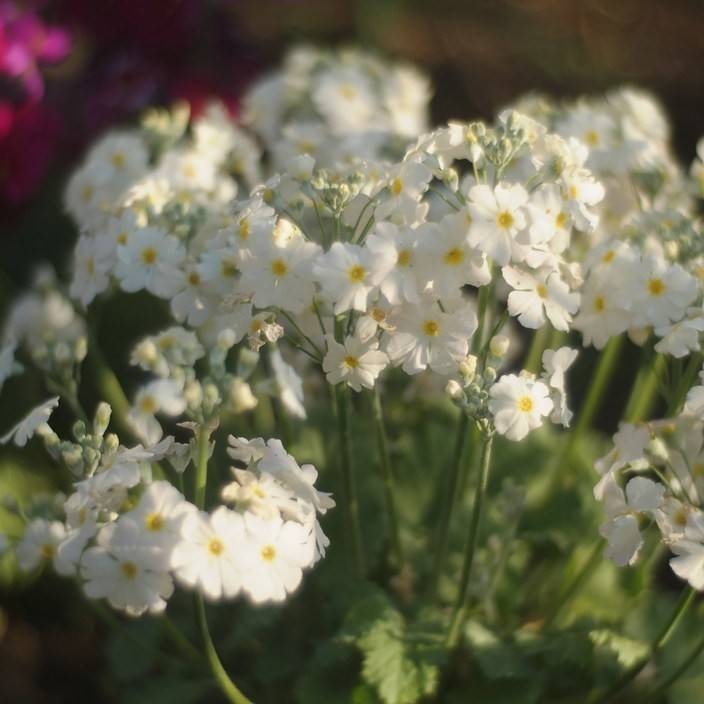
Fairy Primrose
Primula malacoides
Overview
Fairy primrose is a compact, fuzzy-leaved flowering plant celebrated for its dainty, tiered clusters of blooms that sit above soft, rounded foliage. It was first introduced to European horticulture in the early 20th century and quickly became a favorite for winter and early spring indoor displays. While it is grown as an annual in most climates, it thrives in cool, mild conditions where it can bloom continuously for several weeks.
Care Guide
Watering
Water fairy primrose regularly to keep the soil evenly moist but not waterlogged, as soggy conditions can quickly cause root rot. Avoid watering directly onto the crown of the plant to reduce risk of fungal disease, and empty excess water from saucers within 30 minutes of watering. Reduce watering frequency once blooms fade as the plant enters its natural decline.
Light
Fairy primrose prefers bright, indirect light to support abundant blooming without scorching its delicate foliage. It tolerates partial shade, especially in warmer climates where direct sun can damage leaves and shorten bloom life. For indoor plants, place near a north or east-facing window to receive gentle morning light and avoid harsh afternoon sun.
Soil
Plant fairy primrose in a light, well-draining, peat-free potting mix with a slightly acidic pH between 6.0 and 6.5 for optimal growth. Amending standard potting mix with perlite or vermiculite will improve drainage and prevent compaction around the shallow root system. Avoid heavy, clay-heavy soils that retain excess moisture for prolonged periods.
Fertilizer
Feed actively growing, blooming fairy primrose every 2 to 3 weeks with a balanced, water-soluble fertilizer diluted to half the recommended strength. Stop fertilizing once blooms begin to fade, as the plant does not require extra nutrients during its final growth stage. Over-fertilization can lead to excessive foliage growth at the expense of blooms and may burn delicate root tips.
Temperature
Fairy primrose thrives in cool temperatures between 50-65°F (10-18°C) and will have a much longer bloom period when kept away from warm, dry heat sources. Temperatures above 70°F (21°C) will cause the plant to wilt, drop blooms, and decline rapidly. It can tolerate light, short-duration frosts down to 32°F (0°C) when planted outdoors in mild climates.
Pruning
Remove spent flower stems by pinching them off at the base to encourage continuous blooming and maintain a neat, tidy appearance. Trim any yellowed or damaged leaves as they appear to improve air circulation around the plant and reduce the risk of fungal disease. Once the plant has finished blooming entirely and begins to decline, it can be composted as it is an annual that will not regrow the following season.
Propagation
Fairy primrose is most commonly propagated from seed, sown 10 to 12 weeks before the last expected frost date for spring blooms. Seeds require light to germinate, so they should be pressed lightly into the surface of moist seed starting mix and not covered with soil. Germination occurs in 14 to 21 days when kept at consistent temperatures between 60-65°F (15-18°C).
Humidity
Fairy primrose prefers moderate humidity levels between 40-60% to prevent leaf browning and extend bloom life. Indoor plants can be placed on a tray filled with pebbles and water to raise local humidity, as misting directly onto foliage can increase the risk of fungal spots. Avoid placing plants near forced air vents, fireplaces, or other dry heat sources that lower ambient humidity.
Repotting
Fairy primrose is typically sold already in bloom in appropriate-sized pots, so repotting is rarely needed during its short lifespan. If you do need to move the plant to a larger container, do so gently to avoid disturbing its shallow root system, and only move up one pot size to prevent excess soil moisture retention. Repotting is not recommended once the plant has begun blooming, as this can cause shock and lead to bloom drop.
Uses & Symbolism
Fairy primrose is primarily grown as a decorative seasonal houseplant, valued for its soft pastel blooms and mild fragrance that brighten indoor spaces during winter and early spring. In cool, mild climates, it is used as a colorful bedding plant for shaded garden beds, borders, and container displays. It is also a popular choice for cut flower arrangements, as its delicate blooms last well in small vases.
Diseases & Pests
Fairy primrose is susceptible to common fungal diseases including botrytis blight, powdery mildew, and root rot, which are most often caused by overwatering, poor air circulation, or high humidity on foliage. Common pests that attack the plant include aphids, spider mites, and whiteflies, which feed on the soft leaf tissue and can be controlled with insecticidal soap or neem oil. Exposure to excessive heat or direct sun can cause non-infectious leaf scorch and premature bloom drop.
Related plants
Other plants you might like if you grow Fairy Primrose.