European Water Clover
Marsilea quadrifolia
Overview
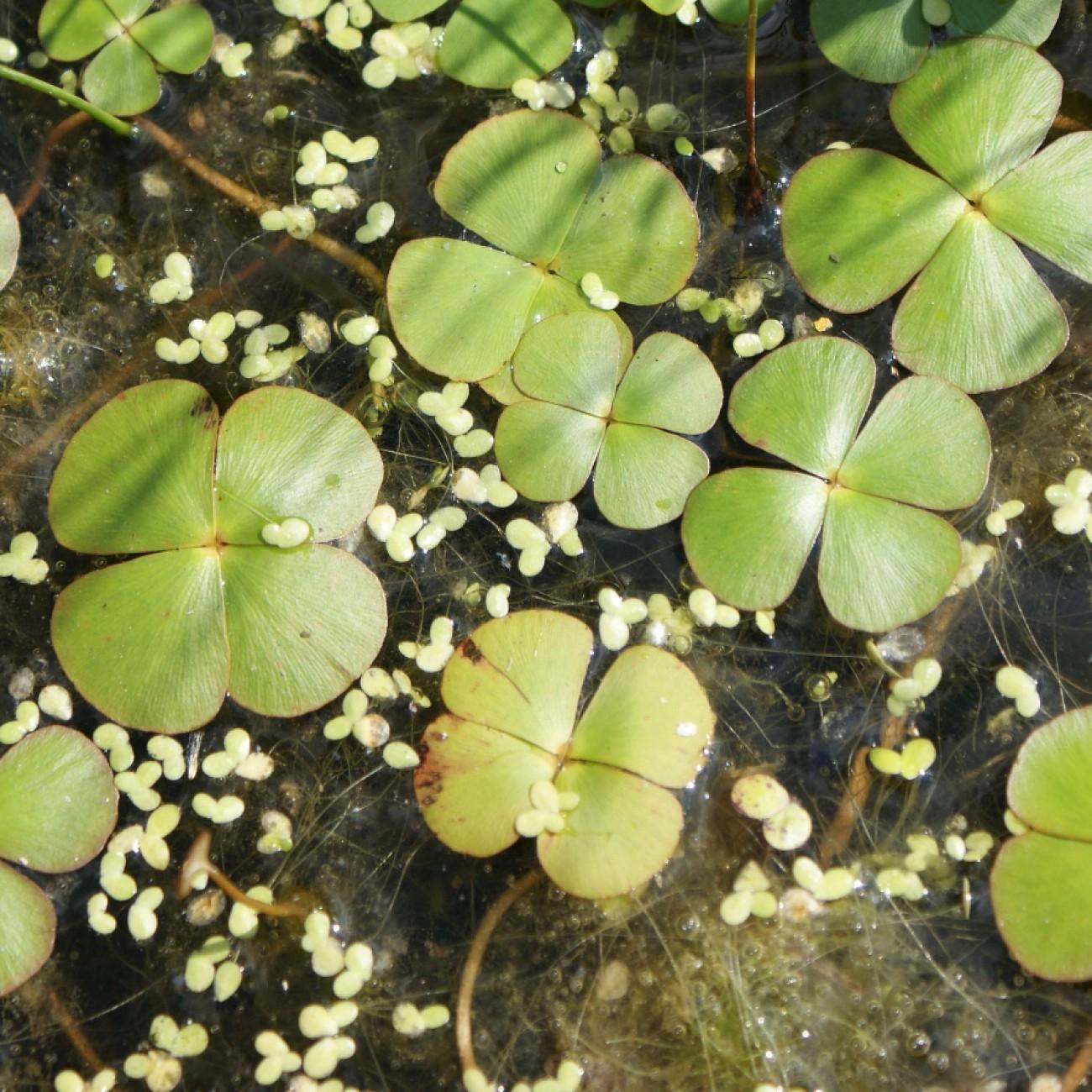
European Water Clover is a distinctive aquatic fern that bears rounded, four-lobed leaves resembling clover, which float on or rise slightly above the water’s surface. It spreads via creeping rhizomes that root in the muddy substrate of ponds, lakes, and slow-moving streams, forming dense, low-growing mats of foliage. Hardy in temperate climates, it is a popular choice for water gardens and ornamental ponds, where it provides natural cover for aquatic wildlife.
Care Guide
Watering
As an aquatic species, European Water Clover requires consistent submersion in 2-6 inches (5-15 cm) of still or slow-moving freshwater; never allow the root zone or foliage to dry out completely. It tolerates neutral to slightly alkaline water conditions, and regular partial water changes will prevent nutrient buildup and maintain water clarity for healthy growth. If grown in a container pond, top off water regularly to offset evaporation and keep the submersion depth consistent.
Light
Thrives in full sun to partial shade, with at least 4-6 hours of direct sunlight daily for the most vigorous growth and dense foliage. In hot, arid climates, it benefits from light afternoon shade to prevent leaf scorch and excessive water evaporation from its growing environment. Low light conditions will lead to sparse, leggy growth and reduced leaf production.
Soil
Requires a heavy, nutrient-rich loamy or muddy substrate with a neutral to slightly alkaline pH, ideally high in organic matter to support rhizome growth. When grown in container ponds, use a dedicated aquatic potting mix rather than standard potting soil, which is too light and will float away when submerged. Avoid porous, sandy substrates that do not hold nutrients or anchor rhizomes securely.
Fertilizer
Benefits from a slow-release aquatic fertilizer tablet pressed into the substrate once or twice during the active growing season in spring and summer, to support consistent foliage production. Avoid standard water-soluble garden fertilizers, which can trigger excessive algae growth in the water and harm companion aquatic organisms. It does not require fertilization in established, nutrient-rich natural ponds with plenty of organic sediment.
Temperature
Grows best in water temperatures between 60-75°F (15-24°C), and is hardy to USDA zones 5-8, tolerating short periods of freezing temperatures as long as the root zone is submerged below the ice layer. In regions with harsh, prolonged winters, it can be grown as an indoor aquatic plant in a heated aquarium or tub to avoid cold damage. Temperatures above 80°F (27°C) for extended periods may slow growth and cause leaf yellowing.
Pruning
Trim back overgrown rhizomes and yellowed, dying leaves periodically during the growing season to control spread and maintain a neat appearance, preventing it from overtaking smaller aquatic plants in shared ponds. Remove any debris or fallen foliage from the water surface regularly to prevent rot and reduce the risk of fungal growth. At the end of the growing season in fall, cut back all dead foliage to keep the water clean over winter.
Propagation
Easiest to propagate via rhizome division in early spring, before active new growth begins; cut sections of rhizome with at least 2-3 healthy leaves and roots, then replant them in the muddy substrate of a new growing location. It can also be grown from spores produced in small, bean-like sporocarps that form at the base of the leaves, though this method is slower and less common for home cultivation. New divisions will establish quickly in warm, nutrient-rich water with adequate sunlight.
Humidity
As an aquatic plant, it requires near 100% humidity around its foliage, which is naturally provided by its submerged growing environment; it will not survive in dry, terrestrial conditions without constant water access. When grown indoors in an aquarium, it thrives under the naturally high humidity of enclosed tank setups, with no additional misting required. Low ambient humidity will cause exposed foliage to wilt and die rapidly, so ensure the water level never drops below the root zone.
Repotting
If grown in a container pond or aquatic pot, repot every 2-3 years in early spring to refresh the substrate and prevent rhizomes from becoming root-bound. Gently lift the entire plant from its pot, trim away any dead or overgrown rhizome sections, and replant in fresh aquatic potting mix in a slightly larger pot if needed, before submerging it back to its preferred depth. Avoid repotting during peak summer heat, as this can stress the plant and slow growth.
Uses & Symbolism
Commonly planted in ornamental ponds and water gardens as a low-growing ground cover that provides shade for fish and amphibians, and helps reduce algae growth by competing for nutrients in the water. It is also suitable for indoor aquarium setups, where it forms attractive carpet-like foliage along the tank bottom. Historically, its young leaves were occasionally eaten as a cooked green in parts of Europe and Asia, though consumption is not common today.
Diseases & Pests
It is relatively pest-resistant, but may be affected by aquatic aphids and snails that feed on its tender foliage; small infestations can be removed by hand or with targeted, aquatic-safe pest treatments. Fungal leaf spot and root rot can occur in stagnant, nutrient-overloaded water, so regular partial water changes and removal of decaying foliage will prevent these issues. In overcrowded ponds, it may also be susceptible to algae overgrowth that coats leaves and blocks sunlight, which can be mitigated by reducing excess nutrients in the water.
Related plants
Other plants you might like if you grow European Water Clover.