Common Horsetail
Equisetum arvense
Overview
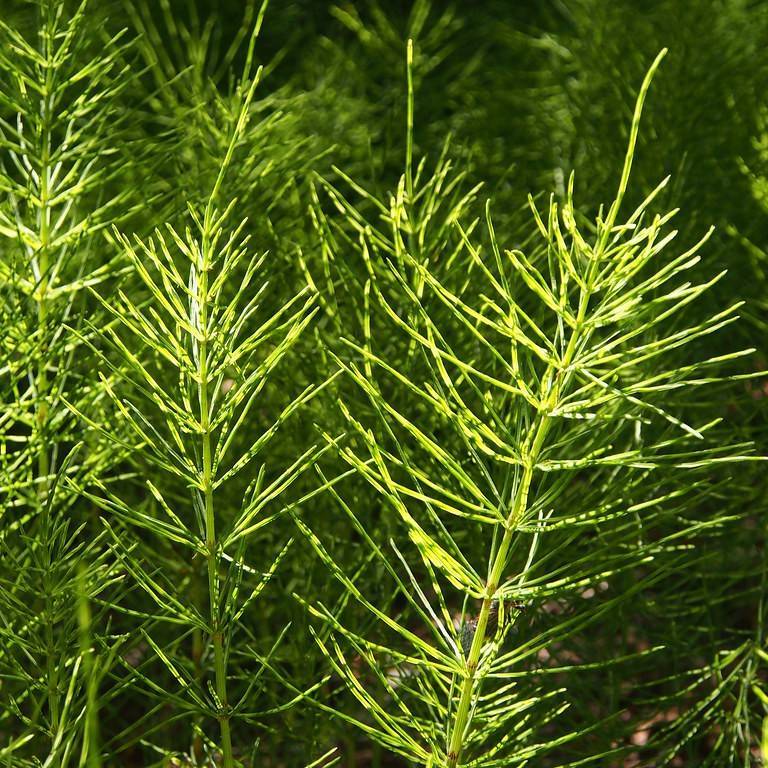
Common horsetail is one of the oldest surviving plant species on Earth, dating back over 300 million years to the Paleozoic era. It produces two distinct stem types: fertile, tan-colored spore-bearing stems in early spring, followed by green, branched, feathery sterile stems that persist through the growing season. It spreads aggressively via deep, creeping rhizomes, often forming dense colonies in moist, disturbed areas. Its high silica content gives the stems a rough, abrasive texture that has been utilized by humans for centuries.
Care Guide
Watering
Common horsetail thrives in consistently moist to wet soil, and can even tolerate shallow standing water for extended periods. Allow the top 1 inch of soil to dry out slightly between waterings only if grown in containers; in-ground plants rarely need supplemental watering beyond natural rainfall in temperate regions. Avoid prolonged drought, as this will cause the sterile stems to yellow and die back prematurely.
Light
It grows best in full sun to partial shade, with the most vigorous growth occurring in locations that receive at least 4 hours of direct sunlight daily. In hot, arid climates, provide light afternoon shade to prevent scorching of the delicate green branches. It can tolerate deep shade, but growth will be sparse and stems may become leggy.
Soil
Adaptable to a wide range of soil types, including sandy, loamy, clay, and poor, nutrient-depleted soils, as long as moisture is consistent. It prefers a slightly acidic to neutral pH range of 5.0 to 7.0, but can tolerate mildly alkaline conditions as well. Poorly drained or waterlogged soils are not a problem for this species, making it ideal for rain gardens or boggy landscape areas.
Fertilizer
Common horsetail requires very little supplemental fertilization, as it is adapted to grow in low-nutrient soils. If grown in containers, apply a balanced, diluted liquid fertilizer once per month during the active growing season, at half the recommended strength to avoid overfeeding. Excess nitrogen will encourage overly lush growth that is more prone to pest damage and weak stems.
Temperature
It is extremely cold-hardy, tolerating winter temperatures as low as -40°F (-40°C) in USDA hardiness zones 3 through 11. It dies back to the ground completely in winter in colder regions, with new stems emerging in early spring once soil temperatures rise above 50°F (10°C). In warm, frost-free climates, it may remain evergreen year-round, with slower growth during the coolest winter months.
Pruning
Cut back all dead stems to the ground in late winter or early spring before new fertile stems emerge to keep the planting looking tidy. To control spread, install root barriers 12 to 18 inches deep around planting areas, as the deep rhizomes can spread several feet per year beyond the original planting site. Pull or dig up unwanted stems as they appear, taking care to remove as much of the attached rhizome as possible to prevent regrowth.
Propagation
The easiest method of propagation is by division of the rhizomes in early spring before new growth begins, or in late fall after stems have died back. Dig up a section of the rhizome, cut into 2 to 3 inch pieces with at least one growing node, and replant immediately in moist soil at the same depth as the original plant. It can also be grown from spores, but this method is much slower and less reliable for home cultivation, as spores require very specific moist, sterile conditions to germinate.
Humidity
Common horsetail prefers moderate to high humidity levels of 50% or higher, which is typical of its native wetland and riparian habitats. It can tolerate average indoor humidity levels of 30-40% when grown as a houseplant, but may benefit from occasional misting if the air is particularly dry. Low humidity for extended periods will cause the tips of the green branches to brown and die back.
Repotting
Container-grown horsetail should be repotted every 2 to 3 years in early spring, as the aggressive rhizomes will quickly fill the pot and can even crack rigid containers if left unchecked. Use a deep, wide pot with drainage holes, and a standard potting mix amended with peat moss to retain moisture, or a specialized aquatic plant mix if growing in a water feature. When repotting, trim back any excess rhizome growth to keep the plant contained to the desired size.
Uses & Symbolism
Historically, the high silica content of common horsetail stems made them useful for scouring pots, polishing metal, and sanding wood, giving rise to its alternate name "scouring rush." It has a long history of use in traditional herbal medicine to treat urinary tract issues, support bone health, and promote wound healing, though clinical evidence for many of these uses is limited. It is also planted ornamentally in bog gardens, water features, and erosion control areas, where its feathery green foliage provides textural contrast to other moisture-loving plants.
Diseases & Pests
Common horsetail is remarkably resistant to most pests and diseases, with very few issues affecting healthy, well-established plants. Overly wet, stagnant conditions in poorly ventilated areas may occasionally lead to fungal stem rot, which can be prevented by ensuring proper air circulation around the planting. Rarely, aphids or spider mites may infest stressed plants, particularly those grown indoors, which can be controlled with insecticidal soap or a strong spray of water to dislodge the pests.
Related plants
Other plants you might like if you grow Common Horsetail.