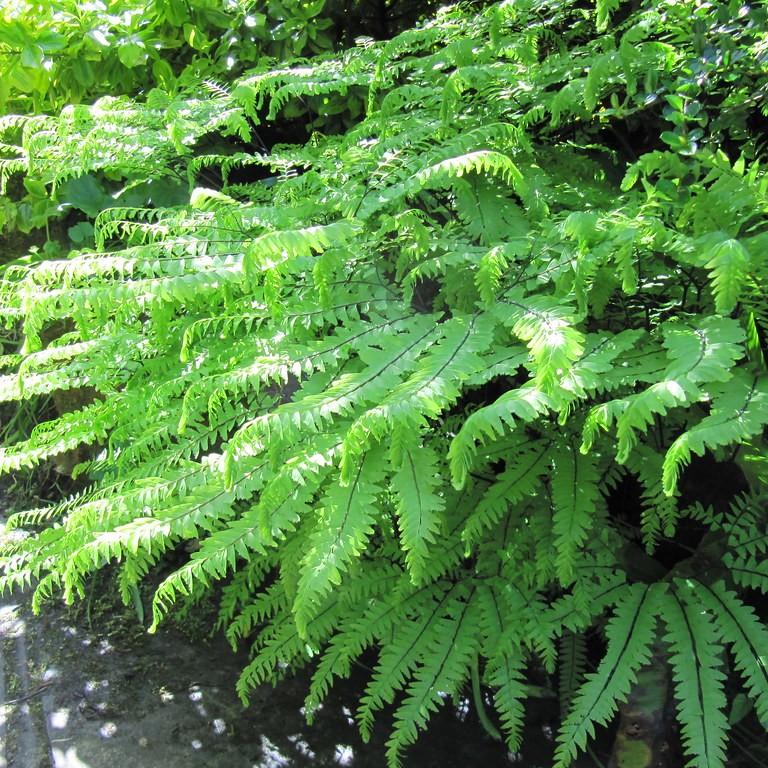
Dwarf Coastal Maidenhair Fern
Adiantum aleuticum 'Subpumilum'
Overview
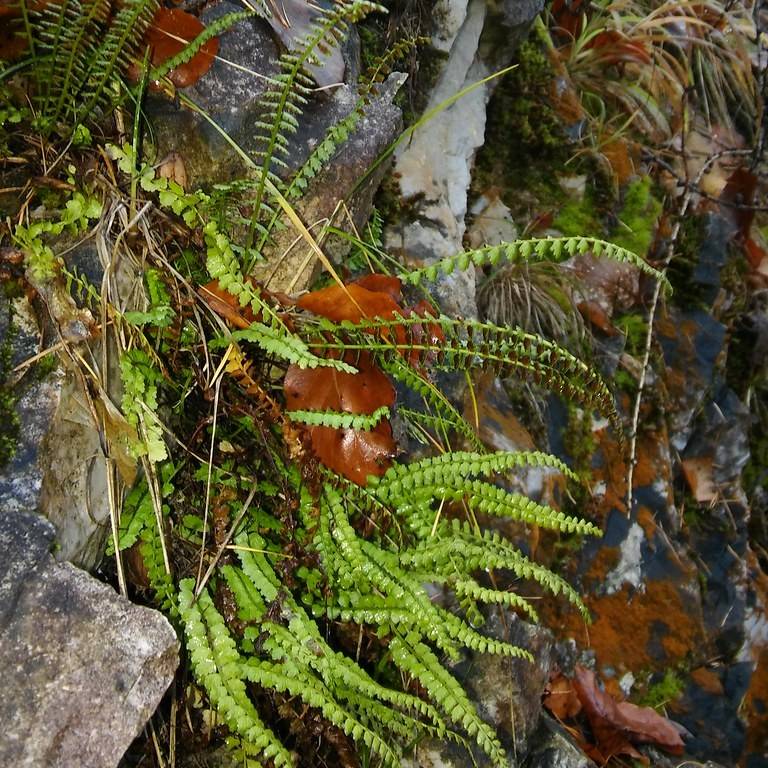
Dwarf Coastal Maidenhair Fern is a miniature cultivar of the western maidenhair fern, prized for its tiny, glaucous blue-green fan-shaped leaflets held on thin, dark wiry stipes. It naturally grows in cool, shaded coastal rock crevices, cliff ledges, and moist forest understories, making it well-adapted to cooler temperatures than many tropical maidenhair species. Its tidy, low-spreading habit forms dense, soft mats of foliage that add delicate texture to shaded garden spots or indoor terrarium displays.
Care Guide
Watering
Keep the soil consistently moist but not waterlogged at all times; never allow the root ball to dry out completely, as this will cause fronds to brown and drop rapidly. Use room-temperature, chlorine-free water if possible, and water directly at the base of the plant to avoid soaking fronds excessively, which can lead to spotting. In drier conditions, you may need to water small potted specimens every 2-3 days to maintain even moisture.
Light
Thrives in bright, indirect light or dappled shade; avoid direct midday sun, which will scorch its delicate leaflets and cause rapid browning. Outdoors, it performs best in full to partial shade under tree canopies or on north-facing slopes, while indoor specimens do well near a north or east-facing window filtered by a sheer curtain. Too little light will cause sparse, leggy growth and loss of the plant’s characteristic compact form.
Soil
Requires a well-draining, moisture-retentive, humus-rich soil with a slightly acidic to neutral pH between 5.5 and 7.0. A mix of peat moss or coconut coir, perlite, and well-rotted leaf mold or compost mimics its native rocky, organic forest habitat perfectly. Avoid heavy, clay-based soils that hold excess water around the roots, as this will quickly lead to root rot.
Fertilizer
Feed sparingly only during the active growing season from spring to early fall, using a balanced, water-soluble houseplant fertilizer diluted to half the recommended strength. Over-fertilization will cause leaf tip burn, discolored fronds, and can damage the fern’s sensitive root system, so avoid feeding in winter when growth is dormant. Potted specimens grown in nutrient-rich potting mix may only need one feeding per growing season, while outdoor plants can receive light feeds every 6-8 weeks if growing in poor soil.
Temperature
Prefers cool temperatures between 55-70°F (13-21°C) during the growing season, and can tolerate short dips down to 20°F (-7°C) when grown outdoors in USDA hardiness zones 3-8. Indoor specimens should be kept away from hot, dry heating vents, fireplaces, and cold drafty windows in winter, as sudden temperature fluctuations can cause frond drop. Unlike tropical maidenhair ferns, it does not thrive in consistent warm temperatures above 75°F (24°C) for extended periods.
Pruning
Remove any brown, dead, or damaged fronds at the base of the stipe throughout the year to maintain the plant’s tidy appearance and encourage new healthy growth. In late winter or early spring, before new fronds emerge, you can cut back all older foliage to the soil line to refresh the plant and promote a full flush of new spring growth. Use clean, sharp scissors or pruning shears to avoid tearing the delicate stipes, and never remove more than one-third of the plant’s foliage at a time during the growing season.
Propagation
Most reliably propagated by division of mature clumps in early spring, just as new growth begins to emerge. Carefully dig up or remove the plant from its pot, gently tease apart the rhizome into sections with at least 2-3 healthy fronds and a portion of intact roots, then replant each division in fresh, moist potting mix. Spore propagation is possible but very slow and labor-intensive, taking 1-2 years to produce mature, sizeable plants, so it is rarely used for home cultivation.
Humidity
Requires moderate to high humidity between 50-70% to thrive, mimicking its native moist coastal habitat. Indoor specimens will benefit from regular misting with room-temperature water, placement on a pebble tray filled with water, or grouping with other humidity-loving plants to raise ambient moisture levels. Low humidity will cause leaf tips to brown and fronds to curl and drop prematurely, so avoid placing this fern near dry air sources like heating or air conditioning vents.
Repotting
Repot every 2-3 years in early spring, only when the plant has outgrown its current pot and roots are visible emerging from the drainage holes. Choose a pot only 1-2 inches larger than the previous one, as too much excess potting soil will hold unnecessary moisture and increase the risk of root rot. Gently loosen the root ball before placing in fresh, humus-rich potting mix, and water thoroughly after repotting to settle the soil around the roots.
Uses & Symbolism
Dwarf Coastal Maidenhair Fern is a popular choice for shaded rock gardens, coastal garden borders, and alpine trough plantings, where its low spreading habit and delicate foliage add soft texture next to larger, bolder shade plants. It is also well-suited for indoor terrarium and fairy garden displays, as its small mature size and preference for high humidity make it ideal for enclosed growing environments. Historically, some Indigenous groups of the Pacific Northwest used related maidenhair fern species for medicinal purposes and basket weaving, though this dwarf cultivar is primarily grown for ornamental use.
Diseases & Pests
The most common issue for Dwarf Coastal Maidenhair Fern is root rot, caused by overwatering or poorly draining soil, which presents as yellowing, wilting fronds and a foul odor from the root zone. Common pests include aphids, scale insects, and fungus gnats, which are attracted to consistently moist soil; these can be controlled with insecticidal soap, neem oil, or by allowing the top ¼ inch of soil to dry slightly between waterings to discourage gnat larvae. Low humidity or underwatering will cause rapid browning of leaf tips and frond drop, which can be prevented by maintaining consistent moisture and ambient humidity levels.
Related plants
Other plants you might like if you grow Dwarf Coastal Maidenhair Fern.