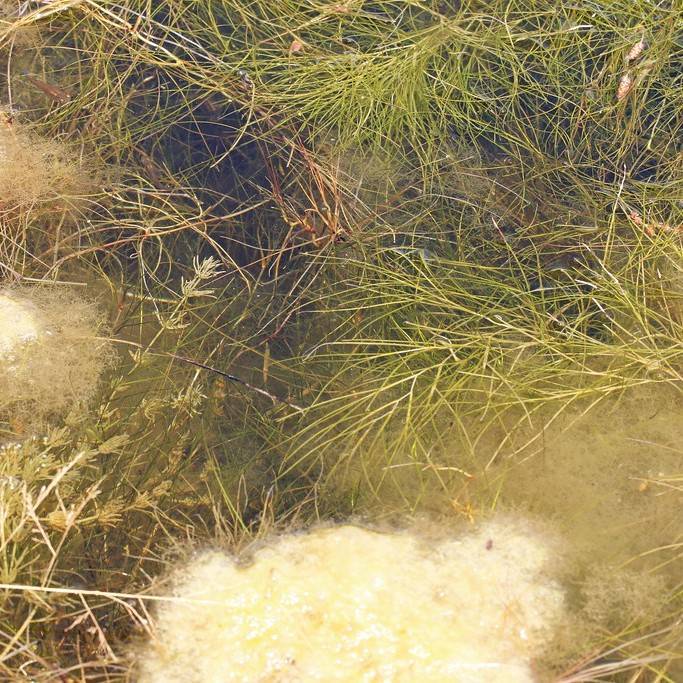
Common Hornwort
Ceratophyllum demersum
Overview
Common Hornwort is a rootless, free-floating or submerged aquatic plant that grows in slow-moving or still freshwater bodies such as ponds, lakes, and slow streams. Its delicate, feathery whorls of bright green foliage create dense mats that provide shelter for fish fry, invertebrates, and amphibian larvae, while also absorbing excess nutrients from water to reduce algal growth. It is one of the most widely distributed aquatic plants globally, adaptable to a broad range of water conditions, making it a staple in both aquaculture and natural habitat restoration projects.
Care Guide
Watering
As a fully aquatic plant, common hornwort requires constant submersion in clean freshwater, with a preferred pH range of 6.0 to 7.5; it tolerates soft to moderately hard water, and benefits from regular partial water changes to prevent nutrient buildup that can coat its leaves. It does not require traditional watering, but water levels should be maintained to keep the plant fully submerged, or it can be left to float freely at the surface if desired. Avoid overly turbulent water flow that can damage its delicate foliage, as gentle to moderate movement supports optimal nutrient uptake.
Light
Thrives in moderate to bright indirect light, with 10 to 12 hours of light per day supporting the fastest growth; it can tolerate low light conditions, though growth will slow and foliage may become sparser. Avoid direct, intense sunlight for extended periods, as this can cause algal growth on the plant’s leaves and lead to browning or foliage decay. For indoor aquarium growth, standard full-spectrum aquarium lights are sufficient to meet its light requirements.
Soil
Common hornwort is rootless, so it does not require any soil substrate to grow; it can be left to float freely in the water column, or weighted down to the bottom of a pond or aquarium by tying stems to rocks or decor. If anchored, it will grow fine without being planted in any medium, as it absorbs all necessary nutrients directly through its foliage from the surrounding water. Avoid heavy, compacted substrates that could smother lower stem sections if they are buried.
Fertilizer
This plant absorbs all nutrients directly from the water, so it benefits from regular doses of liquid aquatic plant fertilizer formulated for freshwater environments, especially in low-nutrient aquarium setups. It is an efficient nutrient scavenger, so it rarely requires heavy fertilization, and will often thrive on excess waste produced by fish and other aquatic inhabitants in well-stocked tanks. Over-fertilization can lead to excessive algal growth that competes with hornwort for resources, so always follow label dosing instructions closely.
Temperature
Adaptable to a wide temperature range of 59 to 86°F (15 to 30°C), making it suitable for both cold water ponds and tropical freshwater aquariums. It can survive short periods of temperatures as low as 32°F (0°C) by going dormant, with foliage dying back and regrowing from surviving stem sections once temperatures warm in spring. Avoid prolonged exposure to temperatures above 90°F (32°C), as this can cause foliage to melt and die off rapidly.
Pruning
Prune regularly to control growth and prevent dense mats from blocking light to other aquatic plants or impeding water flow; simply snip off excess stem length with clean, sharp scissors at any point along the stem. Remove any yellowed, brown, or decaying foliage promptly to prevent it from decomposing in the water and negatively impacting water quality for fish and other inhabitants. Trimmed sections can be left to grow new plants or discarded, depending on desired density.
Propagation
Propagates easily via stem cuttings: cut a 2 to 4 inch section of healthy stem from a mature plant, and either float it in the water column or anchor it in place, where it will develop new growth within 1 to 2 weeks. It also reproduces naturally via fragmentation, where broken stem segments from the parent plant will grow into full independent plants under suitable conditions. Sexual reproduction via tiny, submerged flowers is rare in cultivated settings, with vegetative fragmentation being the primary propagation method for both aquarium and pond use.
Humidity
As a fully aquatic plant, common hornwort does not require any specific atmospheric humidity, as it is constantly submerged in water. If grown emersed (partially out of water) for short periods, high ambient humidity above 70% is required to prevent foliage from drying out and dying, but this plant is almost exclusively grown fully submerged. Evaporation from aquarium or pond water will naturally provide sufficient humidity for any small portions of the plant that may temporarily break the surface.
Repotting
Since common hornwort is rootless and does not grow in a substrate, repotting is never required for this plant. If anchored to decor or weighted at the bottom of a tank, it can be repositioned as needed by untying or moving the weight holding it in place, with no risk of root damage. As growth expands, excess plants can be removed and discarded or shared, with no need for transplanting into a larger container or new substrate.
Uses & Symbolism
Common hornwort is widely used in freshwater aquariums and outdoor ponds as an oxygenating plant, absorbing excess nitrates, ammonia, and phosphates from water to improve water quality and reduce algal growth. Its dense, feathery foliage provides critical shelter for fish fry, shrimp, tadpoles, and other small aquatic organisms, making it a popular addition to breeding tanks and wildlife-friendly ponds. It is also used in wetland restoration projects to stabilize aquatic ecosystems, filter pollutants from runoff, and provide habitat for native aquatic species.
Diseases & Pests
Common hornwort is relatively pest and disease resistant, but can be affected by algal growth on its leaves when exposed to excessive light or high nutrient levels, which can block light and cause foliage to die back if not addressed. It may be infested by common aquarium pests such as aphids, snails, or hydra, which can be removed by rinsing the plant in a gentle potassium permanganate solution before introducing it to a new tank. In poor water quality with high levels of organic waste, foliage may develop brown rot, which can be managed by pruning affected sections and performing partial water changes to improve water parameters.
Related plants
Other plants you might like if you grow Common Hornwort.