European Searocket
Cakile maritima
Overview
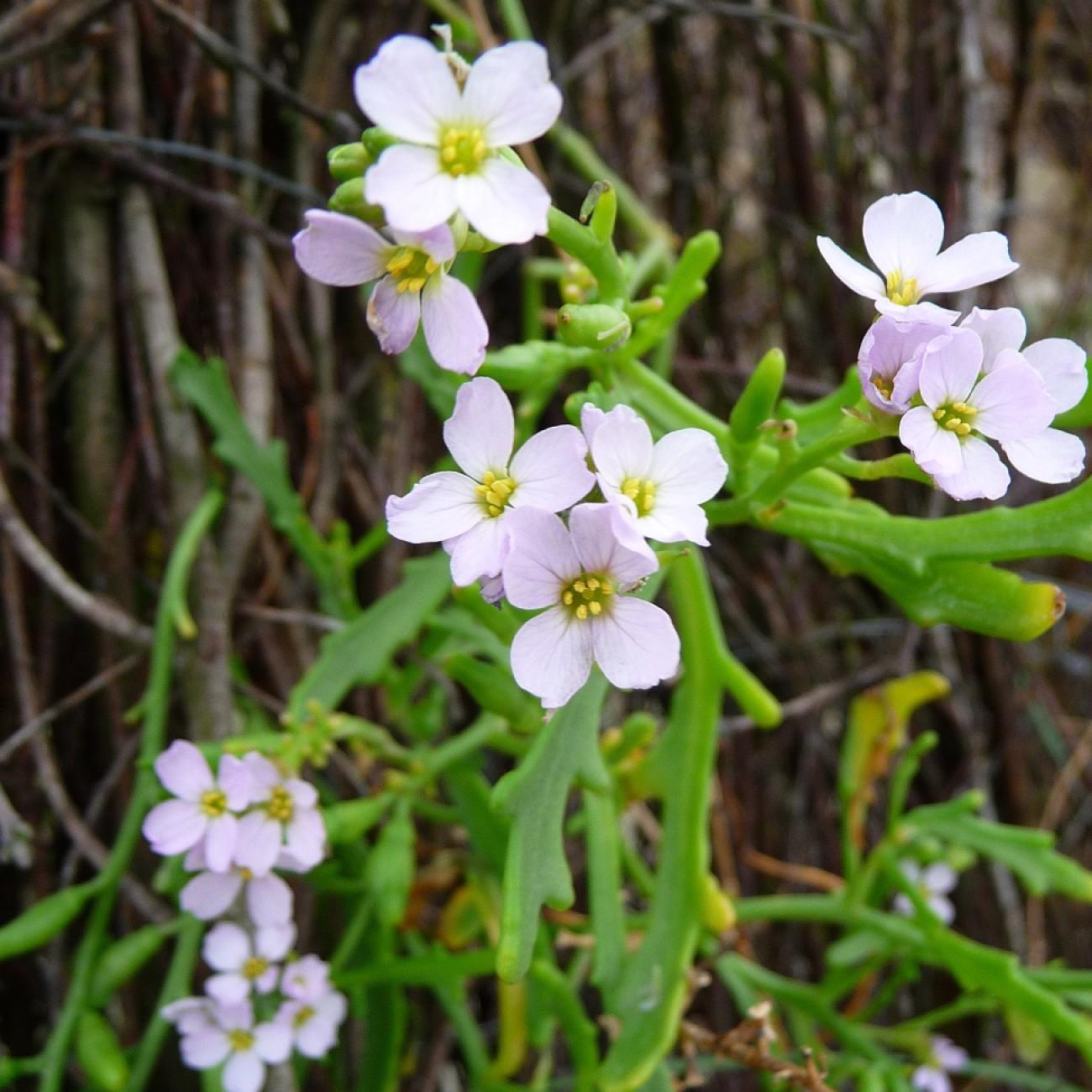
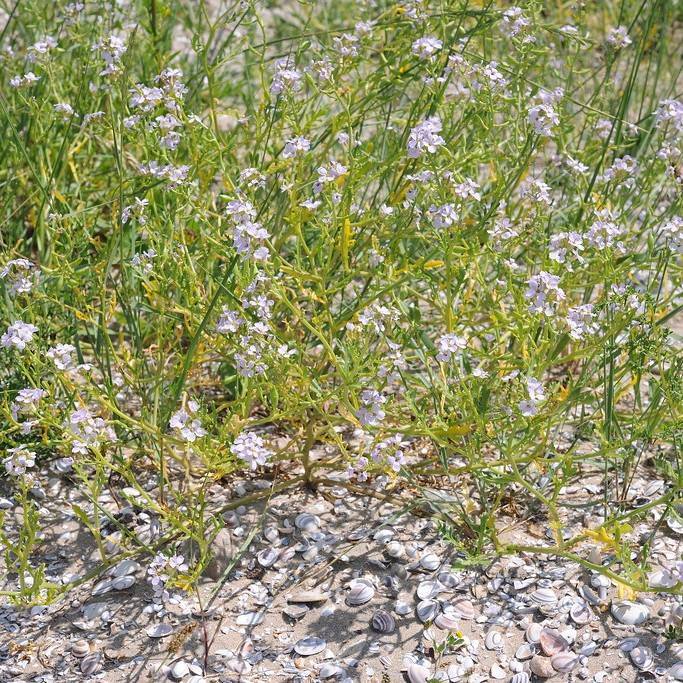
European Searocket is a hardy halophytic plant adapted to the harsh conditions of coastal dunes, upper beaches, and salt marshes, where its deep taproot stabilizes sandy soils. It produces small, four-petaled flowers in pale lavender or white from late spring to early fall, followed by segmented, angular seed pods that disperse via ocean currents. This species is well-known for its ability to withstand high salt exposure, strong winds, and nutrient-poor sandy substrates, making it a common pioneer species in newly formed coastal habitats.
Care Guide
Watering
European Searocket is highly drought-tolerant once established, requiring only occasional natural rainfall in its native coastal habitat; overwatering or prolonged saturated soil will quickly cause root rot. For cultivated plants, water only when the top 2 to 3 inches of soil are completely dry, and avoid overhead watering to reduce foliar moisture buildup. In potted settings, ensure the container has excellent drainage to prevent standing water around the root system.
Light
This species requires full, direct sunlight for a minimum of 6 hours per day to thrive, as shaded conditions will lead to leggy growth and reduced flowering. It tolerates intense, unfiltered coastal sunlight and reflective glare from sand, making it unsuitable for low-light indoor or shaded garden locations. When grown in pots, place it in a south or west-facing position that receives unobstructed sunlight throughout the growing season.
Soil
European Searocket requires extremely well-drained, sandy or gravelly soil with low nutrient content, as it is adapted to the poor, porous substrates of coastal dunes. It tolerates neutral to slightly alkaline pH levels and high salt concentrations in soil, performing poorly in heavy clay or loamy soils that retain moisture. For container cultivation, use a mix of 70% coarse sand and 30% general-purpose potting mix with no added organic matter to mimic its natural growing medium.
Fertilizer
This species is adapted to low-nutrient environments and requires no regular fertilization, as excess nitrogen will lead to weak, floppy growth and reduced tolerance to salt and drought. If grown in a container for more than one growing season, apply a dilute, balanced liquid fertilizer at 1/4 the recommended strength once at the start of the growing season only. Avoid high-nitrogen fertilizers entirely, as they will disrupt the plant's natural hardy growth habit.
Temperature
European Searocket thrives in cool to moderate coastal temperatures, with an ideal growing range of 50 to 75°F (10 to 24°C), and can tolerate light frosts down to 25°F (-4°C) for short periods. It is well-adapted to cool coastal breezes and does not perform well in hot, humid inland temperatures above 85°F (29°C), which will cause wilting and premature dormancy. As an annual, it completes its full life cycle in one growing season, dying back after producing seed in late fall.
Pruning
Pruning is rarely required for European Searocket, though spent flower stems can be trimmed back lightly to encourage additional blooming throughout the growing season. If the plant becomes overly leggy, you can trim back up to 1/3 of the top growth in early summer to promote a denser, more compact habit. Remove any yellowed or damaged foliage as it appears to improve air circulation and reduce the risk of fungal issues.
Propagation
European Searocket is most commonly propagated from seed, which can be sown directly onto sandy, well-drained soil in early spring after the last frost date. Seeds require no stratification, and will germinate within 7 to 14 days when kept moist and exposed to full sunlight; they naturally self-sow in suitable coastal habitats, often forming large colonies over time. Cuttings are rarely successful, as the fleshy stems are prone to rot before rooting, making seed propagation the only reliable method for this species.
Humidity
This species tolerates a wide range of humidity levels, from dry coastal breezes to moderate maritime humidity between 40% and 70%, and does not require supplemental misting or humidity adjustments. It is well-adapted to the dry, salty air of coastal environments, and high humidity above 80% combined with poor air circulation can increase the risk of fungal leaf spot diseases. In indoor settings, ensure the plant is placed near a well-ventilated window to prevent stagnant, moist air around the foliage.
Repotting
As an annual plant, European Searocket rarely requires repotting during its short lifespan, as it completes its full growth cycle within one growing season. If grown in a container, choose a pot with ample drainage holes at planting time, and avoid moving it to a larger pot mid-season, as this can disturb its sensitive taproot and stunt growth. Discard the plant after it dies back in late fall, and sow fresh seeds the following spring for new growth.
Uses & Symbolism
European Searocket is frequently used in coastal restoration projects to stabilize sandy dunes and prevent shoreline erosion, as its deep taproot holds loose sand in place and it tolerates regular salt spray. Its young, fleshy leaves have a tangy, salty, peppery flavor similar to arugula, and are eaten raw in salads, pickled, or cooked as a potherb in coastal culinary traditions. It is also planted as a low-maintenance ornamental in xeriscaped coastal gardens, where its pale flowers and drought tolerance make it a suitable ground cover for sandy, low-nutrient sites.
Diseases & Pests
European Searocket is relatively pest and disease resistant, though it can be affected by common brassica pests such as flea beetles, which chew small holes in the foliage, and aphids, which cluster on new growth and suck sap. Fungal diseases including downy mildew and leaf spot can occur in conditions of high humidity and poor air circulation, especially if the foliage remains wet for prolonged periods. Root rot is the most common issue in cultivation, caused by overwatering or poorly drained soil, which leads to wilting, yellowing foliage, and eventual plant death.
Related plants
Other plants you might like if you grow European Searocket.