Bitter Switchgrass
Panicum amarum
Overview
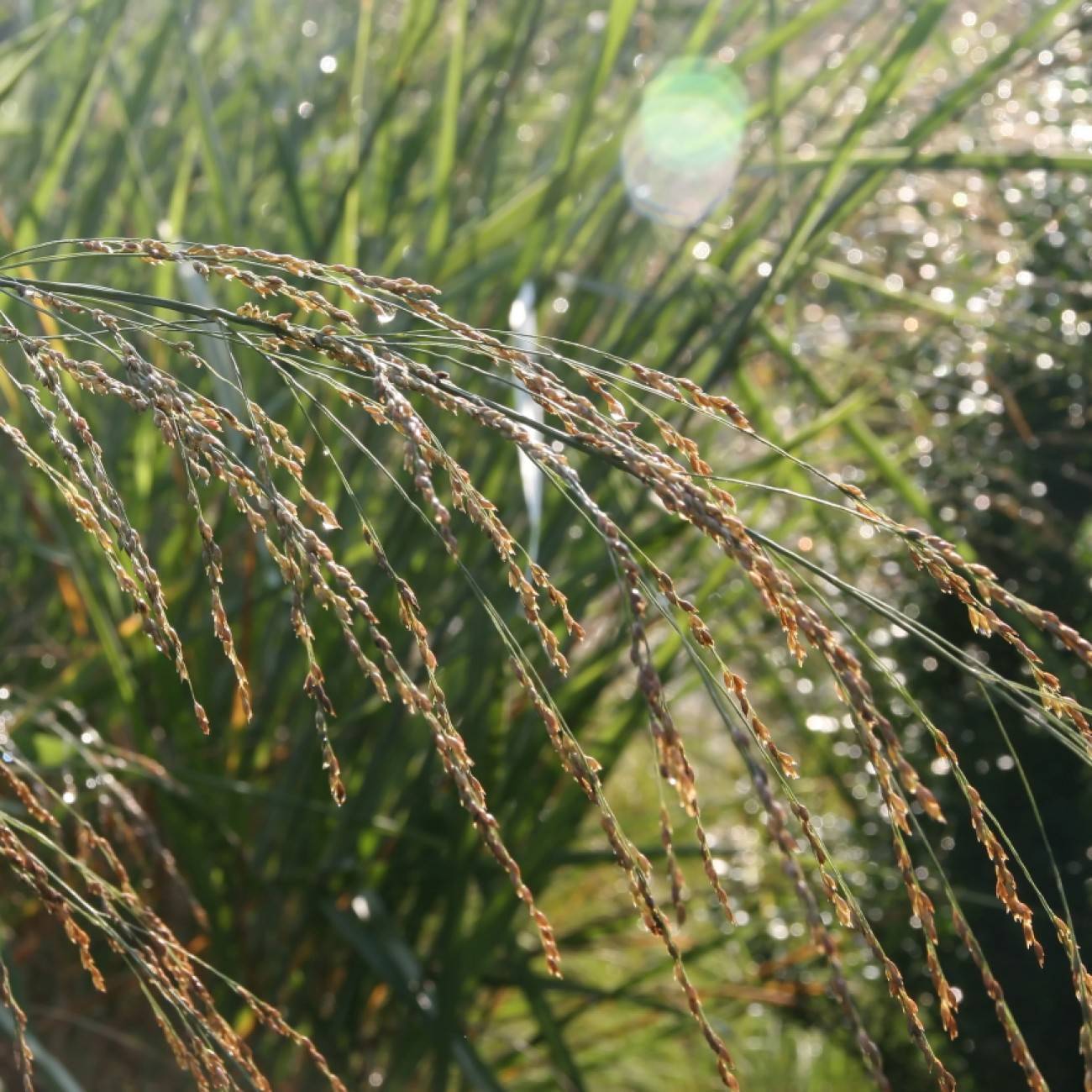
Bitter switchgrass is a clumping, warm-season grass named for the bitter taste of its foliage, which deters grazing by livestock. It thrives in coastal dunes, salt marshes, and sandy shorelines, where its deep, extensive root system stabilizes soil against wind and tidal erosion. It produces airy, branched panicles of pale green to tan seed heads in late summer, which persist into winter and provide food for native birds and small mammals.
Care Guide
Watering
Bitter switchgrass is highly drought-tolerant once established, requiring only occasional supplemental watering during extended dry periods; overwatering in heavy, poorly drained soils can cause root rot. Newly planted specimens need regular, light watering for the first 2–3 months to encourage root development, after which they can survive on natural rainfall in most of its native range.
Light
This grass requires full sun, a minimum of 6 hours of direct sunlight daily, to develop strong, upright growth and abundant seed heads. It will become leggy, flop over, and produce sparse foliage if grown in partial or full shade, and is not suitable for low-light planting sites.
Soil
Bitter switchgrass adapts to a wide range of soil types, including sandy, loamy, and clay soils, and tolerates high salinity, poor nutrient content, and pH levels from 5.5 to 8.0. It performs best in well-drained soil, but can withstand periodic flooding and saturated soil conditions common to coastal habitats.
Fertilizer
This low-maintenance grass rarely requires fertilization, as it thrives in nutrient-poor soils; excessive fertilization will cause overly lush, weak growth that is prone to flopping. If planted in extremely impoverished, sandy soil, a single application of a balanced, slow-release fertilizer in early spring can support healthy growth without overstimulating it.
Temperature
Bitter switchgrass is a warm-season species that grows actively when temperatures are between 70–90°F (21–32°C), and goes dormant when temperatures drop below 50°F (10°C) in fall. It is cold-hardy in USDA zones 6–10, tolerating winter temperatures as low as -10°F (-23°C) without damage once established.
Pruning
Prune bitter switchgrass once annually in late winter or early spring, before new growth emerges, cutting back the entire clump to 4–6 inches above the soil line to remove dead foliage and make space for fresh shoots. Dead or damaged stems can be trimmed away at any time during the growing season to maintain a neat appearance, but excessive pruning during active growth will reduce seed head production.
Propagation
Bitter switchgrass is most commonly propagated by seed, which can be sown directly outdoors in late fall or stratified for 30 days and sown in early spring for higher germination rates. It can also be propagated by dividing mature clumps in early spring, separating the root mass into smaller sections with at least 3–5 healthy shoots each and replanting immediately at the same depth as the original plant.
Humidity
This grass tolerates a wide range of humidity levels, from the dry, windy conditions of coastal dunes to the high humidity of southeastern marshes, with no adverse effects on growth. It has no specific humidity requirements, and is resistant to foliar diseases even in consistently humid environments.
Repotting
Bitter switchgrass is rarely grown in containers, but if potted for landscape staging or restoration projects, it should be repotted every 2–3 years in early spring to prevent root binding. Use a sandy, well-drained potting mix when repotting, and choose a container with ample drainage holes to prevent waterlogged soil.
Uses & Symbolism
Bitter switchgrass is widely planted for coastal erosion control, as its deep root system stabilizes dunes and shorelines against storm surges and wind damage, while its foliage traps sand to build up dune structure. It is also used in native pollinator gardens, rain gardens, and ornamental landscape plantings for its upright, fine-textured foliage and airy winter seed heads, which add visual interest to low-maintenance landscapes. Additionally, the seeds provide a critical food source for migratory birds and small coastal mammals, and the clumping foliage offers shelter for ground-nesting bird species.
Diseases & Pests
Bitter switchgrass is highly resistant to most pests and diseases, with no major common pathogens affecting healthy, well-sited specimens. In overly wet, poorly drained conditions, it may occasionally develop root rot or fungal leaf spots, which can be prevented by planting in well-drained soil and providing adequate air circulation around the clumps. Rare infestations of aphids or grasshoppers may occur, but these rarely cause significant damage and can be left untreated in most native plantings.
Related plants
Other plants you might like if you grow Bitter Switchgrass.
%22%2F%3E%0A%20%20%20%20%20%20%3Ccircle%20cx%3D%22920%22%20cy%3D%22180%22%20r%3D%2290%22%20fill%3D%22%23cfe8d5%22%2F%3E%0A%20%20%20%20%20%20%3Cpath%20d%3D%22M600%20590c-90-180-215-255-310-280%200%20165%20118%20296%20270%20296h40z%22%20fill%3D%22%2379b88e%22%2F%3E%0A%20%20%20%20%20%20%3Cpath%20d%3D%22M600%20590c80-150%20198-212%20302-228-8%20142-123%20255-270%20255h-32z%22%20fill%3D%22%235c9f73%22%2F%3E%0A%20%20%20%20%20%20%3Cpath%20d%3D%22M600%20610V360%22%20stroke%3D%22%234f8c64%22%20stroke-width%3D%2218%22%20stroke-linecap%3D%22round%22%2F%3E%0A%20%20%20%20%20%20%3Ctext%20x%3D%22600%22%20y%3D%22700%22%20text-anchor%3D%22middle%22%20font-family%3D%22Arial%2C%20sans-serif%22%20font-size%3D%2244%22%20fill%3D%22%23365c45%22%3E%0A%20%20%20%20%20%20%20%20Plant%20image%20coming%20soon%0A%20%20%20%20%20%20%3C%2Ftext%3E%0A%20%20%20%20%3C%2Fsvg%3E%0A%20%20)