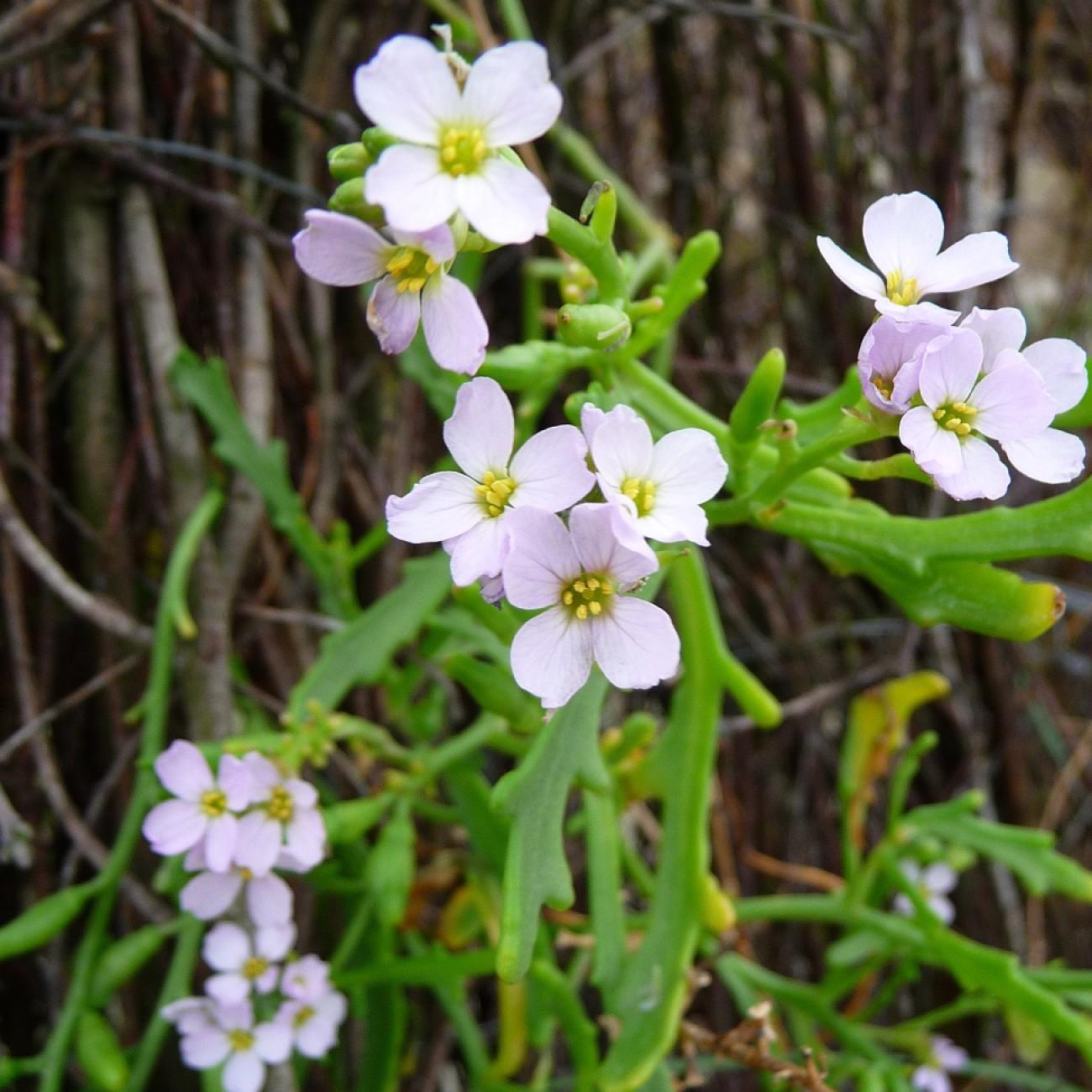
European Sea Rocket
Cakile maritima
Overview
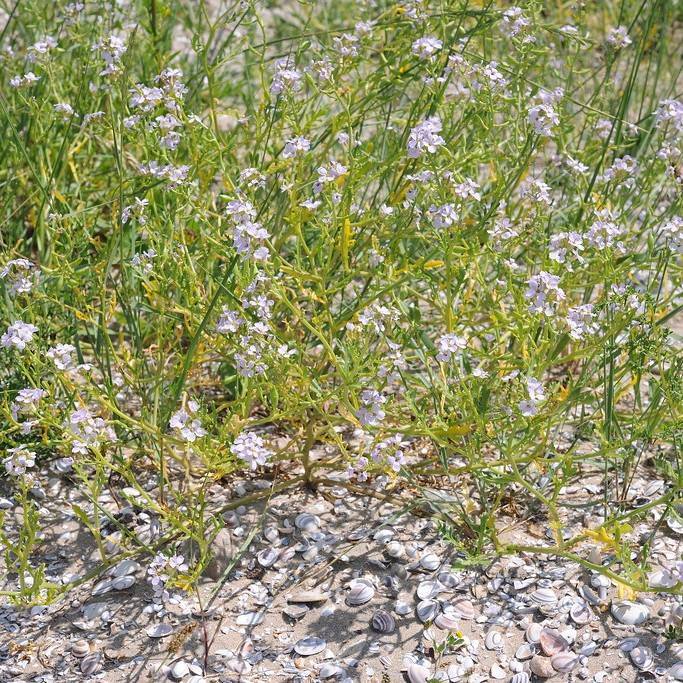
European sea rocket is a hardy, sprawling annual plant that thrives in the harsh, saline conditions of coastal dunes, upper beaches, and tide lines across its native range. It produces lobed, succulent leaves that store water and resist salt damage, and small four-petaled flowers that bloom in loose clusters from late spring to early fall. The plant’s long, segmented seed pods break apart when mature, with sections that can float in seawater for weeks to disperse to new shoreline habitats.
Care Guide
Watering
European sea rocket is highly drought-tolerant and adapted to periodic saltwater spray and rainfall, requiring very little supplemental watering once established. Overwatering, especially in poorly drained soil, will quickly cause root rot and plant death; allow the soil to dry out completely between rare waterings in cultivation. Avoid using highly chlorinated water, as the plant is adapted to natural, low-mineral coastal precipitation.
Light
This species requires full, direct sunlight for a minimum of 6 hours per day to grow and flower properly, as it is adapted to open, unshaded coastal environments. It cannot tolerate partial or full shade, which will lead to leggy growth, reduced flowering, and increased susceptibility to fungal disease. In indoor or nursery settings, use full-spectrum grow lights if natural sunlight is insufficient.
Soil
European sea rocket requires extremely well-drained, sandy or gravelly soil with a low nutrient content, mimicking its native coastal dune habitat. It tolerates highly saline soil conditions and a pH range of 6.0 to 8.0, including alkaline substrates common in shoreline areas. Heavy, clay-rich, or moisture-retentive soils are unsuitable, as they hold too much water around the plant’s shallow root system.
Fertilizer
This plant is adapted to low-nutrient coastal soils and requires almost no supplemental fertilization to thrive. Excess nitrogen from fertilizer will lead to lush, soft foliage that is more vulnerable to pest damage and reduces the plant’s natural salt and drought tolerance. If grown in a container, a single, very dilute application of balanced all-purpose fertilizer once per growing season is sufficient at most.
Temperature
European sea rocket is adapted to cool coastal climates, thriving in temperatures between 50°F and 75°F (10°C to 24°C) during its active growing season. It tolerates light, short-duration frosts down to 25°F (-4°C) but will die back completely if exposed to prolonged freezing temperatures. It can withstand high summer temperatures up to 90°F (32°C) as long as it has access to well-drained soil and full sunlight.
Pruning
Pruning is generally unnecessary for European sea rocket, as its natural sprawling growth habit is well-suited to its coastal habitat or rock garden setting. Deadheading spent flowers can extend the blooming period slightly, but allowing seed pods to mature supports natural self-seeding for new plants the following growing season. Remove any yellowed or diseased foliage promptly to prevent the spread of fungal pathogens.
Propagation
European sea rocket is most easily propagated from seed, which should be sown directly in its final growing location in early spring, as the plant does not tolerate root disturbance well. Seeds require no cold stratification, and will germinate within 7 to 14 days when kept in moist sandy soil and exposed to full sunlight and temperatures between 55°F and 65°F (13°C to 18°C). Self-sown seedlings are common in suitable habitats and can be transplanted when very young if handled carefully to avoid root damage.
Humidity
This species tolerates a wide range of humidity levels, from dry coastal winds to moist maritime air, with no special humidity requirements in cultivation. It is highly resistant to salt-laden coastal air, which damages most other non-halophytic plant species. High humidity combined with poor air circulation can increase the risk of fungal leaf spots, so ensure plants have adequate space for air flow.
Repotting
Repotting is rarely needed for European sea rocket, as it is a short-lived annual with a shallow, small root system that grows well in poor, sandy soil. If grown in a container, use a deep pot with multiple drainage holes filled with coarse sand or a cactus/succulent potting mix to ensure proper drainage. Do not repot the plant once it has become established, as root disturbance will usually cause the plant to wilt and die.
Uses & Symbolism
European sea rocket is often used in coastal restoration and dune stabilization projects to reduce erosion on sandy shorelines, as its extensive root system holds loose sand in place. The young leaves, flowers, and seed pods are edible, with a sharp, peppery flavor similar to arugula, and are used fresh in salads, pickled, or cooked as a potherb in coastal cuisines. It is also planted in xeriscapes and rock gardens in coastal regions as a low-maintenance, salt-tolerant ornamental ground cover.
Diseases & Pests
European sea rocket is relatively pest and disease resistant due to its harsh native habitat, but it can be susceptible to fungal leaf spots and downy mildew in overly moist, poorly ventilated conditions. Aphids and flea beetles may occasionally feed on young foliage, though damage is rarely severe enough to require treatment in outdoor settings. Overwatering or heavy, poorly drained soil will almost always lead to fatal root rot, the most common issue in cultivated specimens.
Related plants
Other plants you might like if you grow European Sea Rocket.