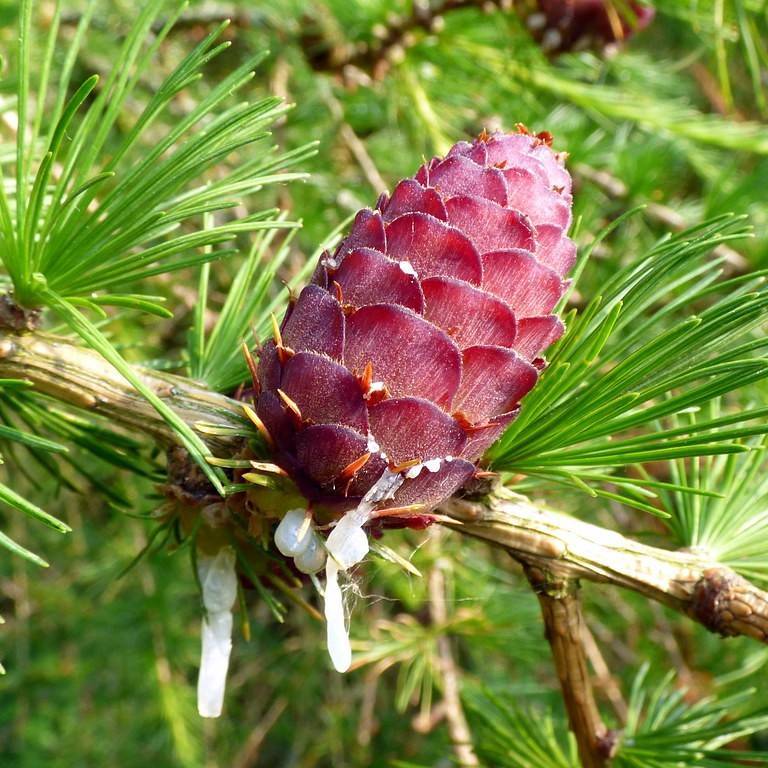
European Larch
Larix decidua
Overview
European larch is one of the few deciduous conifers, losing its needle-like foliage each fall after a vibrant golden display. Native to high-elevation European mountain ranges, it thrives in cool, sunny climates and is widely planted beyond its native range for its aesthetic appeal and durable wood. Its upright, conical growth habit and seasonal color changes make it a popular choice for large landscapes and reforestation projects.
Care Guide
Watering
European larch prefers consistently moist, well-drained soil, especially during its establishment period; mature trees are moderately drought-tolerant but benefit from deep watering during prolonged dry spells. Avoid overwatering or waterlogged conditions, which can lead to root rot and stunted growth. Container-grown specimens require more frequent watering, as their root systems have limited access to moisture.
Light
This species requires full, direct sunlight for optimal growth, tolerating no more than very light dappled shade. Poor light exposure leads to sparse foliage, weak growth, and reduced autumn color intensity. Plant in an open, unobstructed location where it receives at least 6 hours of direct sunlight daily.
Soil
European larch adapts to a wide range of soil types, including loam, sandy, and even poor rocky soils, as long as drainage is excellent. It prefers slightly acidic to neutral pH levels (5.0 to 7.5) but can tolerate mildly alkaline conditions. Heavy clay soils that retain water are unsuitable, as they increase the risk of root damage.
Fertilizer
Young European larch trees benefit from a balanced, slow-release fertilizer applied in early spring to support new growth. Mature specimens rarely need regular fertilization, especially if planted in nutrient-rich soil, but a light application of high-nitrogen fertilizer can be given if growth is stunted or foliage appears pale. Avoid fertilizing late in the growing season, as this can stimulate tender new growth that is vulnerable to frost damage.
Temperature
This cold-hardy tree thrives in cool climates, tolerating winter temperatures as low as -40°F (-40°C) once established. It is poorly adapted to hot, humid summer conditions, as high temperatures can cause foliar scorch and increase susceptibility to pest infestations. It grows best in regions with cold winters and mild, not excessively hot, summers.
Pruning
Prune European larch during its dormant season in late winter or early spring, before new needles emerge, to remove dead, damaged, or crossing branches. Light shaping can be done to maintain its conical form, but avoid heavy pruning, as the tree does not resprout well from old, bare wood. Disinfect pruning tools between cuts to prevent the spread of fungal pathogens.
Propagation
European larch is most commonly propagated from seeds, which require 30 to 60 days of cold stratification to break dormancy before sowing in moist, well-drained seed starting mix. Softwood cuttings taken in early summer can also root successfully if treated with rooting hormone and kept under high humidity. Grafting is sometimes used to propagate specific cultivars, ensuring consistent growth and foliage traits.
Humidity
European larch prefers moderate humidity levels, typical of its native mountain habitats, but tolerates drier air once mature. High humidity combined with poor air circulation can increase the risk of fungal foliar diseases, so ensure adequate space around the tree for airflow. Container-grown indoor specimens may benefit from occasional misting during very dry winter conditions.
Repotting
Container-grown European larch saplings should be repotted every 2 to 3 years in early spring before new growth begins, using a well-drained, slightly acidic potting mix mixed with perlite or coarse sand to improve drainage. Choose a pot that is 2 to 3 inches larger in diameter than the current container, with adequate drainage holes to prevent waterlogging. Mature specimens grown in large containers can be top-dressed with fresh compost annually instead of full repotting to replenish nutrients.
Uses & Symbolism
European larch is widely planted as an ornamental tree in large parks, estates, and landscape projects, valued for its striking golden autumn foliage and distinctive conical form. Its dense, rot-resistant wood is used for construction, exterior cladding, fencing, and boat building, as it performs well in contact with soil and moisture. It is also used in reforestation projects for erosion control in mountainous regions, and its young shoots are sometimes used in traditional herbal remedies for respiratory ailments.
Diseases & Pests
Common pests affecting European larch include larch casebearer, which mines needles and causes defoliation, and larch sawfly, whose larvae feed on foliage and can weaken young trees. Fungal diseases such as larch canker, caused by Lachnellula willkommii, can lead to branch dieback and tree death, especially in humid, poorly ventilated locations. Root rot may occur in waterlogged soils, and needle cast diseases can cause premature foliage drop during wet spring seasons.
Related plants
Other plants you might like if you grow European Larch.