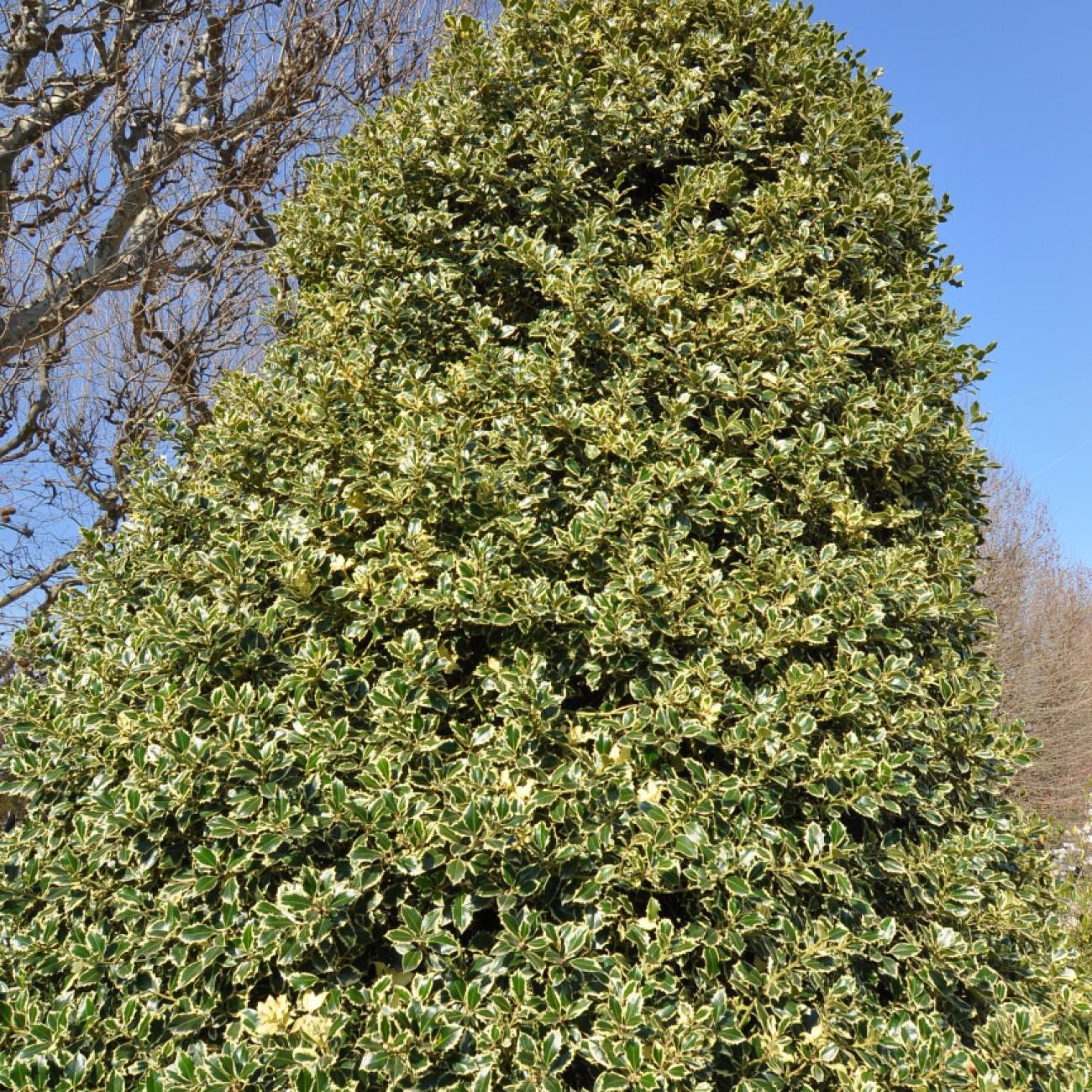
English Holly
Ilex aquifolium
Overview
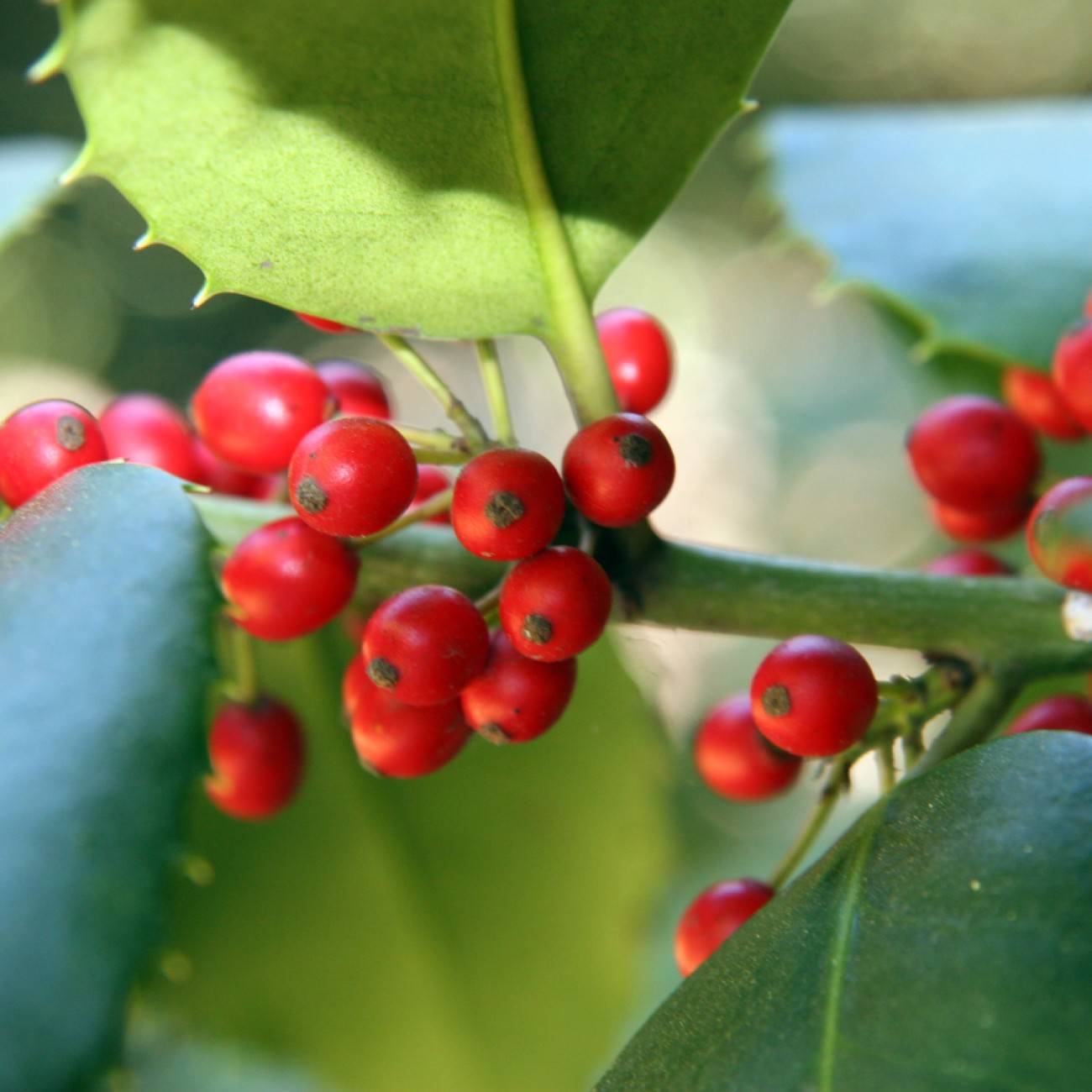
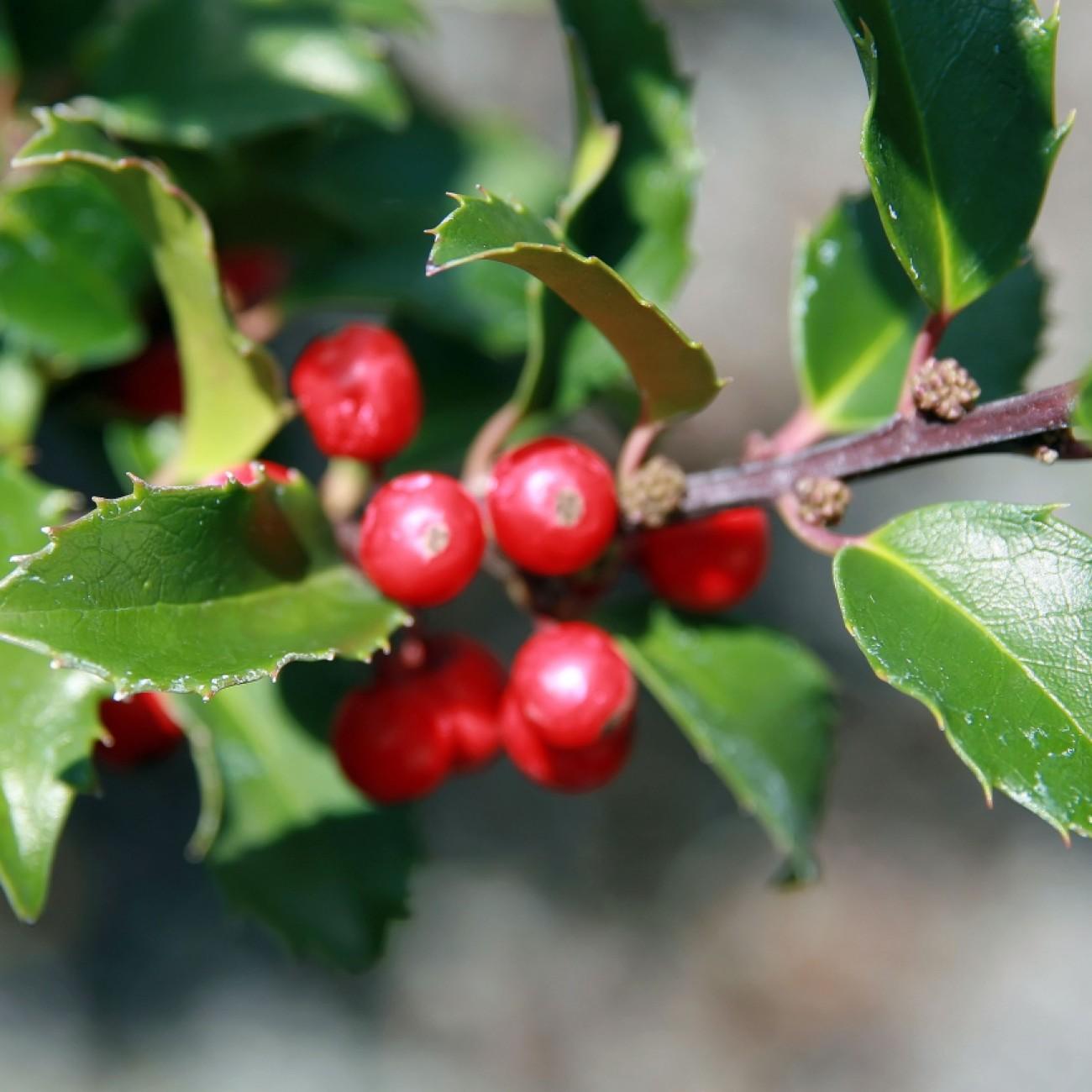
English holly is a slow-growing, long-lived evergreen best known for its distinctive dark green, spiky foliage and clusters of vibrant red berries that appear on female plants in fall and persist through winter. Dioecious by nature, it requires both a male and female plant within 30-40 feet to produce the iconic berry display. It is widely cultivated in temperate regions for ornamental use, wildlife habitat, and seasonal decorative arrangements.
Care Guide
Watering
Water young English holly plants regularly to keep soil consistently moist but not waterlogged for the first 2-3 years as they establish deep roots. Mature plants are highly drought-tolerant, only requiring supplemental watering during extended periods of extreme heat or dryness. Avoid overwatering, as soggy soil can lead to root rot and fungal issues.
Light
English holly thrives in full sun to partial shade, with full sun exposure encouraging the densest foliage growth and heaviest berry production on female plants. It can tolerate deep shade, though growth will be sparser and berry yields will be significantly reduced. Intense, scorching afternoon sun in extremely hot climates may cause leaf burn, so light afternoon shade is ideal in those regions.
Soil
This species adapts to a wide range of soil types, including loam, sand, and clay, as long as the substrate is well-draining. It prefers slightly acidic soil with a pH between 5.0 and 6.5, though it can tolerate neutral to mildly alkaline conditions as well. Amending heavy clay soil with organic matter such as compost or peat moss will improve drainage and support healthier root development.
Fertilizer
Feed English holly once annually in early spring before new growth emerges, using a balanced, slow-release evergreen fertilizer with an N-P-K ratio of 10-10-10 or similar. Avoid fertilizing late in the growing season, as this can stimulate tender new growth that will be vulnerable to damage from winter frost. Over-fertilization can lead to excessive leaf growth at the expense of berry production, so follow package dosage instructions carefully.
Temperature
English holly is cold-hardy in USDA zones 6 through 9, tolerating winter temperatures as low as -10°F (-23°C) once fully established. It can withstand occasional light frost without damage, though young plants may benefit from a layer of mulch around the base to insulate roots during their first few winters. Extreme heat above 90°F (32°C) combined with low humidity may cause leaf scorch, so supplemental watering during these periods is recommended.
Pruning
Prune English holly in late winter or early spring before new growth appears, removing any dead, damaged, or crossing branches to improve air circulation and maintain the desired shape. Light shearing can be done to create formal hedges, but avoid heavy pruning, as the plant is slow to regrow from old, bare wood. Always wear gloves when pruning, as the sharp spines on the leaves can cause skin irritation.
Propagation
The most reliable method of propagating English holly is through semi-hardwood cuttings taken in late summer or early fall, from current year growth that has partially hardened. Dip cut ends in rooting hormone, plant in a well-draining propagation mix, and keep under high humidity with indirect light until roots form, which typically takes 3-6 months. Growing from seed is possible but very slow, as seeds require 18-24 months of cold stratification to germinate, and seedlings will not retain the exact characteristics of the parent plant.
Humidity
English holly prefers moderate humidity levels between 40% and 60%, which is typical of its native temperate European habitat. It tolerates average indoor humidity well when grown as a container houseplant, though extremely dry air from heating vents may cause leaf browning at the edges. Misting the foliage occasionally during dry periods can help maintain adequate humidity for potted specimens.
Repotting
Potted English holly plants should be repotted every 2-3 years in early spring, moving to a container just 1-2 inches larger in diameter than the current pot to avoid excess soil moisture buildup. Use a well-draining acidic potting mix formulated for evergreens or acid-loving plants, and ensure the container has ample drainage holes. Mature container-grown specimens that have reached their desired size can be top-dressed with fresh compost annually instead of repotting to reduce root disturbance.
Uses & Symbolism
English holly is widely grown as an ornamental landscape plant, used for hedges, privacy screens, and specimen plantings, with its evergreen foliage providing year-round interest. Its cut branches with berries are a staple of holiday wreaths, garlands, and floral arrangements, associated with Christmas and winter celebrations in many cultures. The dense, thorny foliage provides excellent shelter and food for birds, which eat the berries during the winter months when other food sources are scarce.
Diseases & Pests
English holly is relatively pest-resistant, but common issues include holly leaf miner, which causes yellow or brown blotches on leaves, and scale insects that suck sap from stems and foliage, leading to stunted growth. Fungal diseases such as leaf spot, powdery mildew, and root rot can occur in poorly drained soil or conditions with high humidity and poor air circulation. Chlorosis, or yellowing of leaves, may occur in overly alkaline soil, which can be corrected by amending the soil with sulfur to lower pH.
Related plants
Other plants you might like if you grow English Holly.