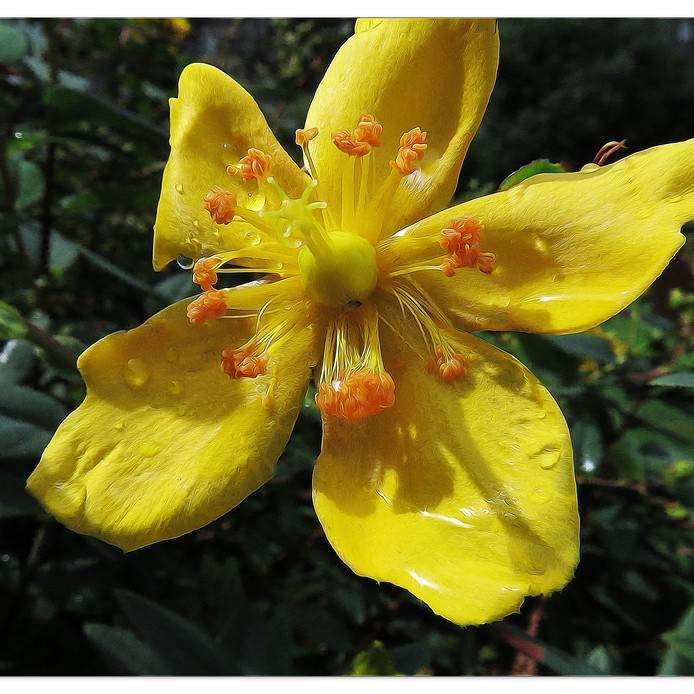
Common St. John's Wort
Hypericum perforatum
Overview
Common St. John's Wort is a hardy, clumping herb recognizable by its perforated leaves (visible when held up to light) and clusters of vivid yellow, five-petaled flowers that bloom around the feast of St. John the Baptist in late June, giving it its common name. It has been used for centuries in traditional herbal medicine to treat mild to moderate depression, skin wounds, and nerve pain, though its medicinal use requires consultation with a healthcare provider due to drug interactions. It naturalizes readily in meadows, roadsides, and disturbed soils, and is considered an invasive species in some parts of North America and Australia.
Care Guide
Watering
Water newly planted St. John's Wort regularly to keep soil evenly moist for the first growing season until roots are established. Mature plants are highly drought-tolerant, requiring only occasional watering during prolonged dry spells, as overwatering can lead to root rot. Avoid wetting the foliage when watering to reduce fungal disease risk.
Light
Grow in full sun for the most abundant flowering and compact, bushy growth; plants will tolerate partial shade, but may become leggy and produce fewer blooms. In regions with extremely hot, intense summer sun, provide light afternoon shade to prevent leaf scorch. Indoor specimens require a bright south-facing window or supplemental grow lights to thrive.
Soil
Adaptable to a wide range of soil types, including poor, rocky, or sandy soils, as long as the site has excellent drainage. It prefers a neutral to slightly alkaline soil pH between 6.0 and 8.0, but will tolerate mildly acidic conditions. Heavy, waterlogged clay soils should be amended with sand, gravel, or compost to improve drainage before planting.
Fertilizer
St. John's Wort thrives in low-nutrient soils and rarely requires fertilization; over-fertilization can lead to excessive, floppy foliage growth and reduced flowering. If growing in very poor, depleted soil, apply a thin layer of compost or a balanced, slow-release organic fertilizer once in early spring at half the recommended strength. Avoid high-nitrogen fertilizers entirely, as they promote leaf growth over flower and essential oil production.
Temperature
Performs best in temperate climates with average summer temperatures between 60–80°F (15–27°C), and is winter hardy in USDA zones 3 through 9. It tolerates light frost and cold winter temperatures, dying back to the ground in the coldest parts of its range and resprouting from the root system in spring. In regions with harsh winter conditions, apply a 2-inch layer of mulch around the base of the plant in late fall to protect roots from freeze-thaw cycles.
Pruning
Prune back the entire plant by one-third to one-half its height in early spring before new growth emerges to encourage a compact, bushy shape and abundant flowering. Deadhead spent blooms throughout the summer to prevent unwanted self-seeding, as the plant spreads readily via seed and can become aggressive in garden settings. Every 3–4 years, cut the entire plant back to within a few inches of the ground in late winter to rejuvenate older, woody specimens that have become sparse or leggy.
Propagation
Easily propagated from seed sown directly outdoors in fall or early spring, as seeds require a period of cold stratification to germinate; surface-sow seeds, as they need light to sprout, and germination occurs within 14–28 days. It can also be propagated via softwood cuttings taken in late spring or early summer: cut 4–6 inch stem tips, remove lower leaves, dip in rooting hormone, and plant in moist, well-draining potting mix, with roots forming in 3–4 weeks. Division of mature clumps can be done in early spring or fall, separating the root ball into smaller sections and replanting immediately at the same depth they were growing previously.
Humidity
Tolerates a wide range of humidity levels, thriving in the moderate humidity of its native temperate habitats, between 40–60% relative humidity. It does not require extra humidity, and high humidity combined with poor air circulation can increase the risk of fungal leaf spots and powdery mildew. If growing indoors, ensure the area around the plant has good air flow to prevent moisture buildup on foliage.
Repotting
If grown in containers, repot St. John's Wort every 2–3 years in early spring before new growth begins, moving it to a pot one size larger with fresh, well-draining potting mix amended with perlite or coarse sand to improve drainage. Ensure the container has multiple drainage holes to prevent standing water, as even short periods of waterlogged soil can kill the plant. Trim back any circling or rotted roots during repotting to encourage healthy new root growth, and water thoroughly after repotting to settle the soil.
Uses & Symbolism
Widely cultivated for its medicinal properties, with extracts of its flowers and leaves used in herbal supplements to treat mild to moderate depression, anxiety, and sleep disturbances, though use should always be cleared with a healthcare provider due to serious interactions with prescription medications. It is also planted as an ornamental in herb gardens, wildflower meadows, and pollinator gardens, as its bright yellow flowers attract bees, butterflies, and other beneficial insects. Historically, its flowers were used to create yellow and red dyes for textiles, and it was used in folk rituals to ward off evil spirits and protect against illness.
Diseases & Pests
Common pests include aphids, scale insects, and spider mites, which suck sap from foliage and can be controlled with insecticidal soap or neem oil sprays, or by introducing natural predators like ladybugs. Fungal diseases such as powdery mildew, leaf spot, and root rot can occur in conditions of high humidity, poor air circulation, or overwatering; these can be prevented by planting in well-draining soil, spacing plants to allow air flow, and avoiding overhead watering. In areas where it is considered invasive, St. John's Wort can outcompete native plants, and its foliage is toxic to grazing livestock, making control necessary in agricultural and natural wildland settings.
Related plants
Other plants you might like if you grow Common St. John's Wort.