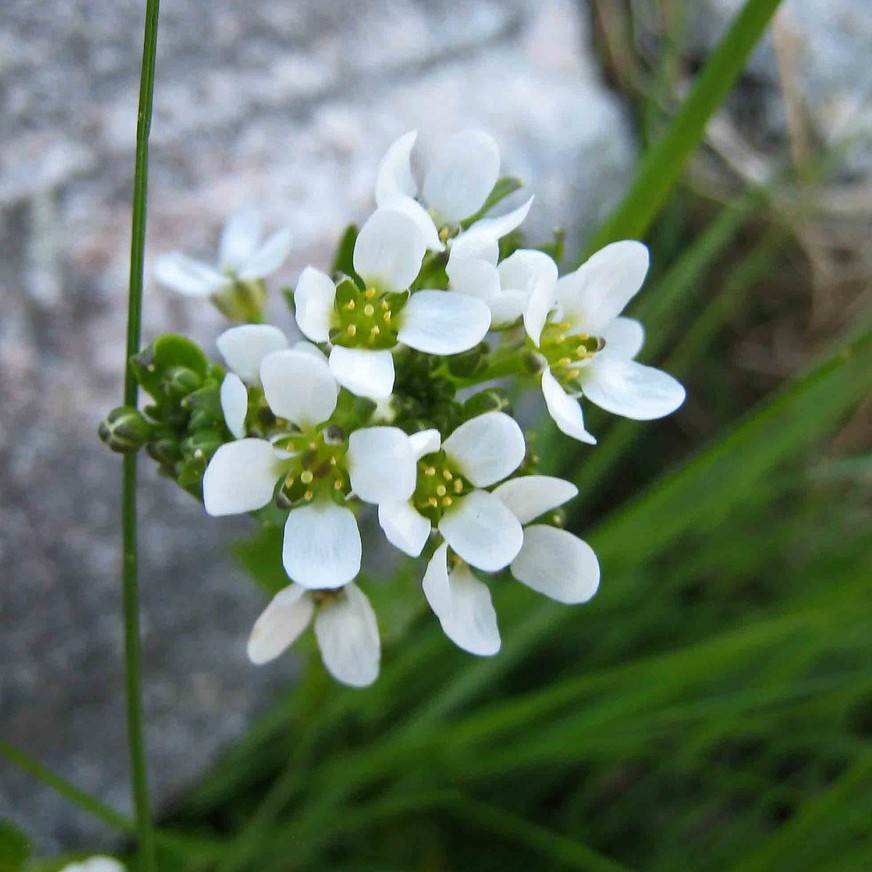
Alpine Bitter Cress
Cardamine bellidifolia
Overview
Alpine bitter cress is a hardy, compact perennial adapted to harsh, cold environments including rocky slopes, tundra, and mountain ledges above the treeline. It forms small rosettes of rounded or oval leaves, with slender stems bearing clusters of delicate four-petaled white flowers in the short summer growing season of its native range. As a member of the Brassicaceae family, it is closely related to other bitter cress species and shares the family’s characteristic peppery foliage flavor.
Care Guide
Watering
Alpine bitter cress requires consistently moist but sharply drained soil, as its native rocky habitats hold little excess water. Avoid overwatering or waterlogged conditions, which can quickly cause root rot in this shallow-rooted species; during active growth, water only when the top layer of soil feels slightly dry. In dormant winter periods, reduce watering significantly to prevent root damage in cold temperatures.
Light
This alpine species thrives in full sun in its native cool, high-elevation habitats, but may benefit from light afternoon shade in warmer lowland cultivation settings. It requires a minimum of 6 hours of direct sunlight daily to produce healthy foliage and abundant flowers; insufficient light will lead to leggy growth and reduced flowering. Avoid deep, full shade, as this will cause the plant to weaken and die over time.
Soil
Alpine bitter cress needs extremely well-drained, gritty, low-nutrient soil that mimics its native rocky alpine substrates. A mix of sandy loam, crushed rock, and a small amount of organic matter with a neutral to slightly acidic pH between 5.5 and 7.0 is ideal. Heavy, clay-rich soils that retain moisture are unsuitable for this species, as they will quickly lead to root rot.
Fertilizer
This species is adapted to low-nutrient alpine soils, so it requires very little fertilization to thrive. A single, dilute application of balanced, slow-release fertilizer in early spring, at half the recommended strength for general garden plants, is sufficient for the entire growing season. Over-fertilization will cause soft, leggy growth that is vulnerable to cold damage and pest infestations, so avoid frequent or high-dose feeding.
Temperature
Alpine bitter cress is extremely cold hardy, tolerating winter temperatures as low as -40°F (-40°C) when dormant, and thrives in cool summer temperatures between 50°F and 65°F (10°C and 18°C). It does not tolerate high heat or humidity, and will struggle or die if exposed to sustained temperatures above 75°F (24°C) for extended periods. In warmer climates, cultivation is only possible in alpine rock gardens, cold frames, or cool, unheated greenhouses that replicate its native cool conditions.
Pruning
Pruning requirements for alpine bitter cress are minimal; remove spent flower stems after blooming to encourage a tidy rosette form and prevent unwanted self-seeding if desired. Trim away any yellowed or damaged foliage in early spring to make room for new growth and improve air circulation around the plant. Avoid heavy pruning, as the small, shallow rosettes cannot recover from excessive removal of foliage.
Propagation
Alpine bitter cress is most commonly propagated from seed, which requires a period of cold stratification of 4 to 6 weeks at temperatures between 32°F and 40°F (0°C and 4°C) to break dormancy before sowing. It can also be propagated by careful division of established rosettes in early spring, taking care to keep the shallow root systems intact during separation and planting. Cuttings are rarely successful for this species, as the thin stems do not root readily under standard propagation conditions.
Humidity
This species prefers moderate to low humidity levels between 30% and 50%, matching the dry air of its native alpine and arctic habitats. High humidity above 60%, especially when combined with warm temperatures, increases the risk of fungal leaf spots and root rot, so ensure good air circulation around plants in cultivation. It does not require misting or supplemental humidity, and will suffer in overly moist, stagnant air conditions.
Repotting
If grown in containers or alpine troughs, repot alpine bitter cress every 2 to 3 years in early spring, before new growth emerges. Use a shallow container with ample drainage holes, and refresh the gritty soil mix each time to maintain good drainage and avoid nutrient buildup. Handle the shallow, fragile root system carefully during repotting to avoid damage that can lead to rot or transplant shock.
Uses & Symbolism
Alpine bitter cress is primarily used in alpine rock gardens, trough gardens, and cold climate native plant landscapes, where its compact form and delicate white flowers add subtle seasonal interest. The peppery, nutrient-dense leaves are edible, and are occasionally foraged raw in salads or cooked as a potherb by people in its native range, though its small size limits widespread culinary use. It also provides a minor early-season nectar source for native alpine pollinators including small bees and butterflies.
Diseases & Pests
Alpine bitter cress is relatively pest and disease free when grown in its preferred cool, well-drained conditions, but is susceptible to root rot caused by overwatering or poorly drained soil. Fungal leaf spots and downy mildew can occur in high humidity or stagnant air conditions, especially when foliage remains wet for extended periods. Aphids and flea beetles may occasionally feed on the foliage, though infestations are rarely severe in cool, well-ventilated growing settings.
Related plants
Other plants you might like if you grow Alpine Bitter Cress.