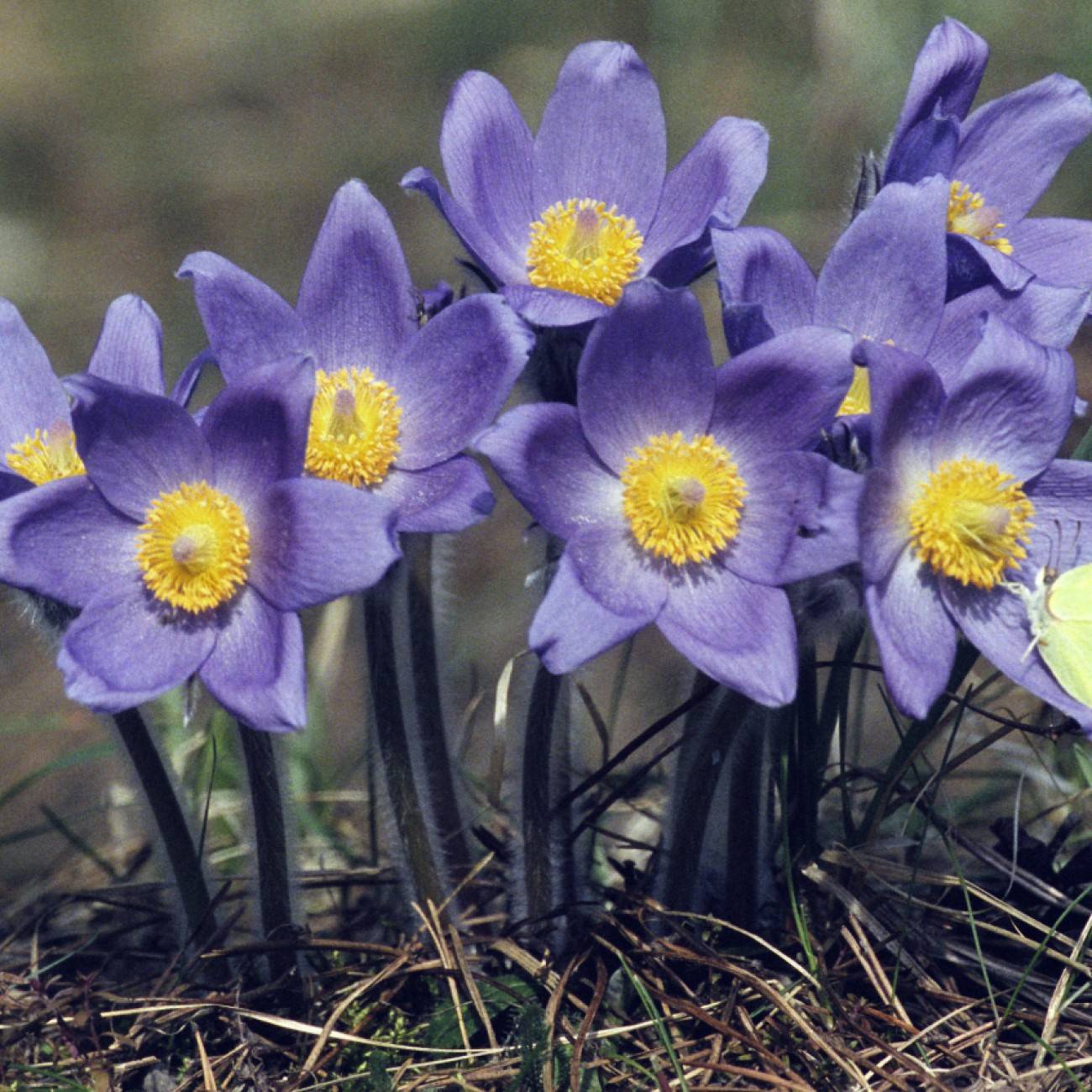
Eastern Pasqueflower
Pulsatilla patens
Overview
Eastern pasqueflower is one of the first wildflowers to emerge in late winter or early spring, often pushing through melting snow to reveal its distinctive cup-shaped, purple or blue-purple blooms covered in soft, silvery hairs. After flowering, it produces eye-catching, feathery seed heads that persist for weeks, adding textural interest to garden beds. This species is highly adapted to cold, temperate climates and is a valuable early nectar source for native bees and other pollinators emerging after winter dormancy.
Care Guide
Watering
Eastern pasqueflower prefers evenly moist, well-drained soil during its active spring growth period, but requires dry conditions during its summer dormancy when foliage dies back. Avoid overwatering, especially in summer, as soggy soil will quickly cause root rot and kill the plant. In garden settings, reduce or cease watering once foliage yellows in late spring, and avoid planting in areas that receive regular summer irrigation.
Light
This species thrives in full sun to partial shade, with at least 6 hours of direct sunlight daily for optimal flowering. In warmer southern portions of its range, light afternoon shade helps protect it from excessive heat that can trigger early dormancy. Too much shade will reduce bloom production and lead to lanky, weak foliage growth.
Soil
Eastern pasqueflower requires sharply drained, gritty, low-fertility soil with a neutral to slightly alkaline pH to thrive. It is well-adapted to sandy, loamy, or rocky soils typical of prairies and dry open woodlands, and will not tolerate heavy clay or poorly draining substrates. Amending planting sites with coarse sand or gravel can improve drainage for garden-grown specimens.
Fertilizer
This wildflower is adapted to low-nutrient soils and requires very little fertilization, if any, to thrive. Excess nitrogen or rich organic fertilizers will promote soft, lush foliage that is prone to rot and reduces flowering. A light topdressing of crushed limestone can be applied annually in fall to maintain alkaline pH for plants growing in naturally acidic soils.
Temperature
Eastern pasqueflower is extremely cold-hardy, surviving winter temperatures as low as -40°F (-40°C) in USDA hardiness zones 3 through 8. It requires a period of cold winter stratification to germinate and break dormancy, making it unsuitable for warm, frost-free climates. Temperatures above 85°F (29°C) in summer will trigger dormancy, which is a normal part of its growth cycle.
Pruning
Pruning requirements are minimal for eastern pasqueflower; spent flower stalks can be trimmed back after blooming if you do not wish to save the decorative seed heads. Once foliage yellows and dies back in early summer, cut back dead growth to ground level to keep planting areas tidy and reduce the risk of fungal disease. Avoid pruning green, actively growing foliage, as this will reduce the plant’s ability to store energy for the following year’s blooms.
Propagation
Eastern pasqueflower is most commonly propagated from seed, which requires 6 to 8 weeks of cold, moist stratification to germinate successfully. Sow fresh seed outdoors in fall for natural stratification, or refrigerate stratified seed for 2 months before sowing in early spring. Division of established clumps is possible but not recommended, as the plant has a deep taproot that is easily damaged during transplanting, leading to high mortality.
Humidity
This species prefers low to moderate humidity levels, typical of its native prairie and open woodland habitats. High humidity, especially combined with warm summer temperatures, increases the risk of fungal leaf spots and root rot. Ensure plants have good air circulation around their foliage to reduce moisture buildup and prevent disease issues.
Repotting
Eastern pasqueflower has a long, fragile taproot and does not tolerate disturbance well, so repotting should be avoided unless absolutely necessary. If grown in containers, use a deep pot to accommodate the taproot, and only repot when the plant is fully dormant in late fall or early winter, taking great care not to damage the root system. Use a gritty, well-drained potting mix with minimal organic matter for container-grown specimens to prevent overwatering issues.
Uses & Symbolism
Eastern pasqueflower is a popular addition to native wildflower gardens, rock gardens, and prairie restorations, where its early spring blooms provide critical nectar for emerging native pollinators. Historically, Indigenous peoples used small, carefully prepared doses of the plant for medicinal purposes to treat headaches, rheumatism, and respiratory issues, though its toxicity makes unregulated use dangerous. Its decorative feathery seed heads are also valued for dried floral arrangements, adding unique texture to bouquets.
Diseases & Pests
Eastern pasqueflower is relatively pest and disease resistant when grown in its preferred well-drained soil and full sun conditions. Overwatering and poor drainage are the most common causes of issues, leading to root rot and fungal leaf spots, especially in warm, humid summer weather. Slugs and snails may occasionally feed on young, tender foliage in spring, but damage is rarely severe and can be mitigated by removing surrounding debris that provides shelter for the pests.
Related plants
Other plants you might like if you grow Eastern Pasqueflower.