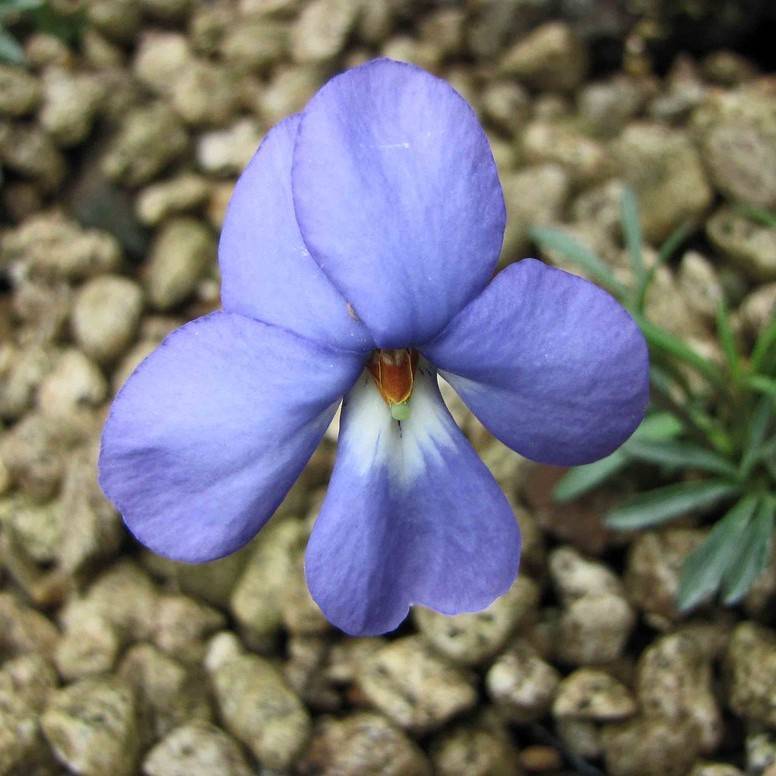
Bird's Foot Violet
Viola pedata
Overview
Bird's Foot Violet gets its common name from its deeply divided, narrow leaf segments that resemble the toes of a bird's foot. It is a prairie and open woodland native that thrives in well-drained, nutrient-poor soils, unlike many more moisture-loving violet species. Its showy, upward-facing flowers appear from mid to late spring, often with darker purple upper petals and paler lavender lower petals, attracting early pollinators such as bees and butterflies, including several species of fritillary butterflies that use it as a larval host plant.
Care Guide
Watering
Water Bird's Foot Violet regularly during its first growing season to establish a deep root system, keeping soil evenly moist but never waterlogged. Once established, it is highly drought-tolerant, requiring only occasional watering during extended dry periods, as overwatering will quickly lead to root rot. Avoid overhead watering to prevent foliar fungal issues, directing water at the base of the plant instead.
Light
This species performs best in full sun to partial shade, with at least 4 hours of direct sunlight daily to encourage abundant flowering. In regions with very hot, intense summer sun, provide light afternoon shade to prevent leaf scorch and extend the plant's active growth period. Too much deep shade will result in sparse foliage and few to no blooms.
Soil
Bird's Foot Violet requires sharply drained, sandy or gravelly, slightly acidic to neutral soil with low to moderate nutrient content. It will not tolerate heavy, compacted clay soils or soils rich in organic matter that retain moisture for long periods. Amend heavy planting sites with coarse sand or fine gravel to improve drainage prior to planting, and avoid adding compost or manure that will raise soil moisture retention.
Fertilizer
This wildflower is adapted to low-nutrient soils and rarely requires fertilization, as excess nutrients will encourage lush, weak foliage and reduce flowering. If growing in a container, apply a diluted, balanced all-purpose fertilizer once at the start of the growing season, at half the manufacturer's recommended strength. Avoid high-nitrogen fertilizers entirely, as they will promote leaf growth over bloom production.
Temperature
Bird's Foot Violet is cold-hardy in USDA zones 3 through 8, tolerating winter temperatures as low as -40°F (-40°C) without protection. It prefers cool spring and fall growing conditions, and will often go dormant during extended periods of summer heat above 90°F (32°C), re-emerging when temperatures cool in early fall. Mulch lightly with gravel or pine needles in winter to protect roots from frost heave in colder regions.
Pruning
Pruning is minimal for this low-growing species; simply snip off spent flower stems after blooming to keep the planting tidy, if desired. Remove any yellowed or damaged leaves throughout the growing season to improve air circulation around the foliage. If the plant goes dormant in mid-summer, cut back dead foliage to the ground to make space for new fall growth.
Propagation
Bird's Foot Violet is most commonly propagated from seed, which requires a 60-day period of cold stratification to germinate successfully; sow seeds outdoors in fall or refrigerate stratified seeds before sowing in early spring. It can also be propagated by careful root division in early fall, though it has a deep taproot that does not tolerate disturbance well, so division has a lower success rate than seed propagation. Plants will also self-seed gently in ideal growing conditions, producing small colonies over time.
Humidity
This species prefers average to low ambient humidity levels, typical of its native prairie and open woodland habitats. It does not tolerate high, constant humidity, which makes it prone to fungal leaf spot and root rot if combined with moist soil. Ensure good air circulation around plants, especially in humid climates, to reduce disease risk.
Repotting
If grown in containers, repot Bird's Foot Violet every 2 to 3 years in early spring, before new growth emerges. Use a fast-draining cactus or succulent potting mix amended with extra coarse sand to mimic its native sandy soil, and choose a pot with ample drainage holes to prevent standing water. Take care not to damage the deep taproot during repotting, as injury to the taproot often causes the plant to decline.
Uses & Symbolism
Bird's Foot Violet is a popular choice for native wildflower gardens, rock gardens, xeriscapes, and pollinator plantings, where its low, spreading habit provides attractive ground cover and early-season nectar for bees and butterflies. It is also a host plant for the larvae of several fritillary butterfly species, supporting local ecosystem biodiversity. Its unique foliage and delicate blooms make it a charming addition to alpine containers and trough gardens for gardeners with limited space.
Diseases & Pests
The most common issues affecting Bird's Foot Violet are root rot and fungal leaf spots, both caused by overwatering, poorly drained soil, or excessive humidity. Aphids and spider mites may occasionally infest foliage, especially on plants grown in overly shaded or crowded conditions; these can be controlled with insecticidal soap or a strong spray of water, provided plants are dried quickly afterward to prevent fungal growth. Slugs and snails may feed on young foliage in moist, shaded sites, so use copper barriers or organic bait to protect plants if damage is observed.
Guides that mention Bird's Foot Violet
Related plants
Other plants you might like if you grow Bird's Foot Violet.