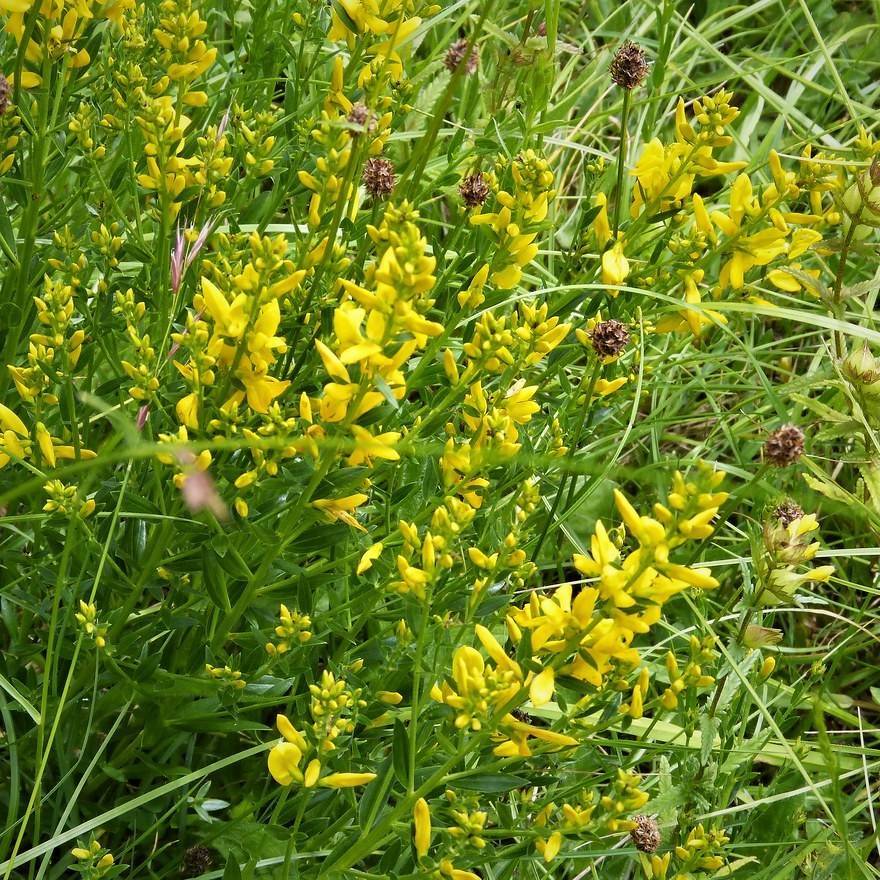
Dyer's Broom
Genista tinctoria
Overview
Dyer's broom is a deciduous, multi-stemmed shrub with slender, green, almost leafless branches that give it a wispy, airy appearance. It produces dense spikes of bright yellow, pea-like blooms from early to mid-summer, attracting pollinators including bees and butterflies. For centuries, it has been a core natural dyestuff in Europe, with its foliage and stems yielding a fast yellow hue when processed with mordants. It thrives in poor, dry soils where many other ornamental shrubs struggle to survive.
Care Guide
Watering
Dyer's broom is highly drought-tolerant once established, requiring only occasional deep watering during extended periods of extreme heat or dryness. Overwatering, especially in heavy, poorly draining soil, will quickly lead to root rot and plant death, so allow the soil to dry out completely between waterings. Newly planted specimens need regular, light watering for the first 2 to 3 months to help them develop a strong root system.
Light
This shrub requires full, direct sunlight for a minimum of 6 hours per day to produce abundant blooms and maintain a compact, healthy growth habit. It will not tolerate partial or full shade, which causes leggy, sparse growth, reduced flowering, and increased susceptibility to pest infestations. Plant it in an open, unobstructed location with no overhead shading from trees or buildings for best results.
Soil
Dyer's broom prefers sharply draining, sandy or gravelly soil with a neutral to slightly alkaline pH, and it adapts well to poor, low-nutrient soils where most other plants fail. It cannot survive in heavy clay or waterlogged soils, as these conditions trap moisture around the roots and cause rapid rot. If planting in heavy soil, amend the planting hole generously with coarse sand or grit to improve drainage before placing the shrub.
Fertilizer
This plant is adapted to low-nutrient conditions, so it rarely requires supplemental fertilization, and over-fertilizing will lead to soft, leggy growth and reduced flowering. If grown in extremely poor soil, a single application of balanced, slow-release fertilizer in early spring, applied at half the recommended strength, is sufficient to support healthy growth. Avoid using high-nitrogen fertilizers, as these promote excessive foliage growth at the expense of blooms and dye production.
Temperature
Dyer's broom is cold-hardy in USDA zones 3 through 8, tolerating winter temperatures as low as -40°F (-40°C) without extra protection. It thrives in warm summer temperatures between 65°F and 85°F (18°C and 29°C), and it can withstand short periods of heat above 90°F (32°C) if planted in well-drained soil. In regions with extremely hot, humid summers, ensure the plant has good air circulation to reduce the risk of fungal disease.
Pruning
Prune dyer's broom immediately after flowering finishes in late summer to maintain its compact shape and encourage strong new growth for the following year's blooms. Cut back the previous year's flowering stems by roughly one-third to one-half, avoiding cutting into old, woody growth, which the plant may struggle to resprout from. Remove any dead, damaged, or crossing stems at the base each spring to improve air flow and reduce disease risk.
Propagation
Dyer's broom is most commonly propagated from seed, which should be scarified (nicked or soaked in hot water for 24 hours) before sowing to break its hard outer coat and improve germination rates. Semi-ripe cuttings taken from new, non-flowering growth in mid to late summer can also be rooted successfully, though they may take 2 to 3 months to develop a strong root system. Division is not recommended, as the plant has a deep, taproot system that is easily damaged during the process.
Humidity
This shrub prefers low to moderate humidity levels, and it is well-adapted to dry, arid conditions. High humidity, especially combined with poor air circulation, can increase the risk of fungal leaf spots and root rot, so avoid planting it in overly damp, enclosed spaces. It does not require any supplemental misting or humidity adjustments when grown in typical outdoor conditions.
Repotting
Dyer's broom is rarely grown in containers long-term, as its deep taproot requires ample space to grow and it does not tolerate root disturbance well. If grown in a pot, repot only when the plant becomes severely root-bound, using a deep container with plenty of drainage holes and a sandy, well-draining potting mix. Avoid disturbing the root ball as much as possible during repotting to minimize transplant shock.
Uses & Symbolism
Historically, dyer's broom was one of the most widely used natural dyestuffs in Europe, with its stems and foliage producing a bright, colorfast yellow dye used for textiles, clothing, and even illuminated manuscript pigments. It is often planted in pollinator gardens, rock gardens, and xeriscapes for its bright summer blooms and ability to thrive in poor, dry soils. It is also occasionally used for erosion control on slopes and disturbed sites, as its deep root system stabilizes soil effectively.
Diseases & Pests
Dyer's broom is relatively pest and disease resistant when grown in optimal conditions, but it can be affected by root rot in poorly draining, waterlogged soil, which is usually fatal if not addressed quickly. Fungal leaf spots and powdery mildew may occur in high humidity or if the plant is grown in shade with poor air circulation, which can be treated with fungicidal sprays and by improving air flow around the shrub. Aphids and spider mites may occasionally infest new growth, which can be controlled with insecticidal soap or horticultural oil sprays.
Related plants
Other plants you might like if you grow Dyer's Broom.
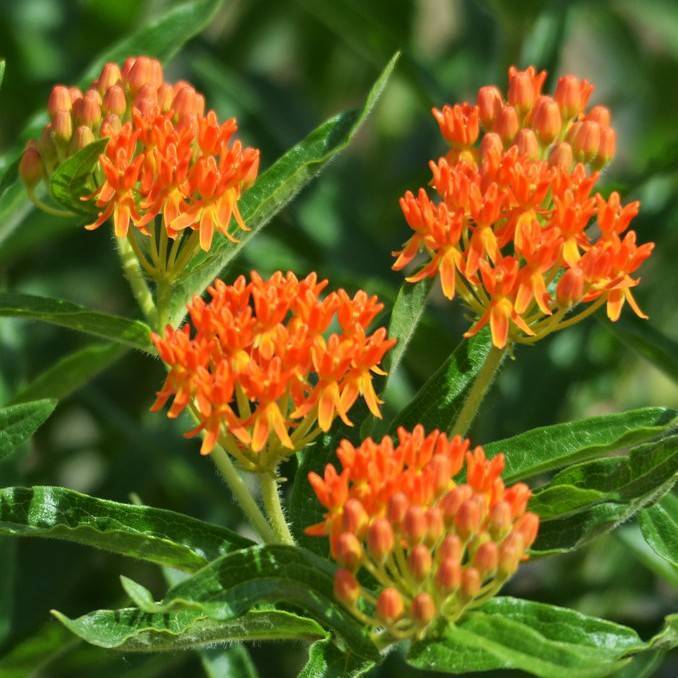
Butterfly Milkweed
Asclepias tuberosa
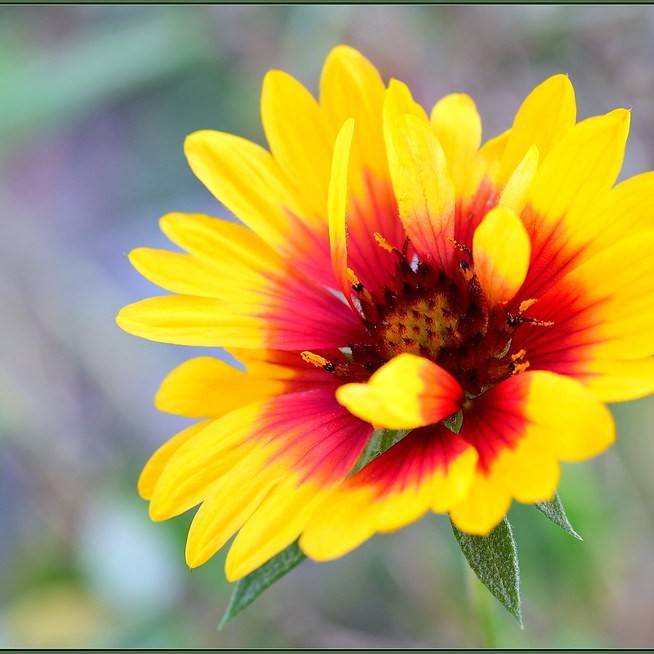
Blanket Flower
Gaillardia aristata
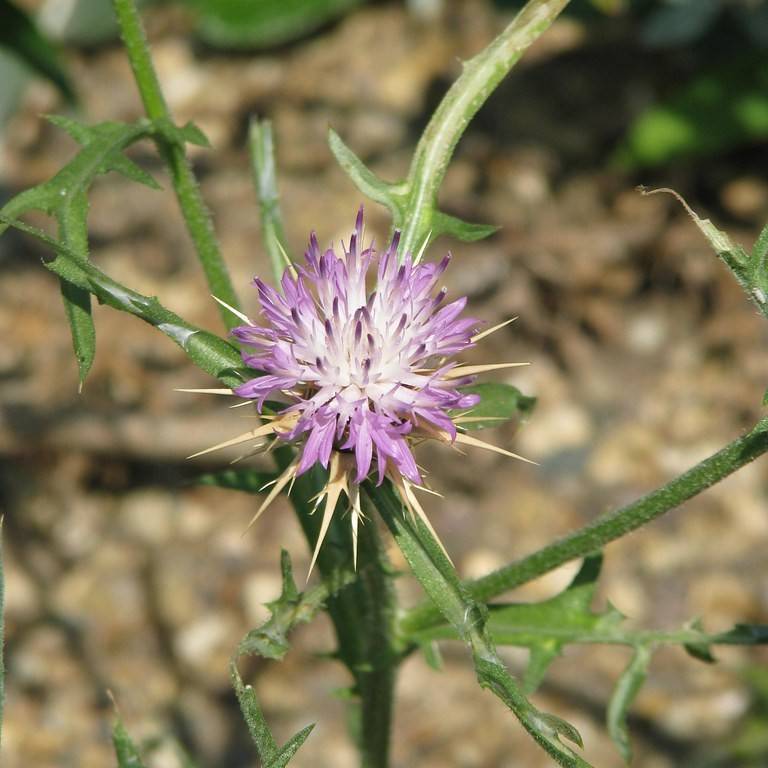
Big Head Purple Star Thistle
Centaurea macrocephala
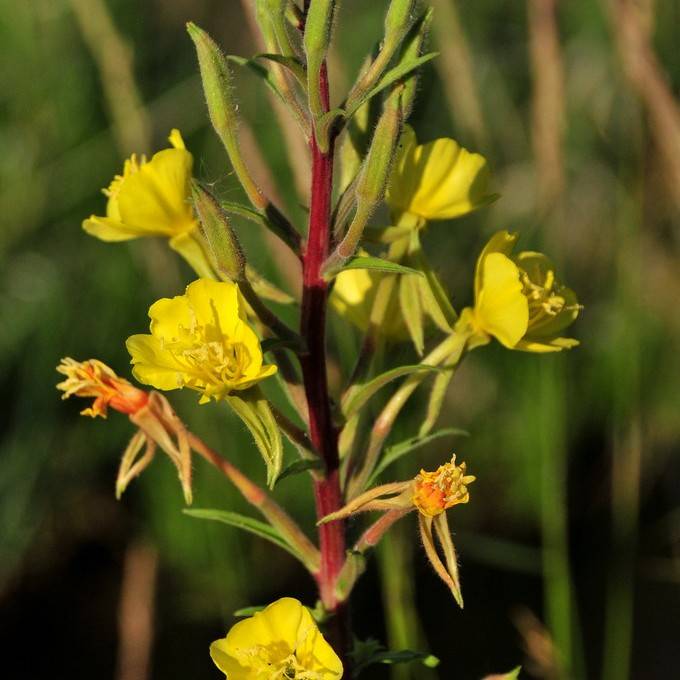
Dwarf Evening Primrose
Oenothera macrocarpa subsp. incana
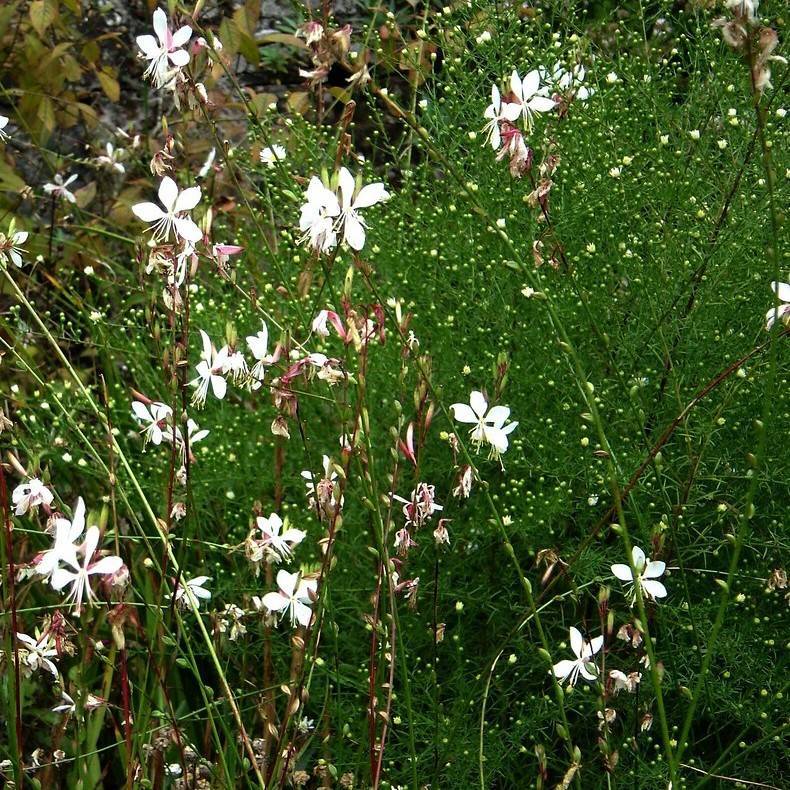
Gaura
Oenothera lindheimeri
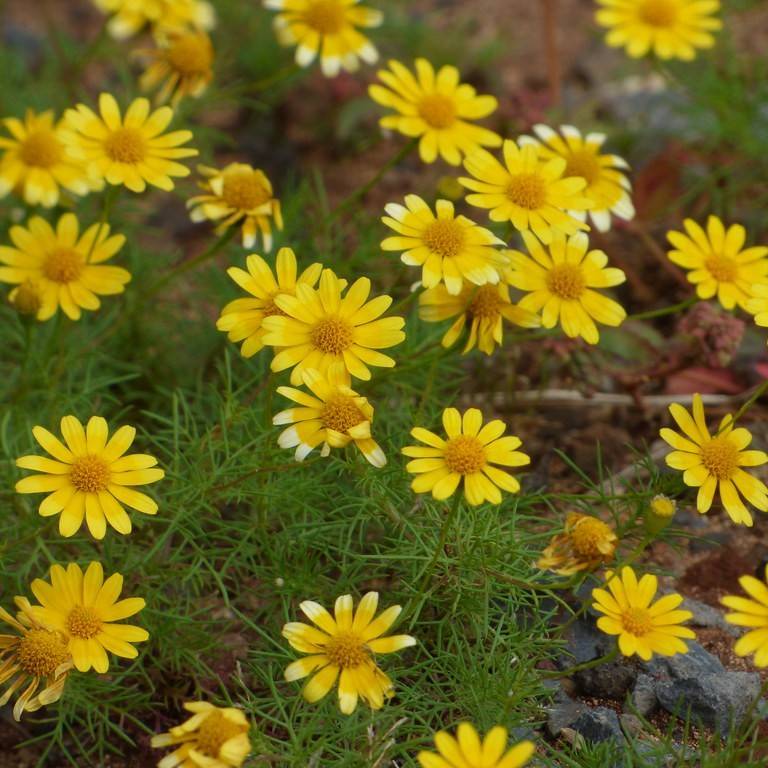
Dahlberg Daisy
Thymophylla tenuiloba
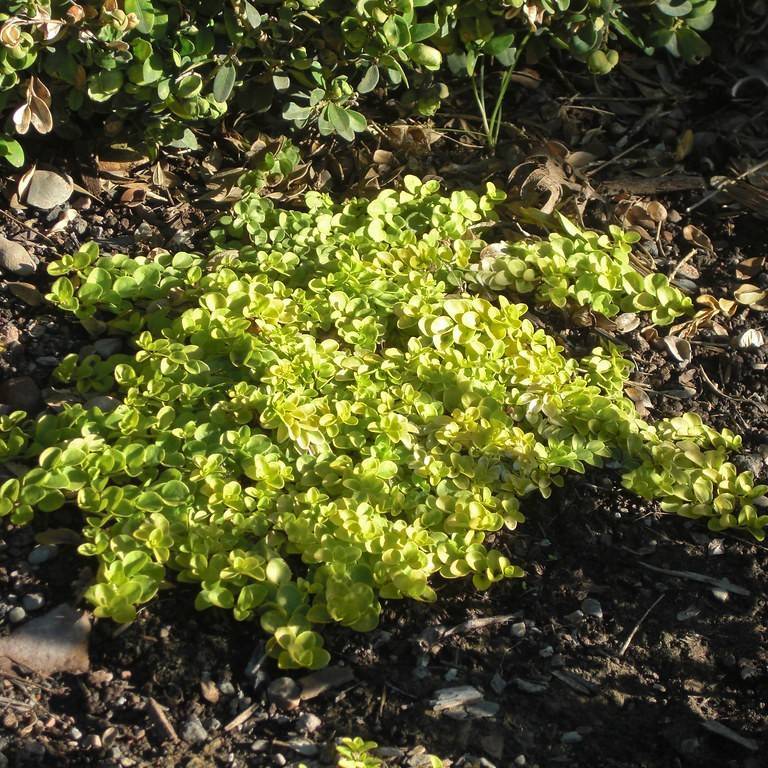
Creeping Speedwell
Veronica filiformis
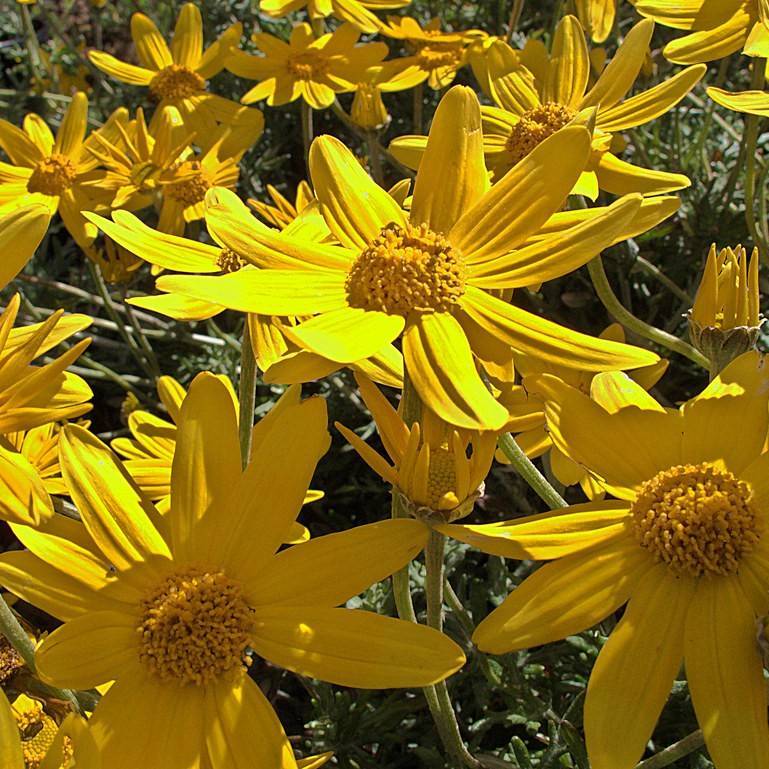
Common Woolly Sunflower
Eriophyllum lanatum