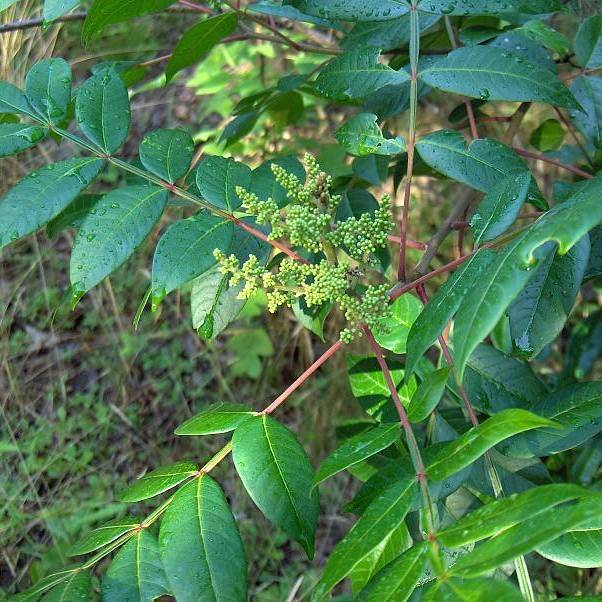
Dwarf Sumac
Rhus copallinum var. latifolia
Overview
Dwarf sumac is a compact cultivar of winged sumac, distinguished by its low, spreading growth habit that makes it far smaller than the standard 20-foot species. It bears pinnately compound leaves with distinctive winged midribs, which shift from deep glossy green in summer to vivid shades of scarlet, orange, and purple in autumn. Female plants produce dense clusters of fuzzy, deep red drupes in late summer that persist through winter, providing a valuable food source for birds and small mammals. It thrives in poor, dry soils where many other shrubs struggle, making it a popular choice for low-maintenance native landscaping.
Care Guide
Watering
Dwarf sumac is highly drought-tolerant once established, requiring only occasional deep watering during extended periods of no rainfall, usually no more than once every 2-3 weeks in peak summer. Overwatering, especially in poorly drained soil, is the most common cause of health issues, so allow the top several inches of soil to dry out completely between waterings. Newly planted specimens need regular, light watering for the first 1-2 growing seasons to help them develop a strong root system.
Light
This shrub grows best in full sun, receiving a minimum of 6 hours of direct, unfiltered sunlight per day, which encourages the most vibrant fall foliage color and maximum berry production. It can tolerate partial shade, though growth will be more sparse, fall color will be less intense, and it may produce far fewer fruit clusters. Full shade conditions will cause stunted growth and increased susceptibility to fungal diseases.
Soil
Dwarf sumac adapts to a very wide range of soil types, including sandy, rocky, clay, and poor, nutrient-depleted soils that are unsuitable for most ornamental shrubs. It requires well-drained soil above all else, and will not survive in areas with standing water or consistently saturated root zones. It tolerates acidic to slightly alkaline pH levels, from 4.5 to 7.5, and does not need amended or enriched soil to thrive.
Fertilizer
This shrub rarely requires fertilization, as it is adapted to low-nutrient soils and excessive nutrients can cause overly leggy, weak growth that is prone to breakage. If growth is extremely stunted or foliage appears pale, apply a balanced, slow-release 10-10-10 fertilizer once in early spring, at half the manufacturer's recommended rate to avoid overfeeding. Avoid fertilizing after mid-summer, as this can stimulate new growth that will be damaged by early fall frost.
Temperature
Dwarf sumac is extremely cold-hardy, suitable for USDA hardiness zones 4 through 9, tolerating winter temperatures as low as -30°F (-34°C) without damage. It thrives in hot, humid summer conditions common across its native range, and is highly resistant to heat stress once established. It can survive short periods of unseasonable cold in spring, though new growth may be damaged by late frost, which the plant will replace quickly as temperatures warm.
Pruning
Prune dwarf sumac in late winter or early spring before new growth emerges, to remove any dead, damaged, or crossing branches, and to maintain its desired compact shape. This shrub spreads via underground rhizomes, so you may need to cut back unwanted suckers periodically to prevent it from spreading beyond its intended planting area. Avoid heavy pruning of more than one-third of the plant's total growth in a single season, as this can stress the shrub and reduce berry production for that year.
Propagation
The easiest method of propagation is via root cuttings taken in late winter while the plant is dormant: dig up 2-3 inch sections of healthy rhizome, plant them horizontally in well-drained potting mix, and keep them lightly moist until new shoots emerge in spring. It can also be grown from seed collected from ripe berries in fall, though seeds require 3 months of cold stratification to break dormancy, and germination rates are often low. Suckers that emerge around the base of mature plants can be dug up with a section of attached root and replanted directly in their new location in early spring for a near-100% success rate.
Humidity
Dwarf sumac tolerates a wide range of humidity levels, from the dry, arid conditions of the southern Great Plains to the high humidity of the southeastern United States, with no adverse effects. It has no specific humidity requirements, making it adaptable to almost any climate within its hardiness range. Excessively high humidity combined with poor air circulation and overly wet soil can increase the risk of foliar fungal diseases, so space plants appropriately to allow for air flow.
Repotting
Dwarf sumac is rarely grown in containers, as its spreading rhizomatous root system prefers room to spread in the ground, and it is best suited for landscape planting. If grown in a large container for a short period, repot every 2-3 years in early spring, moving to a pot just 2-3 inches larger than the current one, using a well-drained, sandy potting mix. Ensure containers have ample drainage holes, and never let the pot sit in a saucer of standing water to avoid root rot.
Uses & Symbolism
Dwarf sumac is widely used in native pollinator gardens, erosion control plantings, and xeriscapes, as its deep root system stabilizes soil on slopes and its flowers provide nectar for native bees and butterflies. The persistent red berries are edible, with a tart, lemony flavor, and can be steeped to make a cold beverage similar to lemonade, a traditional use among Indigenous peoples of North America. Its compact size and vivid fall color make it a popular low-maintenance ornamental shrub for small yards, roadside plantings, and naturalized areas.
Diseases & Pests
Dwarf sumac is largely pest and disease resistant, with no serious common issues, though it may occasionally be affected by aphids, scale insects, or spider mites, which can be treated with insecticidal soap or neem oil. Fungal diseases such as powdery mildew, leaf spot, or rust may occur in areas with high humidity, poor air circulation, or consistent wet foliage, and can be managed by improving air flow around plants and avoiding overhead watering. Verticillium wilt is a rare but serious fungal disease that can affect stressed plants, and there is no cure, so infected specimens should be removed and disposed of to prevent spread to other susceptible plants.
Related plants
Other plants you might like if you grow Dwarf Sumac.