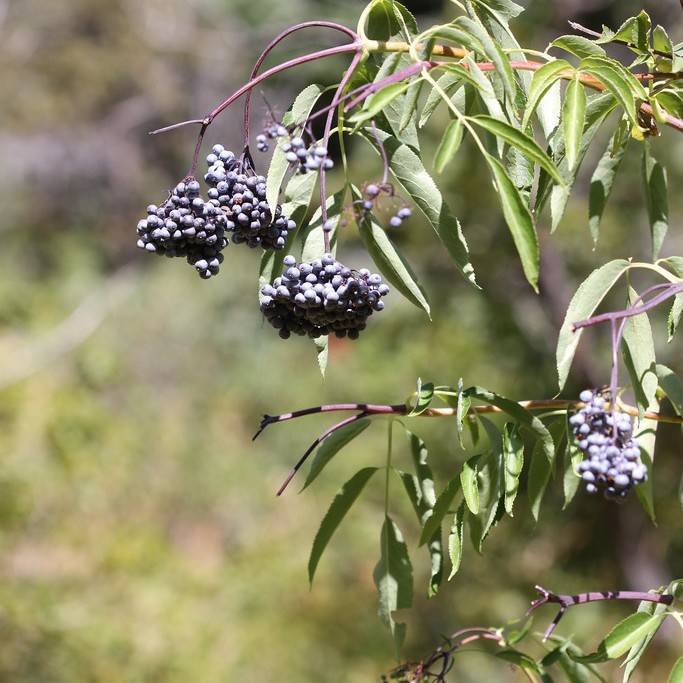
Blue Elderberry
Sambucus nigra subsp. caerulea
Overview
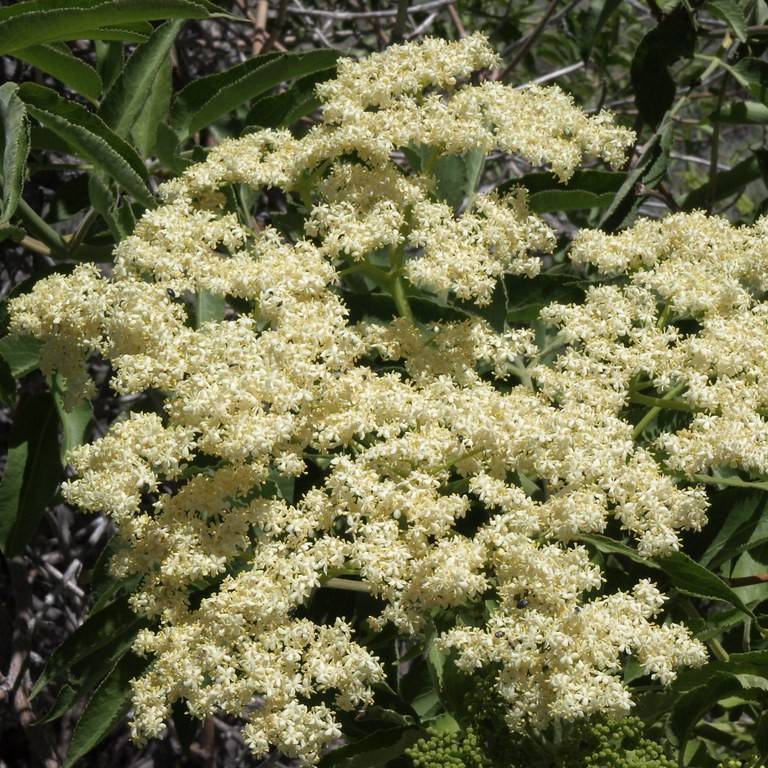
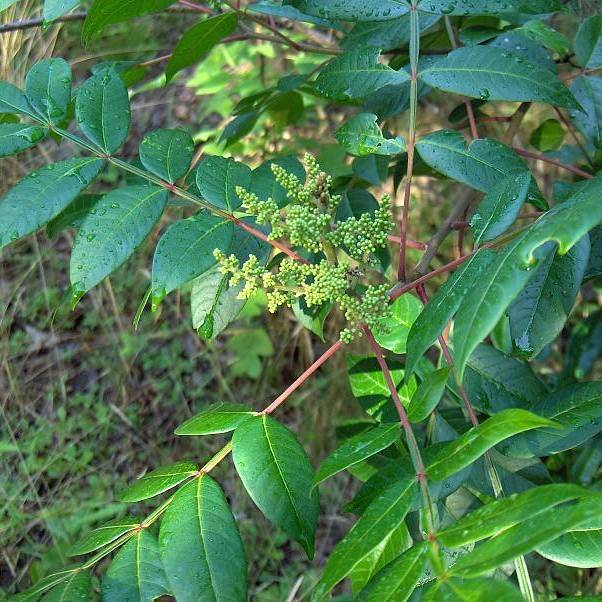
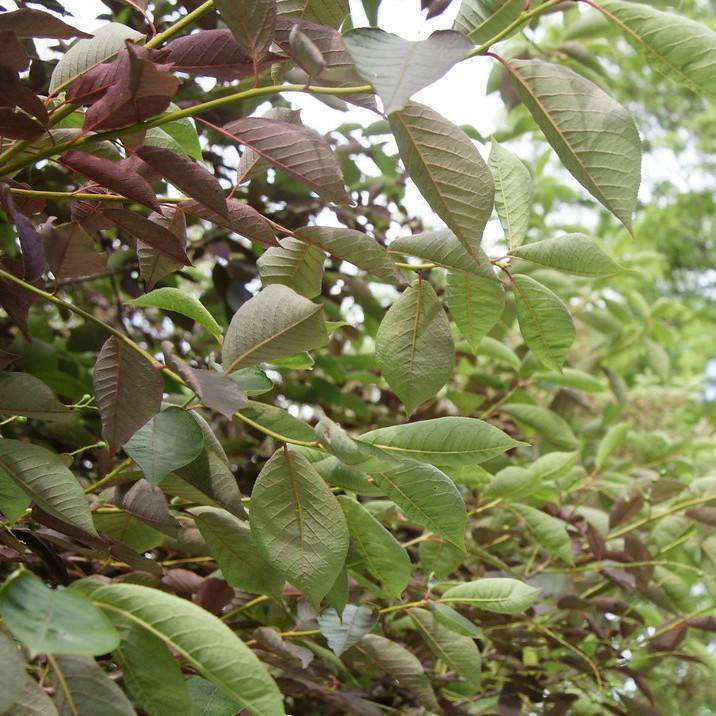
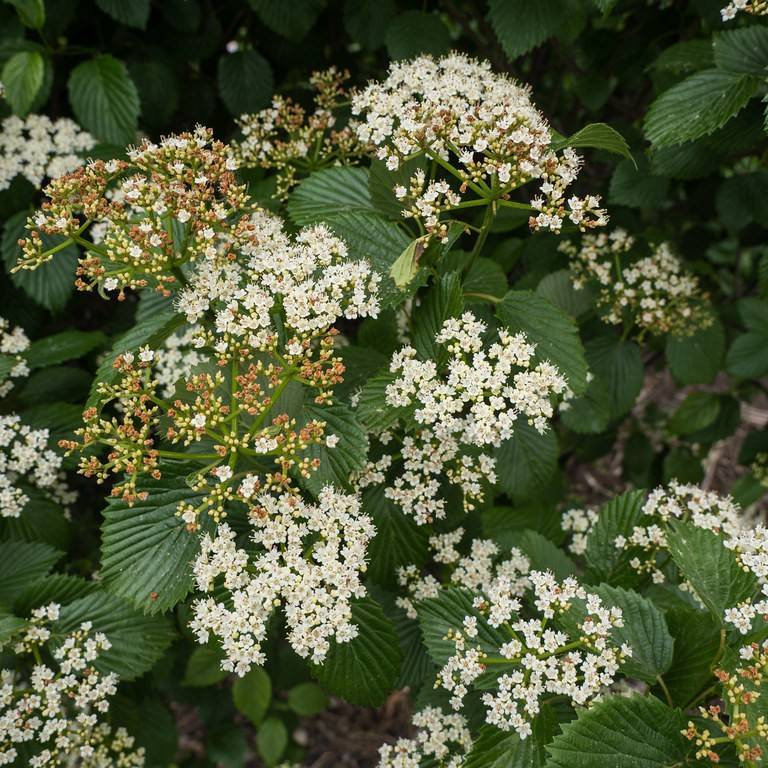
Blue Elderberry is a fast-growing deciduous shrub or small tree native to riparian zones, forest edges, and open slopes across western North America. It produces flat-topped clusters of creamy white, fragrant flowers in late spring, followed by powdery blue, berry-like drupes that ripen in late summer to early fall. The plant has a multi-stemmed, spreading habit with compound, serrated green leaves that turn pale yellow in autumn before dropping. It is widely valued for its ecological benefits, edible fruit, and ornamental appeal in native and wildlife gardens.
Care Guide
Watering
Blue Elderberry is drought-tolerant once established, but requires regular, deep watering during its first 2-3 growing seasons to develop a strong root system. Water mature plants every 2-4 weeks during extended dry periods, avoiding overwatering that can lead to root rot. Reduce watering frequency in fall and winter when the plant is dormant.
Light
This shrub thrives in full sun, which encourages maximum flower and fruit production, though it can tolerate light partial shade. Avoid planting it in deep shade, as this will lead to sparse growth, reduced blooming, and minimal fruit set. In hotter, arid regions, it can benefit from light afternoon shade to prevent leaf scorch.
Soil
Blue Elderberry adapts to a wide range of soil types, including sandy, loam, clay, and rocky soils, as long as the site has good drainage. It tolerates mildly acidic to mildly alkaline pH levels between 5.5 and 7.5, and can even handle occasional seasonal flooding in riparian settings. Amending heavy clay soils with organic matter before planting will improve drainage and support healthier root growth.
Fertilizer
Blue Elderberry typically does not require regular fertilization, especially when planted in nutrient-rich garden soil. If growth is slow or leaves appear pale, apply a balanced, slow-release 10-10-10 fertilizer once per year in early spring, before new growth emerges. Avoid over-fertilizing, as this can lead to excessive leafy growth at the expense of flower and fruit production.
Temperature
This plant is hardy in USDA zones 3 through 10, tolerating winter temperatures as low as -40°F (-40°C) and summer heat up to 110°F (43°C) when established. It requires approximately 200-800 chill hours below 45°F (7°C) during winter to support healthy flowering and fruiting the following growing season. Late spring frosts can damage emerging flower buds, so plant it in a site protected from cold, late-season winds if frost risk is high.
Pruning
Prune Blue Elderberry in late winter or early spring while the plant is dormant to maintain its shape, remove dead or diseased wood, and encourage new, fruit-bearing growth. Older stems that are more than 3 years old produce less fruit, so remove up to one-third of the oldest stems each year to promote vigorous new growth. You can also cut the entire plant back to 1-2 feet (30-60 cm) above the ground every 3-5 years to rejuvenate it if it becomes overgrown or unproductive.
Propagation
Blue Elderberry is most easily propagated from softwood cuttings taken in late spring or early summer, from 4-6 inch (10-15 cm) long sections of new growth stripped of lower leaves and planted in moist, well-draining potting mix. It can also be grown from seed, though seeds require 3-4 months of cold stratification to germinate, and seed-grown plants may not produce fruit true to the parent plant. Suckers that grow from the base of established plants can also be dug up and transplanted in early spring before new growth starts.
Humidity
Blue Elderberry tolerates a wide range of humidity levels, from the dry air of arid western regions to the higher humidity of coastal Pacific Northwest areas. It has no specific humidity requirements, though prolonged periods of very high humidity combined with poor air circulation can increase the risk of powdery mildew on foliage. Ensure plants are spaced adequately to allow good air flow around the canopy to reduce fungal disease risk.
Repotting
Blue Elderberry is rarely grown in containers long-term due to its large size, but young saplings can be kept in large, 15-20 gallon pots for 1-2 years before planting in the ground. Repot container-grown plants annually in early spring before new growth emerges, using a well-draining potting mix amended with compost, and upgrade to a pot 2-3 inches larger in diameter each time. Once the plant reaches 4-5 feet (1.2-1.5 m) tall, it is best transplanted to a permanent outdoor location to accommodate its mature size.
Uses & Symbolism
Fully ripe Blue Elderberry fruits, when cooked, are used to make jams, jellies, syrups, pies, and wine, and are a traditional food source for many Indigenous peoples of western North America. The plant is a staple in native wildlife gardens, providing nectar for pollinators, berries for birds and small mammals, and dense foliage for nesting and shelter. It is also used for riparian restoration, erosion control, and as a fast-growing ornamental screen or hedge in low-water landscapes.
Diseases & Pests
Blue Elderberry is relatively pest and disease resistant, but can be affected by powdery mildew, leaf spot, and root rot in poorly drained or overly humid conditions. Common pests include aphids, spider mites, and elderberry borer beetles, which can be controlled with insecticidal soap or neem oil for minor infestations, or by pruning and destroying heavily infested branches. Birds and small mammals often feed heavily on ripe fruits, so netting may be required if you intend to harvest berries for human use.
Related plants
Other plants you might like if you grow Blue Elderberry.