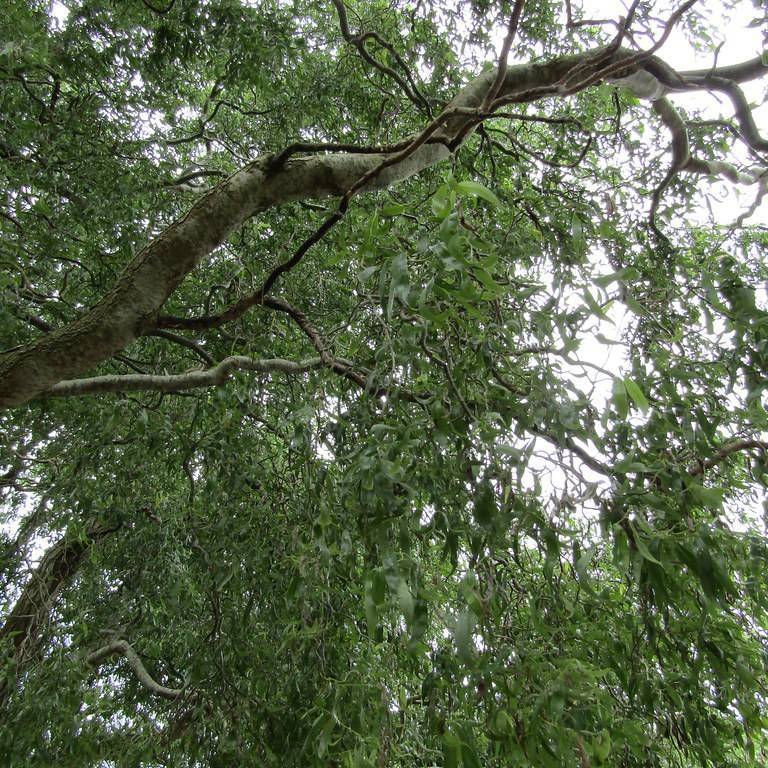
Dragon's Claw Willow
Salix matsudana 'Tortuosa'
Overview
Dragon's Claw Willow, a cultivar of the Hankow willow, is best known for its contorted, curling branches and twisted foliage that creates a dramatic, sculptural appearance year-round. It is deciduous, dropping its narrow, light green leaves in fall to reveal its intricate branch structure, which is a popular choice for cut floral arrangements. Adaptable to a wide range of growing conditions, it is widely planted as an ornamental specimen in temperate regions around the world.
Care Guide
Watering
Prefers consistently moist, well-watered soil, and thrives near water features such as ponds or stream banks where soil stays damp for extended periods. Water deeply once or twice per week during dry spells, avoiding letting the root zone dry out completely for more than a few days, as this will cause leaf drop and stress. Mature specimens have some drought tolerance, but regular watering supports the fastest, healthiest growth.
Light
Requires full sun, meaning at least 6 hours of direct, unfiltered sunlight per day to develop its characteristic twisted branch structure and dense foliage. It can tolerate very light partial shade, but growth will become lanky and the contortion of branches will be less pronounced in low-light conditions. Plant in an open, unobstructed location to maximize sun exposure across all sides of the tree.
Soil
Adaptable to a very wide range of soil types, including clay, loam, sandy, and even occasionally waterlogged soils where many other trees would suffer root rot. It prefers a slightly acidic to neutral pH between 5.5 and 7.5, but will tolerate mildly alkaline soils as well. Amending heavy clay with small amounts of compost will improve drainage and support more vigorous root growth, but it is not required for survival.
Fertilizer
Apply a balanced, slow-release 10-10-10 fertilizer once per year in early spring, just before new leaf growth emerges, to support robust foliage and branch development. Spread the fertilizer evenly around the drip line of the tree, not directly against the trunk, to avoid burning the shallow root system. Avoid over-fertilizing, as this can lead to excessively fast, weak growth that is prone to breakage in wind or heavy snow.
Temperature
Thrives in temperate climates within USDA hardiness zones 4 through 8, tolerating winter lows as low as -30°F (-34°C) and summer highs up to 90°F (32°C). It is well adapted to seasonal temperature fluctuations, with cold winter dormancy supporting healthy new growth in spring. Extreme heat above 95°F (35°C) may cause temporary leaf scorch, but the tree will recover once temperatures cool if soil is kept moist.
Pruning
Prune in late winter while the tree is dormant, removing any dead, damaged, or crossing branches to maintain airflow and a strong structural form. You can also selectively trim branches to encourage more pronounced contortion, or to control the tree's size if it is grown in a smaller landscape. Avoid heavy pruning of more than 25% of the tree's canopy in a single year, as this can stress the plant and lead to weak, uncharacteristic straight growth.
Propagation
Easily propagated from hardwood cuttings taken in late winter or early spring, before new leaves emerge. Cut 6-12 inch (15-30 cm) sections of healthy, one-year-old branches, remove any buds from the lower 2/3 of the cutting, and plant directly in moist soil or place in a jar of water until roots form, which typically takes 2-4 weeks. Rooted cuttings can be transplanted to their permanent location once they have developed a strong root system and new leaf growth.
Humidity
Tolerates a wide range of humidity levels, from dry continental air to humid coastal conditions, with no specific humidity requirements to thrive. Very low humidity below 20% may cause minor leaf browning at the tips during the hottest summer months, but this is rarely a serious issue if the tree is watered regularly. It does not require misting or supplemental humidity when planted outdoors.
Repotting
Dragon's Claw Willow is almost exclusively grown as an outdoor landscape tree and rarely kept in containers long-term. If grown temporarily in a pot, repot every 1-2 years in early spring before new growth starts, using a loamy, well-draining potting mix and a container with large drainage holes to prevent waterlogging. Once the tree reaches 6-8 feet (1.8-2.4 m) tall, it should be transplanted to a permanent outdoor location to accommodate its large mature size.
Uses & Symbolism
Primarily planted as a dramatic ornamental specimen tree in landscapes, where its twisted winter silhouette adds year-round visual interest, especially in snowy or bare winter gardens. Its contorted branches are widely harvested for cut floral arrangements, both fresh and dried, adding unique texture to bouquets and holiday decor. It is also sometimes planted for erosion control along stream banks and wetland edges, as its extensive root system stabilizes soil in moist, sloped areas.
Diseases & Pests
Susceptible to common willow pests including aphids, scale insects, and willow beetles, which can cause leaf damage and stunted growth if populations are left unmanaged. It is also prone to fungal diseases such as willow blight, powdery mildew, and root rot, especially when planted in poorly drained soil with prolonged standing water. Regular pruning to improve airflow and avoiding overwatering can reduce the risk of most fungal infections, and minor pest infestations can be treated with horticultural oil or insecticidal soap.
Related plants
Other plants you might like if you grow Dragon's Claw Willow.