Doublefile Viburnum
Viburnum plicatum f. tomentosum
Overview
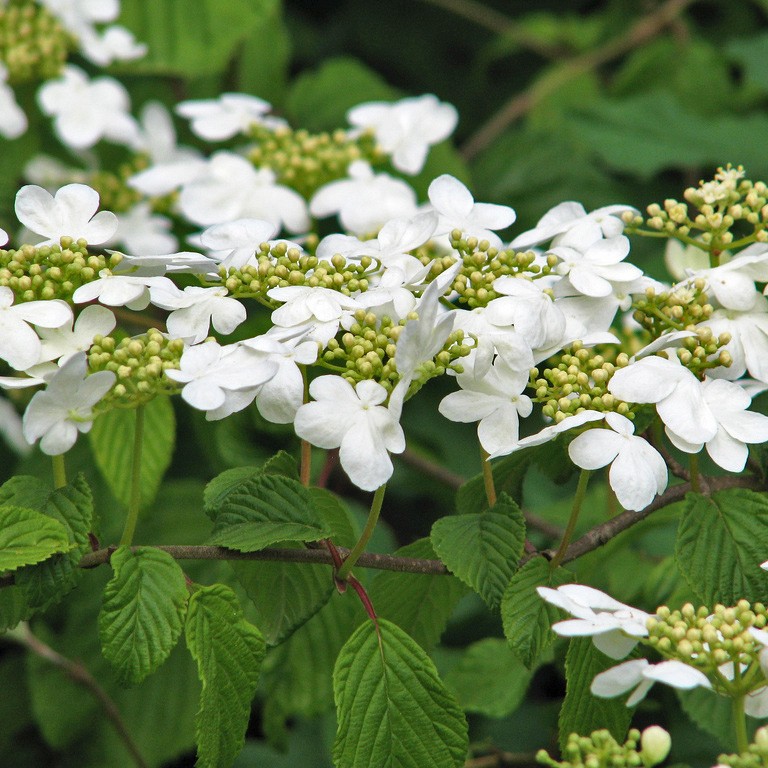
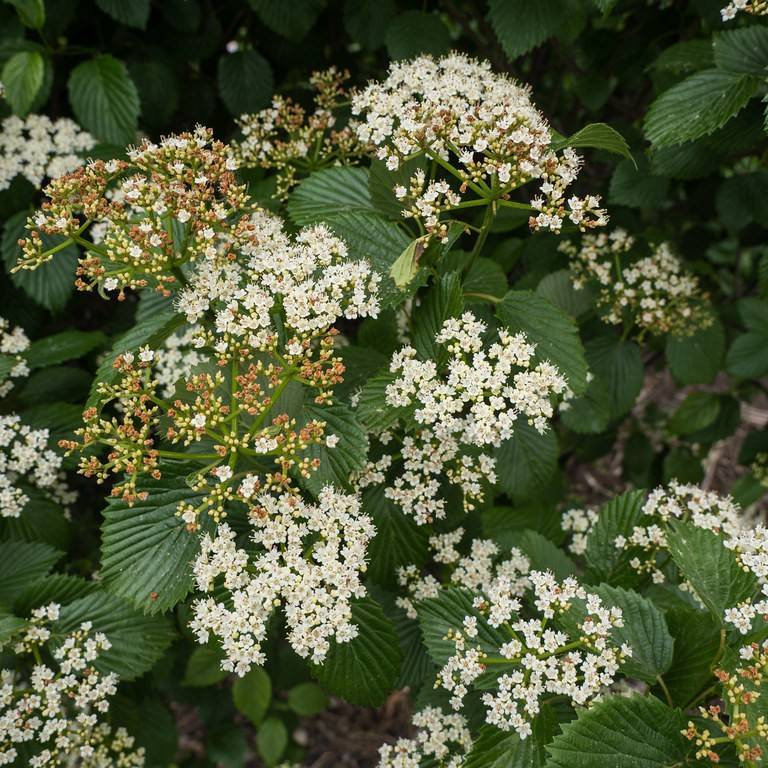
Doublefile viburnum is a popular landscape shrub prized for its elegant, layered growth habit, where branches grow in flat, horizontal tiers resembling a double file pattern. In spring, it produces masses of flat, lacecap white flower clusters arranged perfectly along the top of each branch, creating a striking, uniform floral display. As seasons progress, its dark green, deeply veined foliage turns a rich burgundy-red in fall, and it bears small, ornamental red to black drupes that attract birds through late summer and autumn.
Care Guide
Watering
Water newly planted doublefile viburnum deeply 1-2 times per week for the first growing season to establish a robust root system, keeping soil consistently moist but not waterlogged. Once established, it is moderately drought tolerant, only requiring supplemental watering during extended dry spells of 2 weeks or more to prevent leaf drop. Avoid overhead watering at the base of the shrub to reduce risk of fungal root issues.
Light
This shrub thrives in full sun to partial shade, with full sun exposure encouraging the most abundant and uniform spring flowering. In regions with intense, hot summer sun, light afternoon shade helps prevent leaf scorch and keeps foliage healthy through the warmest months. Too much dense shade will result in sparse flowering and a looser, less structured growth habit.
Soil
Doublefile viburnum prefers fertile, well-drained loamy soil with a slightly acidic to neutral pH between 5.5 and 7.0, though it will adapt to mildly alkaline soils if amended with organic matter. It does not tolerate waterlogged, heavy clay soils, so amending compacted planting sites with compost or peat moss is critical to improve drainage. A 2-3 inch layer of organic mulch over the root zone helps retain moisture and regulate soil temperature year-round.
Fertilizer
Apply a balanced, slow-release granular fertilizer formulated for woody landscape shrubs in early spring, just before new leaf growth emerges, following product label rates to avoid over-fertilization. An optional second application of a low-nitrogen, high-phosphorus fertilizer can be applied after flowering finishes to support healthy root development and next year's bloom production. Skip fertilization for stressed or newly planted shrubs in their first year to avoid burning tender new roots.
Temperature
It is winter hardy in USDA zones 5 through 8, tolerating minimum temperatures as low as -20°F (-29°C) without significant winter damage when established. Sudden late spring frosts can damage emerging flower buds, so planting in a site protected from harsh, cold winter winds reduces risk of cold injury. In the upper end of its hardiness range, it tolerates summer temperatures up to 95°F (35°C) as long as it receives adequate moisture and light shade.
Pruning
Prune doublefile viburnum immediately after flowering finishes in late spring, as it sets flower buds for the next year on old wood, so pruning later in the season will remove future blooms. Remove any dead, damaged, or crossing branches first, then lightly trim to maintain its natural layered tiered habit, avoiding heavy shearing that ruins its distinctive shape. Mature overgrown shrubs can be rejuvenated by removing up to one-third of the oldest, thickest branches at ground level every 2-3 years.
Propagation
The most reliable method for home gardeners is softwood stem cuttings taken in early summer, from new growth that has just started to harden, treated with rooting hormone and placed in a moist, well-drained propagation medium under high humidity. It can also be propagated from seed, but seed requires a lengthy 18-24 month period of cold stratification to germinate, and seedlings may not retain the exact characteristics of the parent doublefile cultivar. Suckers that grow from the base of mature shrubs can be carefully dug up and transplanted in early spring for an exact clone of the parent plant.
Humidity
Doublefile viburnum adapts well to average ambient humidity levels between 40% and 70%, which is typical across most of its hardiness range. It tolerates moderate levels of dry air, but extended periods of very low humidity combined with high heat can cause leaf browning along the edges. Good air circulation around the shrub helps prevent fungal leaf spot diseases in areas with high summer humidity and frequent rainfall.
Repotting
Doublefile viburnum is almost exclusively grown as an outdoor landscape shrub, so repotting is rarely required unless it is being temporarily container-grown for planting at a later date. If grown in a container, repot every 2-3 years in early spring before new growth emerges, using a high-quality potting mix with added perlite for drainage, and selecting a pot 2-3 inches larger in diameter than the current container. Once planted in the landscape, it does not tolerate root disturbance well, so avoid transplanting mature shrubs unless absolutely necessary.
Uses & Symbolism
Doublefile viburnum is a highly sought-after ornamental landscape shrub, often used as a specimen plant, privacy screen, or border planting where its distinctive layered habit and spring floral display can be fully showcased. Its berries provide a valuable food source for native songbirds, and its dense branching offers shelter for small wildlife, making it a popular choice for pollinator and wildlife-friendly gardens. Its cut branches with flowers or fall foliage are also used in seasonal floral arrangements.
Diseases & Pests
The most common diseases affecting doublefile viburnum include bacterial leaf spot, powdery mildew, and fungal root rot, which typically occur in sites with poor drainage, excessive moisture, or poor air circulation. Common pests include aphids, scale insects, and viburnum leaf beetles, which feed on foliage and can cause significant defoliation if infestations are left untreated; regular inspection and use of horticultural oil or insecticidal soap can control most pest issues. In poorly drained soils, root rot is the most serious threat, so proper site preparation and avoiding overwatering are the best preventative measures.
Guides that mention Doublefile Viburnum
Related plants
Other plants you might like if you grow Doublefile Viburnum.
%22%2F%3E%0A%20%20%20%20%20%20%3Ccircle%20cx%3D%22920%22%20cy%3D%22180%22%20r%3D%2290%22%20fill%3D%22%23cfe8d5%22%2F%3E%0A%20%20%20%20%20%20%3Cpath%20d%3D%22M600%20590c-90-180-215-255-310-280%200%20165%20118%20296%20270%20296h40z%22%20fill%3D%22%2379b88e%22%2F%3E%0A%20%20%20%20%20%20%3Cpath%20d%3D%22M600%20590c80-150%20198-212%20302-228-8%20142-123%20255-270%20255h-32z%22%20fill%3D%22%235c9f73%22%2F%3E%0A%20%20%20%20%20%20%3Cpath%20d%3D%22M600%20610V360%22%20stroke%3D%22%234f8c64%22%20stroke-width%3D%2218%22%20stroke-linecap%3D%22round%22%2F%3E%0A%20%20%20%20%20%20%3Ctext%20x%3D%22600%22%20y%3D%22700%22%20text-anchor%3D%22middle%22%20font-family%3D%22Arial%2C%20sans-serif%22%20font-size%3D%2244%22%20fill%3D%22%23365c45%22%3E%0A%20%20%20%20%20%20%20%20Plant%20image%20coming%20soon%0A%20%20%20%20%20%20%3C%2Ftext%3E%0A%20%20%20%20%3C%2Fsvg%3E%0A%20%20)