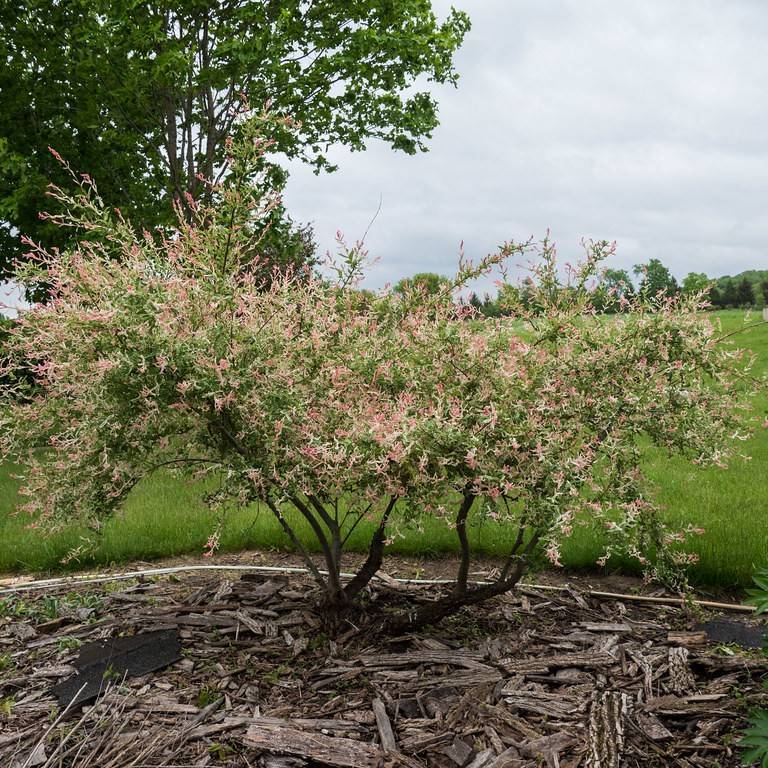
Dappled Willow
Salix integra 'Hakuro-nishiki'
Overview
Dappled willow is a deciduous shrub admired for its striking tri-color foliage that emerges bright pink in spring, matures to a mix of white, pale green, and soft pink, and deepens to solid green by late summer. Its slender, red-tinged stems add winter interest after leaves drop, making it a year-round focal point in temperate landscapes. It grows in a naturally rounded, arching form that can be shaped into a small tree or kept compact with regular pruning. It is tolerant of wet soils, making it a popular choice for rain gardens, stream edges, or low-lying landscape areas.
Care Guide
Watering
Dappled willows prefer consistently moist, well-drained soil and require regular watering, especially during hot, dry periods, to prevent leaf scorch and stress. Water deeply 1-2 times per week in the absence of rain, ensuring the root zone stays evenly damp but not waterlogged for extended periods. Established plants have moderate drought tolerance, but consistent moisture supports the healthiest, most vibrant foliage.
Light
This shrub thrives in full sun to partial shade, with full sun exposure producing the most vibrant pink and white variegation on new foliage. In regions with extremely hot, intense summer sun, light afternoon shade is recommended to prevent leaf burn on the delicate variegated leaves. Too much deep shade will reduce variegation, leading to mostly green foliage and a leggy growth habit.
Soil
Dappled willows adapt to a wide range of soil types, including loam, sand, and clay, as long as the soil retains moisture well. They prefer a slightly acidic to neutral pH between 5.5 and 7.0, but can tolerate mildly alkaline conditions without significant issue. Amending heavy clay soil with organic matter such as compost will improve drainage while retaining the moisture this species favors.
Fertilizer
Feed dappled willow in early spring before new growth emerges with a balanced, slow-release 10-10-10 fertilizer formulated for woody shrubs. Avoid over-fertilizing, as excessive nitrogen can lead to overly fast, weak growth and reduce the intensity of leaf variegation. Potted specimens benefit from a diluted liquid fertilizer applied once every 4-6 weeks during the active growing season.
Temperature
This hardy shrub is suitable for USDA zones 5 through 7, tolerating winter temperatures as low as -20°F (-29°C) without significant damage. It prefers mild summer temperatures between 60-80°F (15-27°C), and may show leaf scorch if exposed to prolonged temperatures above 90°F (32°C) without adequate moisture. Late spring frosts can damage emerging new foliage, but the plant will quickly regrow new leaves once temperatures warm.
Pruning
Prune dappled willow in late winter or early spring before new growth appears to encourage dense, bushy growth and maximize vibrant variegation on new stems, which produce the most colorful foliage. You can cut the entire shrub back to 6-12 inches (15-30 cm) above the ground every 2-3 years to rejuvenate it and maintain a compact size, or do lighter annual trimming to shape it as desired. Remove any dead, damaged, or crossing branches throughout the year to improve air circulation and reduce disease risk.
Propagation
Dappled willow is most easily propagated from softwood or hardwood cuttings taken in late spring or late winter, respectively. Take 6-8 inch (15-20 cm) cuttings from healthy, current-year growth, remove the lower leaves, and plant them in moist potting soil or directly in damp garden soil, where they will root readily within 4-6 weeks without the need for rooting hormone. As a cultivar, it does not grow true from seed, so cuttings are the only reliable propagation method to retain variegation.
Humidity
Dappled willows adapt well to average ambient humidity levels between 40-60%, which is typical of most temperate growing regions. They do not require extra humidity in outdoor settings, but potted indoor specimens may benefit from occasional misting during very dry winter heating periods to prevent leaf tip browning. High humidity supports healthy foliage, but good air circulation is important to prevent fungal leaf spot in consistently damp conditions.
Repotting
Potted dappled willows should be repotted every 2-3 years in early spring before new growth begins, moving to a container one size larger with fresh, well-draining potting mix amended with compost to retain moisture. Choose a pot with ample drainage holes to prevent waterlogging, as sitting in saturated soil can lead to root rot. If you want to keep the plant small, you can root prune it during repotting, cutting back up to 1/3 of the root ball to restrict growth.
Uses & Symbolism
Dappled willow is primarily grown as an ornamental landscape shrub, used as a focal point, hedge, border planting, or specimen in rain gardens and water feature edges due to its tolerance for wet soil. Its colorful stems and foliage are popular in cut flower arrangements, adding texture and soft color to both fresh and dried bouquets. Historically, willow bark has been used to extract salicin, a precursor to aspirin, though this cultivar is not typically grown for medicinal use.
Diseases & Pests
Dappled willows are relatively pest-resistant, but can be susceptible to aphids, scale insects, and willow leaf beetles, which feed on foliage and can cause discoloration or defoliation if populations are high. Fungal diseases including powdery mildew, leaf spot, and rust can occur in humid, poorly ventilated conditions, leading to spotted or discolored leaves. Root rot can develop if the plant is grown in consistently waterlogged, poorly drained soil, causing wilting, yellowing foliage, and eventual plant death if not corrected.
Related plants
Other plants you might like if you grow Dappled Willow.