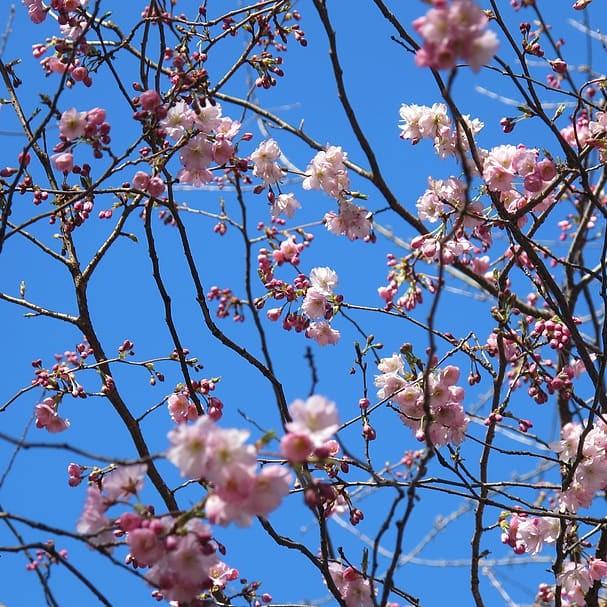
Double Weeping Higan Cherry
Prunus subhirtella 'Pendula Plena'
Overview
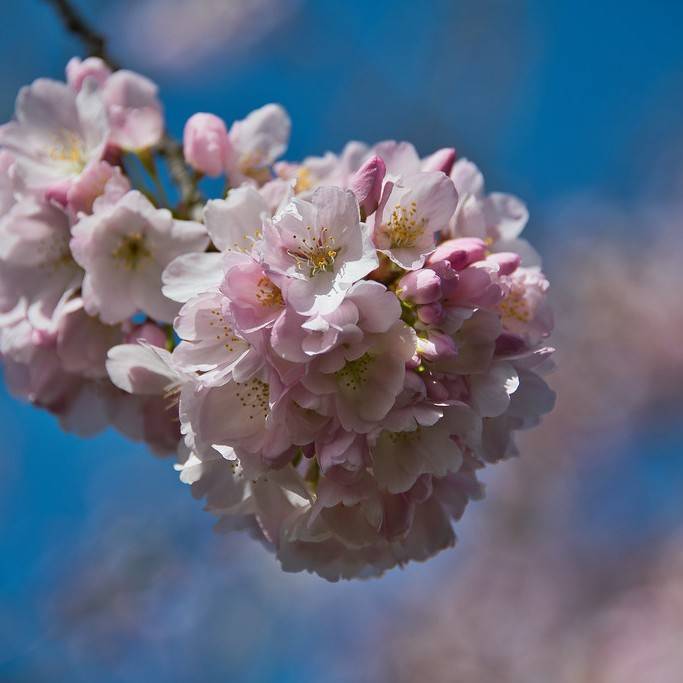
The Double Weeping Higan Cherry is a widely cultivated ornamental deciduous tree prized for its dramatic, pendulous branches that drape downward to create a cascading, umbrella-like silhouette. It bursts into bloom in early spring, before its foliage emerges, covering its arching stems with clusters of soft, double pale pink flowers that fade to near-white as they mature. In fall, its dark green, ovate leaves turn warm shades of yellow and bronze, adding additional seasonal interest, while its weeping form provides architectural structure to gardens in winter.
Care Guide
Watering
Water newly planted trees deeply once or twice weekly for the first two years to establish a strong root system, keeping the soil consistently moist but not waterlogged. Mature trees are moderately drought tolerant, but benefit from supplemental watering during extended periods of hot, dry weather to prevent stress and leaf drop. Avoid overwatering or allowing water to pool around the root crown, as this can lead to root rot and fungal disease.
Light
Plant in a location that receives full sun, at least 6 to 8 hours of direct sunlight daily, to encourage the heaviest spring bloom production and maintain a healthy, dense canopy. It can tolerate very light partial shade, but too much shade will reduce flowering, lead to sparse foliage, and make the tree more susceptible to pest infestations.
Soil
Grows best in well-drained, loamy soil with a slightly acidic to neutral pH between 5.5 and 7.0, though it can adapt to a range of soil types including clay, sandy, or loam as long as drainage is adequate. Amend heavy, compacted soil with compost or well-rotted organic matter at planting time to improve drainage and add nutrients that support early root growth. Avoid planting in low-lying areas that collect standing water, as this will quickly cause root rot and kill the tree.
Fertilizer
Apply a balanced, slow-release 10-10-10 fertilizer formulated for woody ornamentals in early spring, just before new growth emerges, to support healthy foliage and abundant bloom production. Avoid fertilizing after mid-summer, as this can stimulate tender new growth that will be damaged by late fall or winter frost. Mature, well-established trees may only need fertilizer every 2 to 3 years if they are growing in nutrient-poor soil.
Temperature
Thrives in USDA hardiness zones 5 through 8, tolerating winter low temperatures down to -20°F (-29°C) and warm summer highs up to 90°F (32°C) with adequate moisture. Young trees benefit from a layer of mulch around the base in late fall to insulate the root zone and protect against cold winter temperature fluctuations. Avoid planting in areas exposed to harsh, drying winter winds, which can damage delicate branch tips and reduce spring flowering.
Pruning
Prune immediately after flowering finishes in late spring, to avoid cutting off the next year’s flower buds, which form on old wood from the previous growing season. Remove any dead, diseased, or crossing branches, and thin out crowded inner growth to improve air circulation and reduce the risk of fungal disease. You can trim wayward weeping branches to maintain the desired cascading shape, but avoid heavy pruning, as this can cause the tree to produce unattractive upright water sprouts.
Propagation
This is a grafted cultivar, so it cannot be reliably grown from seed, as seed-grown trees will not retain the characteristic weeping habit or double flowers. Most commercial propagation is done by grafting a 'Pendula Plena' scion onto a hardy Prunus rootstock in late winter or early spring, before new growth begins. Home gardeners can also propagate it via softwood cuttings taken in early summer, though these will require rooting hormone and consistent moisture to establish successfully.
Humidity
Tolerates a wide range of humidity levels, from moderately dry to humid conditions, as long as adequate soil moisture is maintained. High humidity combined with poor air circulation can increase the risk of fungal leaf spot and powdery mildew, so ensure the tree is planted in an open area with good airflow around its canopy. It does not require any supplemental humidity when grown outdoors in its suitable hardiness zones.
Repotting
This is a large, landscape-grown tree that is not suitable for container growing long-term, so repotting is not a standard care practice for mature specimens. Young saplings sold in containers should be planted directly into the landscape within one to two years of purchase, before their root systems become pot bound. If you need to transplant a young tree, do so in late winter while it is dormant, to minimize stress and improve the chance of successful establishment.
Uses & Symbolism
Widely used as a focal specimen tree in residential landscapes, public parks, and Japanese-style gardens, where its graceful weeping form and showy spring blooms create a dramatic visual focal point. It is often planted near water features like ponds or streams, where its cascading branches and blooms can be reflected in the water for added aesthetic appeal. Its small, dark purple-black fruits that appear after flowering are a valuable food source for songbirds and other small wildlife in late summer.
Diseases & Pests
Common fungal diseases include powdery mildew, leaf spot, black knot, and verticillium wilt, all of which are more prevalent in conditions of high humidity and poor air circulation. Common pests include aphids, scale insects, Japanese beetles, and tent caterpillars, which feed on foliage and can cause significant defoliation if infestations are left untreated. It is also susceptible to borers, which tunnel into the trunk and branches, weakening the tree and potentially causing dieback or tree death if not addressed quickly.
Related plants
Other plants you might like if you grow Double Weeping Higan Cherry.