Dotted Beebalm
Monarda punctata
Overview
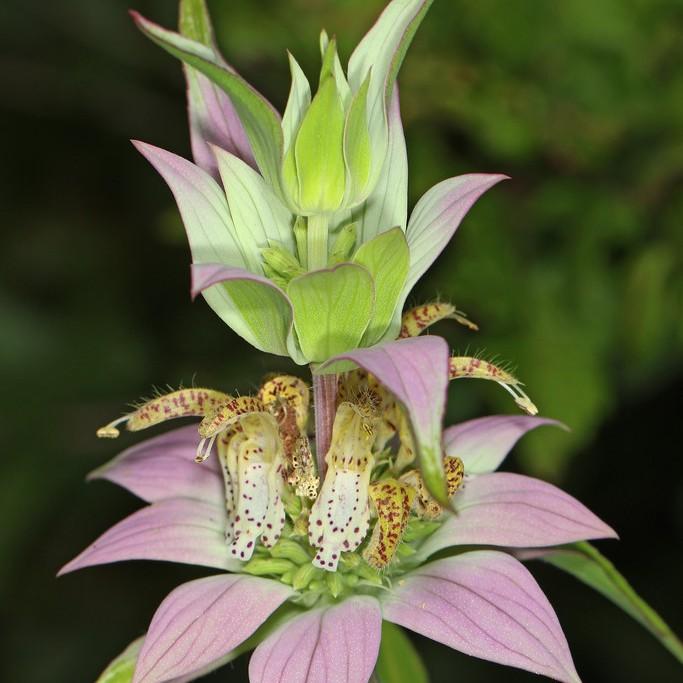
Dotted beebalm, also called spotted horsemint, is a clump-forming herbaceous perennial prized for its unique tiered flower clusters and aromatic, gray-green foliage. The distinct blooms feature pale yellow, purple-dotted tubular flowers surrounded by showy pink or lavender bracts, creating a layered, stacked appearance along upright stems. Highly adaptable to dry, poor soils, it is a staple of native pollinator gardens, meadow plantings, and xeriscapes across its native range.
Care Guide
Watering
Dotted beebalm is highly drought-tolerant once established, requiring only occasional deep watering during extended dry periods. Avoid overwatering or consistently soggy soil, as this can lead to root rot and fungal issues. Newly planted specimens need regular, light watering for the first 2-3 months to support root establishment.
Light
This plant thrives in full sun, requiring a minimum of 6 hours of direct sunlight daily to produce robust blooms and dense foliage. It can tolerate partial shade, but plants grown in shadier conditions will become leggy, produce fewer flowers, and have increased susceptibility to powdery mildew.
Soil
Dotted beebalm prefers well-drained, sandy, loamy, or gravelly soils with a neutral to slightly alkaline pH. It is exceptionally tolerant of poor, dry, low-nutrient soils where many other perennials struggle to survive. Heavy clay soils should be amended with sand or organic matter to improve drainage before planting.
Fertilizer
This low-maintenance plant rarely requires fertilizer, as excess nutrients can lead to leggy growth and reduced flower production. If planted in extremely nutrient-depleted soil, a single light application of balanced, slow-release fertilizer in early spring is sufficient. Avoid high-nitrogen fertilizers, as they prioritize foliage growth over bloom development.
Temperature
Dotted beebalm is cold-hardy in USDA zones 3 through 9, tolerating winter temperatures as low as -40°F (-40°C). It thrives in warm summer conditions and handles high heat and humidity far better than many other Monarda species, with lower susceptibility to foliar diseases. Winter mulch is not required in most of its range, but a light layer can protect young plants in the coldest northern zones.
Pruning
Deadhead spent flower clusters throughout the growing season to encourage additional bloom production and prevent unwanted self-seeding if desired. In late fall or early spring, cut back the entire plant to 2-3 inches above the soil line to remove old, woody growth and promote fresh, healthy spring foliage. Thinning crowded clumps in early spring improves air circulation, reducing the risk of powdery mildew.
Propagation
Dotted beebalm can be easily propagated by seed, root division, or stem cuttings. Seeds can be sown directly outdoors in fall or cold-stratified for 30 days before sowing indoors in early spring, with germination occurring in 10-20 days. Divide mature clumps every 3-4 years in early spring or fall to control spread and produce new plants, ensuring each division has a healthy portion of roots and foliage.
Humidity
Dotted beebalm adapts well to a wide range of humidity levels, from dry prairie conditions to the humid southeastern United States. Good air circulation around the foliage is recommended in high-humidity regions to prevent fungal growth like powdery mildew. It has no special humidity requirements when grown in well-drained soil and full sun.
Repotting
Dotted beebalm is rarely grown in containers long-term, but if potted, it should be repotted every 1-2 years in early spring to refresh the soil and prevent root binding. Use a well-drained, sandy potting mix and select a container with multiple drainage holes to avoid waterlogged soil. When repotting, you can divide large clumps into smaller sections to create new plants.
Uses & Symbolism
Dotted beebalm is a top choice for native pollinator gardens, as it attracts bumblebees, honeybees, solitary bees, butterflies, and hummingbirds, and serves as a host plant for the hermit sphinx moth. Its aromatic foliage, which contains thymol, has traditional medicinal uses for treating colds, digestive issues, and minor skin irritations, and can be brewed into a minty herbal tea. It is also used in cut flower arrangements for its unique tiered blooms and long-lasting, colorful bracts, and is a popular addition to xeriscapes and roadside wildflower mixes for its low maintenance and drought tolerance.
Diseases & Pests
Dotted beebalm is far more resistant to powdery mildew than other common Monarda species, but it may still develop the fungal disease in overly shaded, crowded, or high-humidity conditions with poor air circulation. Common pests include spider mites, thrips, and aphids, which can be controlled with insecticidal soap, neem oil, or by encouraging natural predatory insects like ladybugs. Root rot may occur in poorly drained or consistently waterlogged soils, so proper site selection with good drainage is critical to prevent this issue.
Related plants
Other plants you might like if you grow Dotted Beebalm.