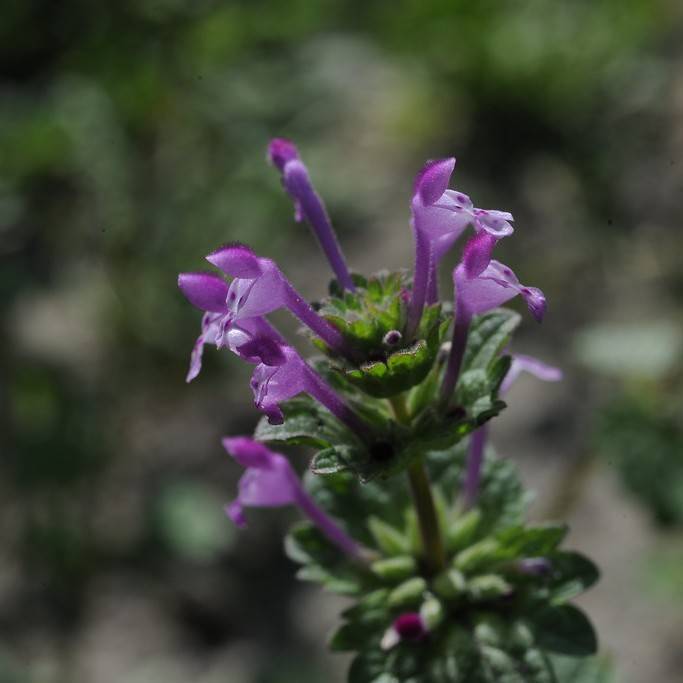
Deadnettle
Lamium maculatum
Overview
Deadnettle is a mat-forming herbaceous perennial prized for its colorful, often silver-splashed foliage and delicate spring to early summer blooms. Unlike true stinging nettles, it lacks stinging hairs, making it safe to handle and ideal for ornamental planting. It thrives in shaded areas where many other ground covers struggle, spreading quickly to suppress weeds without becoming overly aggressive.
Care Guide
Watering
Water deadnettle regularly during its first growing season to establish a deep, healthy root system, keeping soil consistently moist but not waterlogged. Once established, it is moderately drought tolerant, requiring supplemental water only during extended periods of hot, dry weather. Avoid overhead watering to reduce risk of foliar diseases.
Light
Deadnettle performs best in partial to full shade, where its variegated foliage maintains its brightest coloration. It can tolerate some morning sun, but intense afternoon sun will scorch its leaves and cause the foliage to fade or wilt. In deep full shade, flowering may be reduced but the plant will still produce attractive foliage.
Soil
This adaptable plant grows well in average, well-draining soil with a neutral to slightly acidic pH range of 6.0 to 7.0. It tolerates poor, dry soils better than many ground covers, but will grow more vigorously in soil amended with organic matter such as compost or leaf mold. Avoid heavy, waterlogged clay soils, which can cause root rot.
Fertilizer
Deadnettle has low nutrient needs and typically requires only one light application of balanced, slow-release fertilizer in early spring as new growth emerges. Over-fertilization can cause excessive, leggy growth and reduce the intensity of foliage variegation. If grown in nutrient-rich garden soil, additional fertilization may not be necessary at all.
Temperature
Deadnettle is hardy in USDA zones 3 through 8, tolerating winter temperatures as low as -40°F (-40°C) when established. It prefers cool, mild growing temperatures between 60-75°F (15-24°C), and may go dormant or die back to the ground during extended periods of heat above 90°F (32°C). In mild winter climates, it often remains evergreen through the cold months.
Pruning
Trim back dead or leggy growth in early spring to encourage fresh, bushy new foliage and promote better flowering. After the first flush of blooms fades in mid-summer, shear the entire plant back by one-third to prevent self-seeding and stimulate a second, lighter round of flowering. Remove any stems that revert to solid green foliage to preserve the variegated appearance of the cultivar.
Propagation
Deadnettle is most easily propagated by division in early spring or fall, simply digging up established clumps and separating them into smaller sections with healthy roots and foliage for replanting. It can also be propagated from softwood stem cuttings taken in late spring or early summer, rooted in moist potting mix within 2-3 weeks without the need for rooting hormone. Many cultivars self-seed sparingly in ideal growing conditions, though volunteer seedlings may not retain the variegation of the parent plant.
Humidity
Deadnettle adapts well to average ambient humidity levels between 40-60%, which is typical of most temperate garden and indoor environments. High humidity combined with poor air circulation can increase the risk of powdery mildew and other foliar diseases, so space plants adequately to promote airflow around foliage. It tolerates low humidity well, making it suitable for indoor container growth in heated homes during winter.
Repotting
Container-grown deadnettle should be repotted every 1-2 years in early spring, before new growth begins, to refresh the soil and prevent root binding. Choose a pot with drainage holes one size larger than the current container, using a general-purpose potting mix amended with perlite to improve drainage. Trim back any overgrown or rotting roots during repotting to encourage healthy new root development.
Uses & Symbolism
Deadnettle is most widely used as a low-maintenance ground cover for shaded garden beds, woodland gardens, and underplanting around trees and shrubs where lawn grass struggles to grow. Its trailing habit makes it a popular choice for hanging baskets, window boxes, and container planters, where its variegated foliage spills over the edges to provide contrast with flowering plants. In herbal medicine, it has historically been used topically to soothe minor skin irritations, though it is not commonly used for culinary purposes.
Diseases & Pests
The most common disease affecting deadnettle is powdery mildew, a fungal infection that appears as a white, powdery coating on foliage, typically occurring in high humidity with poor air circulation. Root rot can develop in heavy, waterlogged soils, causing wilting, yellowing foliage, and eventual plant death if drainage is not improved. Common pests include aphids, spider mites, and slugs, which feed on tender new foliage; these can be controlled with insecticidal soap, neem oil, or organic slug baits as needed.
Related plants
Other plants you might like if you grow Deadnettle.