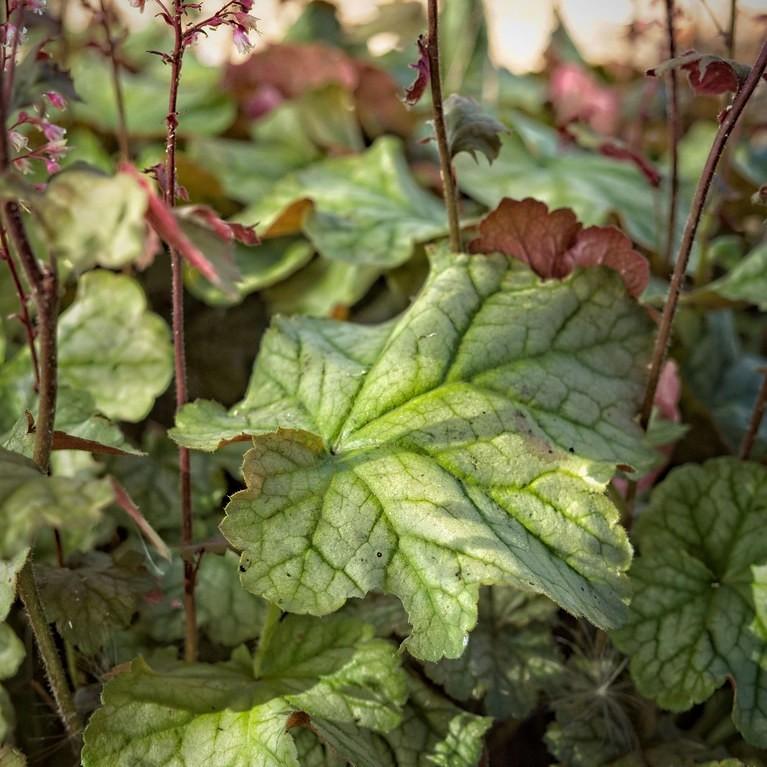
Coral Bells
Heuchera sanguinea
Overview
Coral Bells is a hardy, herbaceous perennial in the Heuchera genus, celebrated for its diverse foliage colors ranging from deep burgundy to lime green, silver, and bronze, often with veined or marbled patterns. In late spring to early summer, slender, arching spikes of tiny, bell-shaped pink, red, white, or coral flowers rise above the foliage, attracting hummingbirds, bees, and butterflies to the garden. Adaptable to a wide range of growing conditions, it thrives in both formal and naturalistic landscapes, and is a popular choice for edging, rock gardens, and mixed container plantings.
Care Guide
Watering
Water Coral Bells regularly to keep the soil consistently moist but not waterlogged, as soggy roots can lead to rot. Reduce watering frequency in cooler months, allowing the top 1-2 inches of soil to dry out between sessions, and avoid wetting the foliage directly to minimize fungal risk. Drought-tolerant once established, but prolonged dry periods will cause foliage to wilt and reduce flowering performance.
Light
Grow Coral Bells in partial shade for the most vibrant foliage color and consistent flowering, with 2-6 hours of direct morning sun and dappled afternoon shade. In cooler northern climates, it can tolerate full sun, as long as soil moisture is maintained, while in hot southern regions, full shade is recommended to prevent leaf scorch and fading of colorful foliage. Too much deep shade will lead to leggy growth and reduced flower production.
Soil
Plant Coral Bells in well-draining, loamy or sandy soil with a slightly acidic to neutral pH between 6.0 and 7.0, amended with organic matter such as compost or leaf mold to improve nutrient content and drainage. Avoid heavy, clay soils that retain excess moisture, as these will quickly cause root rot in this shallow-rooted species. A light layer of mulch applied around the base will help retain soil moisture and regulate root temperature.
Fertilizer
Feed Coral Bells once annually in early spring with a slow-release, balanced 10-10-10 granular fertilizer, worked gently into the top layer of soil around the root zone to avoid burning shallow roots. Avoid over-fertilizing, as excess nitrogen will lead to lush, floppy foliage growth and reduced flowering, and may also make the plant more susceptible to pest infestations. Container-grown specimens can be given a diluted liquid fertilizer once per month during the growing season for extra nutrients.
Temperature
Coral Bells thrives in average temperatures between 60-75°F (15-24°C), and is hardy in USDA zones 4-9, tolerating winter lows down to -30°F (-34°C) when planted in well-draining soil. In regions with harsh winter frost, a light layer of straw or leaf mulch applied after the first freeze will help protect shallow roots from heaving caused by freeze-thaw cycles. High temperatures above 85°F (29°C) combined with full sun will cause leaf scorch, so provide extra shade and moisture during summer heatwaves.
Pruning
Prune Coral Bells in early spring by removing any dead, damaged, or browned foliage from the previous season to encourage fresh new leaf growth and improve air circulation around the plant. Snip spent flower spikes back to the base of the foliage once blooming is complete to tidy up the plant and promote a second, smaller flush of flowers later in the season in mild climates. Divide clumps every 3-4 years in early spring or fall to prevent overcrowding, maintain vigorous growth, and preserve foliage color intensity.
Propagation
The most common method of propagating Coral Bells is by division in early spring or late fall, when the plant is dormant, by carefully digging up clumps and separating them into smaller sections with a sharp knife, each with healthy roots and several growing points. It can also be grown from seed sown indoors 8-10 weeks before the last expected frost, though seed-grown plants may not retain the exact foliage color or flower traits of the parent plant. Leaf cuttings taken from healthy, mature plants in early summer can be rooted in moist, well-draining potting mix with high humidity, though this method has a lower success rate than division.
Humidity
Coral Bells prefers average to moderate humidity levels between 40-60%, which is typical of most temperate garden environments, and does not require extra humidity when grown outdoors. In indoor settings or very dry climates, occasional misting of the air around the plant can help prevent leaf edges from browning, though avoid misting the foliage directly to reduce fungal disease risk. High humidity combined with poor air circulation can lead to powdery mildew and other foliar diseases, so ensure plants are spaced properly for airflow.
Repotting
Repot container-grown Coral Bells every 2-3 years in early spring, moving to a pot one size larger than the current one with adequate drainage holes to prevent waterlogging. Use a well-draining potting mix amended with perlite or coarse sand to improve drainage, and ensure the crown of the plant is planted at the same depth as it was in the previous pot to avoid rot. If the plant becomes root-bound, gently tease apart the root ball before repotting to encourage new root growth into the fresh soil.
Uses & Symbolism
Coral Bells is widely used as an ornamental landscape plant for edging borders, filling in rock gardens, and adding color to shaded woodland gardens, with its diverse foliage providing year-round interest even when not in bloom. The long-lasting flower spikes are popular for cut flower arrangements, and the plant is a staple in pollinator gardens, as its nectar-rich blooms attract hummingbirds, bees, and beneficial butterflies. Some Indigenous groups of North America historically used parts of the Heuchera plant for medicinal purposes to treat minor ailments such as sore throats and digestive issues.
Diseases & Pests
Coral Bells is relatively pest and disease resistant, but can be susceptible to fungal issues such as powdery mildew, rust, and root rot when grown in poorly draining soil or overly humid conditions with poor air circulation. Common pests include aphids, vine weevils, and spider mites, which feed on the foliage and roots, causing yellowing leaves, stunted growth, and wilting; these can be controlled with insecticidal soap, neem oil, or beneficial predatory insects. Crown rot is a common fatal issue caused by planting the crown too deeply or overwatering, so ensure the top of the root ball is level with the soil surface and soil drains freely.
Related plants
Other plants you might like if you grow Coral Bells.