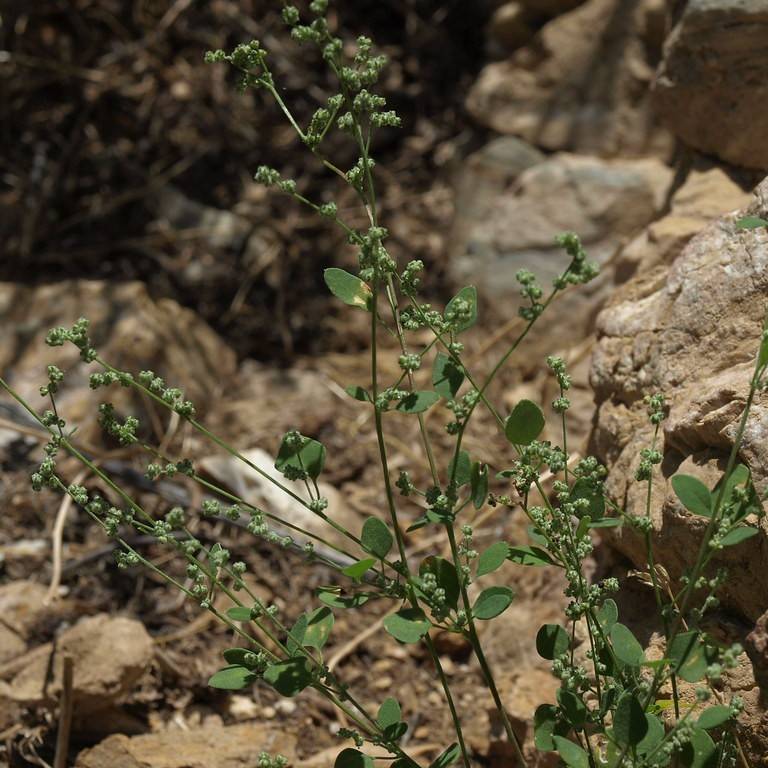
Dark Lamb's Quarters
Chenopodium album 'Atropurpureum'
Overview
A pigmented cultivar of the widespread wild lamb's quarters, this plant features deep maroon to purple new growth that matures to dark green with purple undersides and stems. It grows vigorously across a wide range of conditions, often outcompeting weeds in garden settings. All aboveground parts are edible, with a mild, earthy flavor similar to spinach without the bitter aftertaste of some leafy greens.
Care Guide
Watering
Water deeply once per week, allowing the top 1-2 inches of soil to dry out between waterings to prevent root rot; reduce frequency during extended rainy periods. It is moderately drought tolerant once established, but consistent moisture produces the most tender, flavorful leaves without bitter notes. Avoid overhead watering to minimize foliar fungal issues, directing water to the base of the plant instead.
Light
Thrives in full sun, which enhances the deep purple pigmentation of its foliage and supports robust, compact growth. It can tolerate partial shade, though plants may become leggy and foliage will be lighter in color with less intense purple marbling. A minimum of 6 hours of direct sunlight daily is recommended for optimal growth and edibility.
Soil
Adaptable to nearly all well-draining soil types, from sandy loam to heavy clay, with a preferred pH range of 6.0 to 7.5. It can tolerate poor, low-nutrient soils where other leafy greens struggle, though amending with 1-2 inches of compost before planting will boost foliage yield. Avoid waterlogged soils, as this can cause rapid root decay and plant death.
Fertilizer
Typically requires no supplemental fertilizer if planted in moderately fertile soil, as excessive nitrogen can lead to overly lush, weak growth and reduced flavor. For poor, depleted soils, apply a balanced, all-purpose organic fertilizer at half strength once 4 weeks after germination to support steady growth. Avoid high-nitrogen synthetic fertilizers, which can lead to accumulation of nitrates in the edible leaves.
Temperature
Grows best in temperatures between 60-75°F (15-24°C), and can tolerate light spring and fall frosts down to 25°F (-4°C) without significant damage. It will bolt and produce seed stalks quickly once temperatures consistently exceed 85°F (29°C), at which point foliage becomes bitter and less palatable. In warm climates, it is best grown as a spring or fall crop to avoid mid-summer heat stress.
Pruning
Regularly harvest the top 4-6 inches of young stems and leaves to encourage bushier, more productive growth and delay bolting. Remove any flower stalks as soon as they appear to extend the edible harvest period by several weeks. At the end of the growing season, pull entire plants and compost them, unless you wish to allow it to self-seed for the following year.
Propagation
Easily propagated from direct-sown seed planted 1/4 inch deep in prepared garden soil after the last frost date in spring. Seeds germinate in 7-14 days at soil temperatures between 50-75°F (10-24°C), with no pre-treatment required. Thin seedlings to 12-18 inches apart once they have 2-3 true leaves to provide adequate space for mature growth.
Humidity
Tolerates a wide range of humidity levels, from 30% to 70%, with no specific humidity requirements for healthy growth. High humidity combined with poor air circulation can increase risk of powdery mildew, so space plants appropriately to allow airflow between foliage. It is well adapted to dry, low-humidity conditions where other leafy greens wilt quickly.
Repotting
As a fast-growing annual typically grown directly in garden beds or large outdoor containers, repotting is rarely required for Dark Lamb's Quarters. If started indoors in seed trays, transplant seedlings to their final growing location when they have 3-4 true leaves, taking care not to disturb the delicate taproot. Container-grown plants should be planted in pots at least 12 inches deep to accommodate their root system, with no need to move them during their single growing season.
Uses & Symbolism
The young leaves, stems, and unopened seed heads are edible raw in salads, or cooked similarly to spinach in stir fries, soups, and sautés, offering high levels of vitamin A, vitamin C, calcium, and iron. The striking dark purple foliage is also used as an ornamental filler in annual garden beds and cut flower arrangements, adding rich color contrast to green foliage displays. It is also used as a nutrient-dense forage crop for poultry and small livestock, and its mature seeds can be ground into a gluten-free flour or used whole as a grain substitute.
Diseases & Pests
Dark Lamb's Quarters is relatively pest and disease resistant, though it can occasionally be affected by leaf miners, which create winding tunnels in foliage; remove infested leaves immediately and use floating row covers to prevent adult flies from laying eggs. Powdery mildew may develop in humid, poorly ventilated conditions, which can be treated with neem oil sprays and by spacing plants to improve air circulation. It may also act as a host for aphids, spider mites, and cucumber mosaic virus, so avoid planting it near susceptible crops like cucumbers, tomatoes, and squash to prevent cross-contamination.
Related plants
Other plants you might like if you grow Dark Lamb's Quarters.