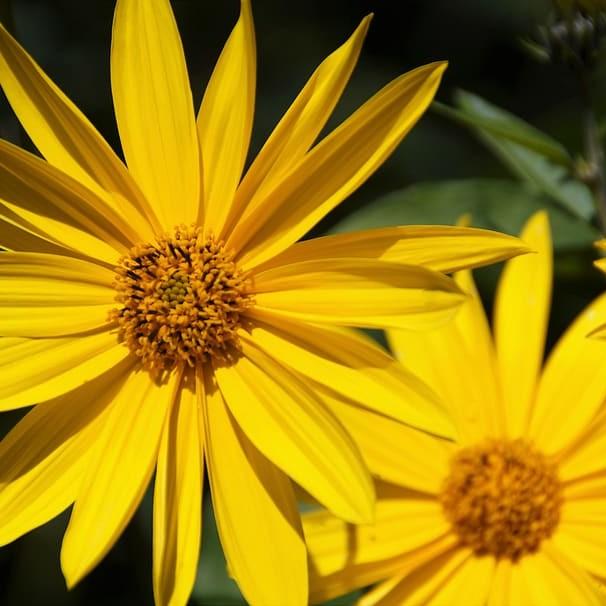
Jerusalem Artichoke
Helianthus tuberosus
Overview
Jerusalem artichoke, also called sunchoke, is a herbaceous perennial in the sunflower family that produces tall, leafy stems topped with bright yellow, daisy-like flowers in late summer. Its underground tubers, which have a sweet, nutty flavor and crisp texture, are the primary edible part, with a long history of cultivation by Indigenous North American peoples. The plant is highly adaptable and spreads vigorously via tubers left in the soil, often becoming naturalized in temperate regions beyond its native range.
Care Guide
Watering
Water Jerusalem artichokes regularly to keep soil consistently moist but not waterlogged, especially during tuber formation in late summer, as drought will reduce yield. Established plants have moderate drought tolerance, but consistent moisture of 1-2 inches per week supports healthy growth and plump tubers. Reduce watering as foliage yellows and dies back in fall to prevent tuber rot before harvest.
Light
Plant Jerusalem artichokes in full sun, receiving at least 6 hours of direct, unfiltered sunlight daily to support robust stem growth, flowering, and tuber development. Partial shade will result in leggy growth and reduced tuber yields, so avoid heavily shaded planting sites.
Soil
Jerusalem artichokes thrive in loose, well-drained loamy or sandy soil with a pH between 5.8 and 7.0, though they are highly adaptable to most soil types except heavy, waterlogged clay. Avoid overly rich, high-nitrogen soil, which encourages excessive leafy growth at the expense of tuber development. Work 2-3 inches of compost into the planting area before setting tubers to improve drainage and add mild nutrients.
Fertilizer
Jerusalem artichokes are light feeders and rarely require regular fertilization if planted in moderately fertile soil. A light application of balanced, all-purpose fertilizer at planting time is sufficient for the entire growing season. Avoid high-nitrogen fertilizers, as they promote lush top growth and reduce tuber production.
Temperature
Jerusalem artichokes grow best in temperatures between 65-85°F (18-29°C) during the active growing season. Tubers can be planted as soon as soil temperatures reach 50°F (10°C) in spring, and they tolerate light frosts well. Fully dormant tubers can survive winter temperatures as low as -30°F (-34°C) if left in the ground with a thick layer of mulch for insulation.
Pruning
Pruning is rarely required for Jerusalem artichokes, but you can cut back top growth by one-third in mid-summer to reduce height and prevent tall stems from toppling over in wind. Remove any yellowed or diseased leaves throughout the growing season to improve air circulation and reduce pest risk. After foliage dies back completely in fall, cut stems to ground level before harvesting tubers or leaving them in the ground for overwintering.
Propagation
Jerusalem artichokes are almost exclusively propagated from small, whole tubers or tuber sections with at least 2-3 eyes, planted 3-4 inches deep in early spring. Space tubers 12-18 inches apart in rows 3 feet apart to give the tall plants room to spread. The plant self-propagates readily via small tubers left in the soil after harvest, so it can become invasive if not contained in raised beds or harvested thoroughly each year.
Humidity
Jerusalem artichokes are tolerant of a wide range of humidity levels, thriving in the moderate humidity typical of temperate North American growing regions. Excessively high humidity combined with poor air circulation can increase the risk of fungal foliar diseases, so space plants adequately to allow airflow between stems. The plant has no special humidity requirements and grows well in both humid and semi-arid climates as long as soil moisture needs are met.
Repotting
Jerusalem artichokes are almost exclusively grown in outdoor garden beds or large, deep containers rather than as potted houseplants. If growing in containers, use a pot at least 18 inches deep and 24 inches wide to accommodate tuber growth, and empty and replant fresh tubers each spring to prevent overcrowding and maintain yield. Avoid leaving tubers in the same container for multiple years, as overcrowding will lead to small, low-quality tubers and stunted growth.
Uses & Symbolism
Jerusalem artichoke tubers are a versatile edible crop, eaten raw in salads, roasted, boiled, mashed, or pickled as a low-carb, high-fiber alternative to potatoes, with a naturally sweet, nutty flavor. The tubers are rich in inulin, a prebiotic fiber that supports gut health, and they are often used as a sugar substitute or dietary supplement for people with diabetes. The plant’s tall stems and bright yellow flowers also make it a useful ornamental screen or border plant in edible gardens, and the foliage can be used as livestock fodder.
Diseases & Pests
Jerusalem artichokes are relatively pest and disease resistant, but they can be susceptible to powdery mildew, rust, and fungal leaf spot in humid, poorly ventilated growing conditions. Common pests include aphids, slugs, and sunflower beetles, which feed on foliage, though damage is rarely severe enough to reduce tuber yields significantly. Tuber rot can occur in heavy, waterlogged soil, so ensure proper drainage to prevent this issue.
Related plants
Other plants you might like if you grow Jerusalem Artichoke.