Common Wild Oats
Avena fatua
Overview
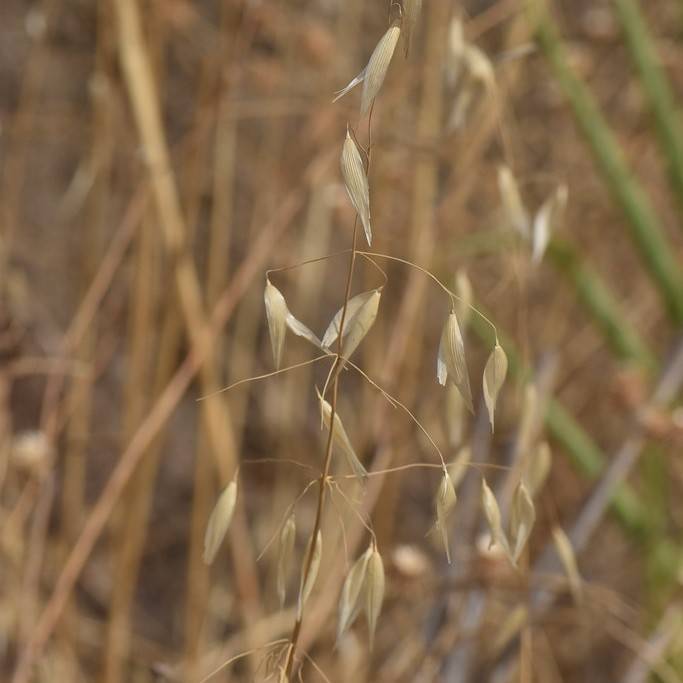
Common wild oats are an annual grass native to Eurasia that has naturalized across most temperate global regions, frequently colonizing disturbed soils, agricultural fields, and grasslands. It produces loose, nodding panicles of spikelets with long, twisted awns that twist in response to moisture, aiding seed burial for germination. While often classified as a problematic weed in grain crop fields, it is closely related to cultivated oats and offers edible, nutritious seeds that can be harvested and processed similarly to domesticated oat varieties.
Care Guide
Watering
Common wild oats are highly drought-tolerant once established, requiring only occasional supplemental water during extended dry periods, as they naturally thrive in temperate regions with moderate seasonal rainfall. Overwatering or prolonged saturated soil will lead to root rot and reduced seed production, so it is best to let the top several inches of soil dry out completely between waterings. In agricultural or naturalized settings, it typically receives sufficient moisture from seasonal precipitation and does not need regular irrigation.
Light
This species thrives in full, direct sunlight, requiring a minimum of 6 hours of unobstructed sun daily to support robust growth and ample seed production. It can tolerate very light, dappled shade for short periods, but growth will become leggy, and seed yields will decline significantly in low-light conditions. For cultivation, choose a planting site with unfiltered southern or western exposure for optimal performance.
Soil
Common wild oats are extremely adaptable to a wide range of soil types, including sandy, loam, clay, and poor, disturbed soils with low nutrient content. It prefers a neutral to slightly alkaline pH between 6.0 and 8.0, but can tolerate mildly acidic conditions as low as 5.5 without significant stunting. Well-drained soil is critical to prevent root rot, though it can withstand short periods of waterlogging better than many other grass species.
Fertilizer
This grass requires minimal to no fertilization, as it thrives in low-nutrient soils and excess nitrogen will only promote excessive foliage growth at the expense of seed production. If grown in extremely depleted soils, a single application of a balanced, slow-release 10-10-10 fertilizer at planting time is sufficient to support full growth through its life cycle. Avoid frequent or high-nitrogen fertilizers, which increase its competitive spread if grown near other desired plants.
Temperature
Common wild oats grow best in temperate climates with daytime temperatures between 60 and 75°F (15 to 24°C), and can tolerate light frosts down to 25°F (-4°C) during early growth stages. Seeds germinate optimally when soil temperatures are between 40 and 60°F (4 and 15°C), which allows it to emerge early in the spring before many competing plant species. It cannot tolerate extreme heat above 90°F (32°C) for extended periods, which will trigger early maturation and seed set.
Pruning
Pruning is generally unnecessary for common wild oats, though if grown in a garden setting, cutting back seed heads before they mature can prevent unwanted self-seeding and spread to adjacent areas. If harvested for grain, stalks can be cut at the base once seed heads have fully ripened and turned a pale tan color, typically in late summer or early fall. Dead or damaged foliage can be removed at any time to improve the plant’s appearance, though it is not required for health.
Propagation
Common wild oats propagate exclusively from seed, which is highly viable and can remain dormant in soil for up to 10 years before germinating under favorable conditions. To propagate, sow seeds directly on the soil surface in early spring, as they require light to germinate and will not emerge if buried more than 1 inch deep. Seeds will germinate within 7 to 14 days when soil temperatures are consistently above 40°F (4°C), and plants will reach maturity in 90 to 110 days.
Humidity
This species is adaptable to a wide range of humidity levels, thriving in both dry and moderately humid temperate environments between 30% and 70% relative humidity. It does not require high humidity, and extended periods of high humidity above 80% can increase the risk of fungal rust and powdery mildew infections on foliage. Good air circulation around plants helps mitigate fungal disease risk in more humid regions.
Repotting
Repotting is not applicable for common wild oats, as it is an annual plant that completes its full life cycle in a single growing season and is almost exclusively grown directly in outdoor soil or large outdoor containers. If grown in a container, it will not need to be repotted during its short lifespan, as long as the pot is at least 12 inches deep to accommodate its fibrous root system. After the plant dies back in fall, it can be removed and the soil refreshed for future planting.
Uses & Symbolism
Common wild oats produce edible, nutrient-dense seeds that can be cooked as a whole grain, rolled into flakes, or ground into flour, with a flavor and nutritional profile nearly identical to cultivated oats. Ecologically, it provides a valuable food source for seed-eating birds, small mammals, and pollinator insects, and its fibrous root system helps reduce soil erosion on disturbed sites. It is also used in some traditional herbal medicine systems as a mild nervine to support stress relief and nervous system health.
Diseases & Pests
Common wild oats are susceptible to several fungal diseases, including oat crown rust, stem rust, and powdery mildew, which are most prevalent in warm, humid conditions with poor air circulation. Common pests include aphids, cereal leaf beetles, and wireworms, which feed on foliage and roots, potentially stunting growth and reducing seed yields. It is also a host for several viruses and pathogens that can spread to cultivated oat, wheat, and barley crops, making it a problematic weed in commercial grain production regions.
Related plants
Other plants you might like if you grow Common Wild Oats.