%22%2F%3E%0A%20%20%20%20%20%20%3Ccircle%20cx%3D%22920%22%20cy%3D%22180%22%20r%3D%2290%22%20fill%3D%22%23cfe8d5%22%2F%3E%0A%20%20%20%20%20%20%3Cpath%20d%3D%22M600%20590c-90-180-215-255-310-280%200%20165%20118%20296%20270%20296h40z%22%20fill%3D%22%2379b88e%22%2F%3E%0A%20%20%20%20%20%20%3Cpath%20d%3D%22M600%20590c80-150%20198-212%20302-228-8%20142-123%20255-270%20255h-32z%22%20fill%3D%22%235c9f73%22%2F%3E%0A%20%20%20%20%20%20%3Cpath%20d%3D%22M600%20610V360%22%20stroke%3D%22%234f8c64%22%20stroke-width%3D%2218%22%20stroke-linecap%3D%22round%22%2F%3E%0A%20%20%20%20%20%20%3Ctext%20x%3D%22600%22%20y%3D%22700%22%20text-anchor%3D%22middle%22%20font-family%3D%22Arial%2C%20sans-serif%22%20font-size%3D%2244%22%20fill%3D%22%23365c45%22%3E%0A%20%20%20%20%20%20%20%20Plant%20image%20coming%20soon%0A%20%20%20%20%20%20%3C%2Ftext%3E%0A%20%20%20%20%3C%2Fsvg%3E%0A%20%20)
Dahurian Rhododendron
Rhododendron dahuricum
Overview
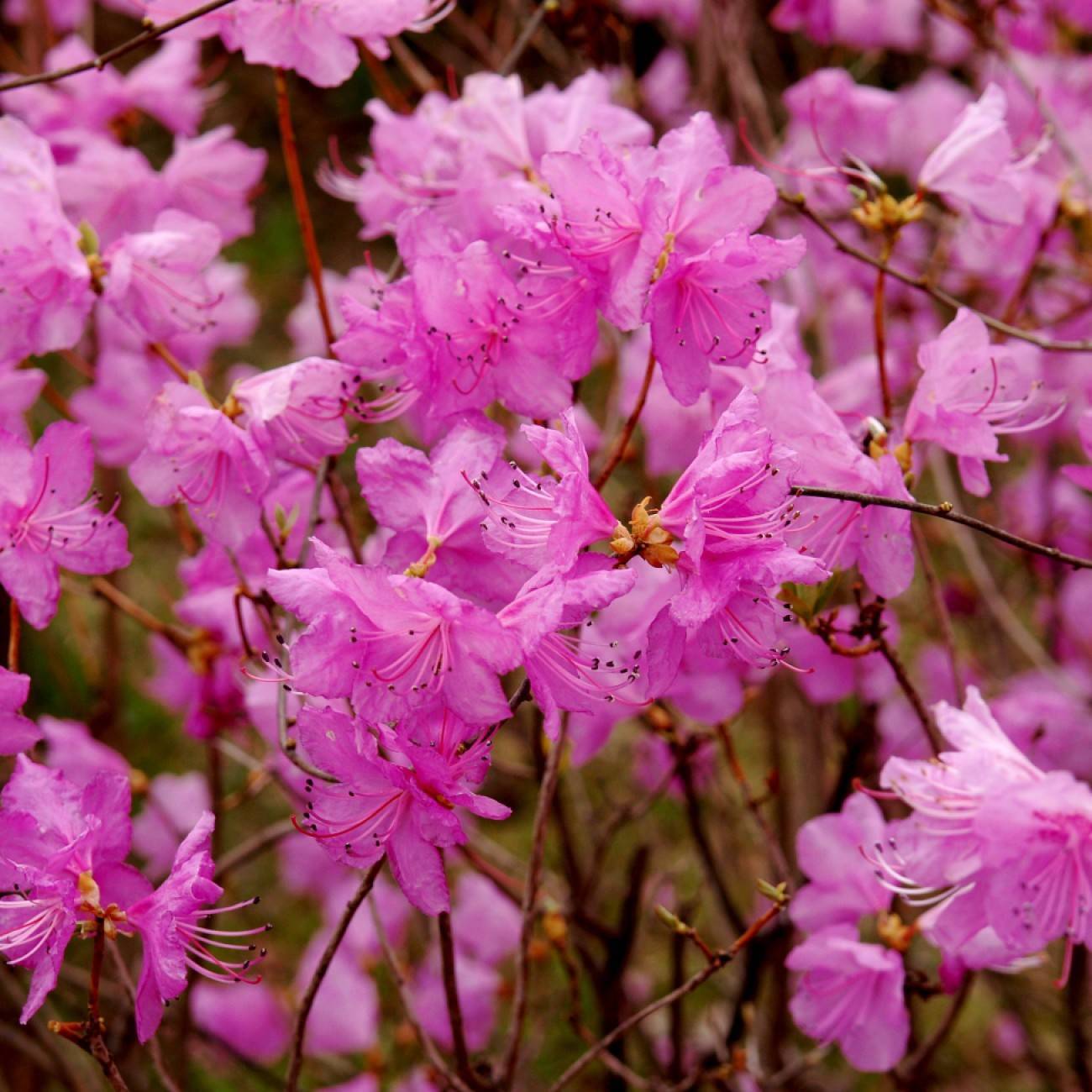
Dahurian Rhododendron is a compact, semi-evergreen to evergreen shrub valued for its exceptional cold tolerance, surviving temperatures as low as -40°F (-40°C). It produces clusters of funnel-shaped, rosy-purple to pale pink flowers in late winter to early spring, often before new foliage emerges, making it a welcome early-season ornamental for temperate and cold-climate gardens. Its small, leathery, dark green leaves take on a purplish-bronze tint in winter for added year-round interest.
Care Guide
Watering
Water regularly to keep soil consistently moist but never waterlogged, as Dahurian Rhododendron is prone to root rot in saturated conditions. Reduce watering frequency in winter when growth slows, only watering when the top 1-2 inches of soil feel dry to the touch. Use rainwater or filtered water if your tap water is high in lime, as alkaline water can disrupt soil pH and cause nutrient deficiencies.
Light
Thrives in partial shade, particularly with protection from harsh midday sun that can scorch its delicate foliage and flowers. It tolerates full sun in cooler northern climates as long as soil moisture remains consistent, but will suffer in extended, intense direct sun in warmer regions. Dappled shade under tall deciduous trees mimics its native forest edge habitat for optimal growth.
Soil
Requires well-draining, acidic soil with a pH between 4.5 and 6.0, a requirement common to all ericaceous plants. Amend heavy clay soils with peat moss, pine bark, or composted oak leaves to improve drainage and lower pH, as alkaline soils will cause iron chlorosis and stunted growth. Avoid planting in low-lying areas where water pools after rain to prevent root rot.
Fertilizer
Feed with a slow-release, ericaceous (acid-loving) plant fertilizer in early spring just before new growth begins, following package instructions to avoid over-fertilizing which can burn shallow roots. A second light application can be made immediately after flowering finishes to support new foliage development, but avoid fertilizing after mid-summer as this can prompt tender new growth vulnerable to winter damage. Do not use fertilizers containing lime or high levels of phosphorus, as these can disrupt nutrient uptake in acidic soil.
Temperature
Extremely cold hardy, thriving in USDA zones 3 through 7, withstanding winter lows down to -40°F (-40°C) when dormant. It prefers cool summer temperatures between 60-75°F (15-24°C), and may struggle in regions with prolonged summer heat above 85°F (29°C) without adequate shade and moisture. A layer of winter mulch around the root zone helps insulate roots and prevent frost heave in cold climates.
Pruning
Minimal pruning is required for this naturally compact shrub; only remove dead, damaged, or diseased branches at any time of year. If shaping is needed, prune immediately after flowering finishes, as flower buds form on the previous year’s growth, and pruning later in the season will remove the next year’s blooms. Avoid heavy cutting back into old, woody stems, as these often fail to resprout vigorously.
Propagation
Most commonly propagated from semi-hardwood cuttings taken in mid to late summer, treated with rooting hormone, and placed in a well-draining acidic propagation medium under high humidity. It can also be grown from seed, but seed-grown plants may take 3-5 years to reach flowering size and do not always retain the exact characteristics of the parent plant. Layering is another reliable method: bend a low-growing stem to the ground, wound the section under soil, pin in place, and allow 1-2 years for roots to form before separating from the parent.
Humidity
Prefers moderate to high humidity levels between 40-60%, typical of its native forest edge habitats. In dry indoor or arid outdoor environments, occasional misting or placement near a water feature can boost humidity levels to prevent leaf browning and drop. Avoid placing in areas with constant dry, blowing wind, as this will quickly desiccate foliage and flower buds.
Repotting
If grown in containers, repot every 2-3 years in early spring before new growth emerges, using a high-quality acidic potting mix formulated for rhododendrons or azaleas. Choose a pot only 1-2 inches larger than the current root ball, as Dahurian Rhododendron has shallow roots and performs best when slightly root-bound. Gently loosen the outer root ball before repotting to encourage new root growth into the fresh medium.
Uses & Symbolism
Widely cultivated as an ornamental shrub in cold-climate gardens, used in foundation plantings, shrub borders, rock gardens, and woodland landscapes for its early spring floral display. It is a parent of many popular early-blooming rhododendron and azalea hybrids, valued for passing on its exceptional cold hardiness to cultivated varieties. In its native range, extracts from the plant have been used in traditional medicine for anti-inflammatory properties, though its toxic compounds make unregulated use dangerous.
Diseases & Pests
Common fungal diseases include powdery mildew, leaf spot, and root rot, the latter most often caused by overwatering or poorly draining soil. Pests that may infest Dahurian Rhododendron include rhododendron borer, lace bugs, spider mites, and scale insects, which can be controlled with horticultural oil or insecticidal soap when caught early. Chlorosis, or yellowing of leaves, is a common abiotic issue caused by alkaline soil, which inhibits iron uptake and can be corrected with soil acidifiers or iron chelate applications.
Related plants
Other plants you might like if you grow Dahurian Rhododendron.