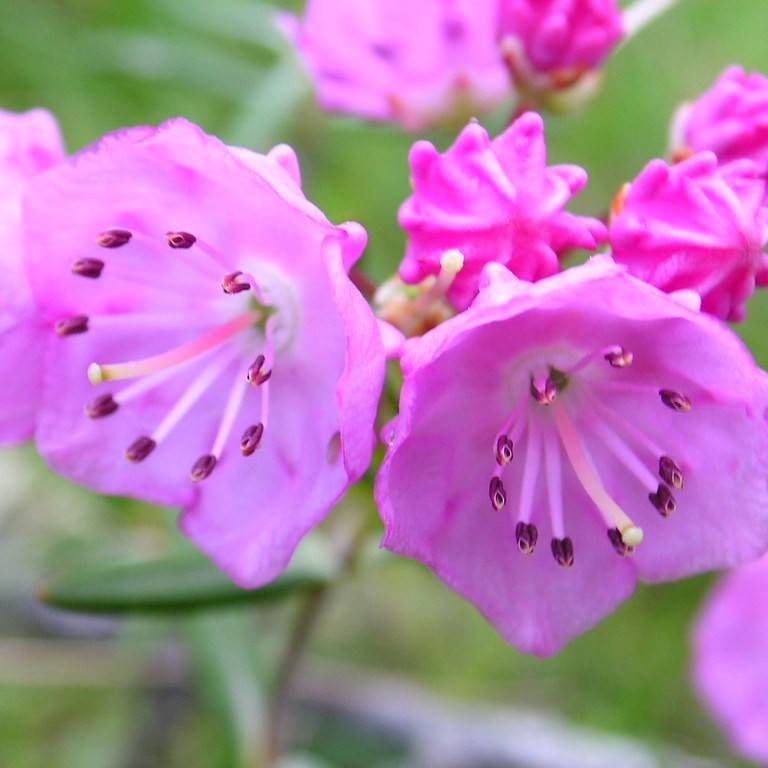
Bog Laurel
Kalmia polifolia
Overview
Bog laurel is a low-growing evergreen shrub native to cold, nutrient-poor wetland ecosystems, recognized for its clusters of delicate, pale pink to lavender bell-shaped flowers that bloom in late spring. Its leathery, glossy dark green leaves are rolled at the edges, an adaptation to reduce water loss in its saturated, wind-exposed native habitat. It plays a key ecological role in bog ecosystems, providing shelter for small wetland wildlife and supporting specialized pollinator species.
Care Guide
Watering
Bog laurel requires consistently saturated, never dry soil, mimicking its native bog habitat; use rainwater or distilled water to avoid alkaline mineral buildup that can harm its roots. In cultivation, it is best grown in water gardens, bog planters, or consistently moist garden beds where the root zone remains wet year-round, never allowing the soil to dry out even temporarily.
Light
It thrives in full sun to partial shade, with optimal flowering occurring in locations that receive at least 6 hours of direct sunlight daily. In warmer southern parts of its range, it benefits from light afternoon shade to prevent foliage scorch during the hottest summer months.
Soil
Bog laurel requires extremely acidic, nutrient-poor soil with a pH between 3.5 and 5.5, composed primarily of peat moss, sphagnum, and sandy loam with no added lime or alkaline amendments. The soil must be poorly drained and water-retentive, as it cannot tolerate well-drained or dry growing conditions.
Fertilizer
Fertilization is rarely necessary, as bog laurel is adapted to low-nutrient bog soils; excessive nutrients can cause root burn or kill the plant entirely. If growth is severely stunted, apply a very dilute, acid-loving plant fertilizer once in early spring, avoiding high-phosphorus formulas that are toxic to this species.
Temperature
It is cold-hardy, thriving in USDA zones 2 to 6, tolerating winter temperatures as low as -50°F (-45°C) when protected by a layer of snow or ice over its root zone. It does not tolerate high heat or humidity above 75°F (24°C) for extended periods, making it unsuitable for cultivation in warm temperate or subtropical climates.
Pruning
Pruning is minimal, limited to removing dead or damaged stems in early spring before new growth emerges to maintain a compact shape and improve air circulation. Avoid heavy pruning, as bog laurel grows slowly and may struggle to regrow from cuts made into old, woody stems.
Propagation
Bog laurel is most reliably propagated from semi-hardwood cuttings taken in late summer, rooted in moist sphagnum moss under high humidity with bottom heat to encourage root development. It can also be grown from fresh seed sown on the surface of acidic peat moss in late fall, though germination is slow and may take 6 to 12 months.
Humidity
It prefers high humidity levels between 60% and 80%, typical of its native bog and wetland habitats, and will suffer leaf browning or drop in excessively dry air. When grown in containers, place the pot on a tray filled with water and pebbles to maintain consistent ambient humidity around the foliage.
Repotting
Container-grown bog laurel only needs repotting every 3 to 4 years, when roots have completely filled the existing container, using a fresh acidic peat and sphagnum moss mix with no added compost or nutrients. Handle roots carefully during repotting, as they are shallow and fragile, and avoid disturbing the root ball more than necessary to prevent transplant shock.
Uses & Symbolism
Bog laurel is occasionally cultivated in native plant water gardens, bog landscapes, and wetland restoration projects for its attractive spring flowers and evergreen foliage, as well as its ability to stabilize saturated wetland soils. It has no edible or medicinal uses due to its high toxicity, though some Indigenous North American communities historically used small, carefully processed quantities of its foliage for limited ceremonial and therapeutic purposes.
Diseases & Pests
Bog laurel is relatively pest-free in its native habitat, but it is susceptible to root rot and fungal leaf spots if grown in poorly aerated, stagnant water or overly shaded conditions with poor air circulation. Aphids and lace bugs may occasionally feed on its foliage, though infestations are rarely severe and can be controlled with insecticidal soap or by introducing predatory insects like ladybugs.
Related plants
Other plants you might like if you grow Bog Laurel.
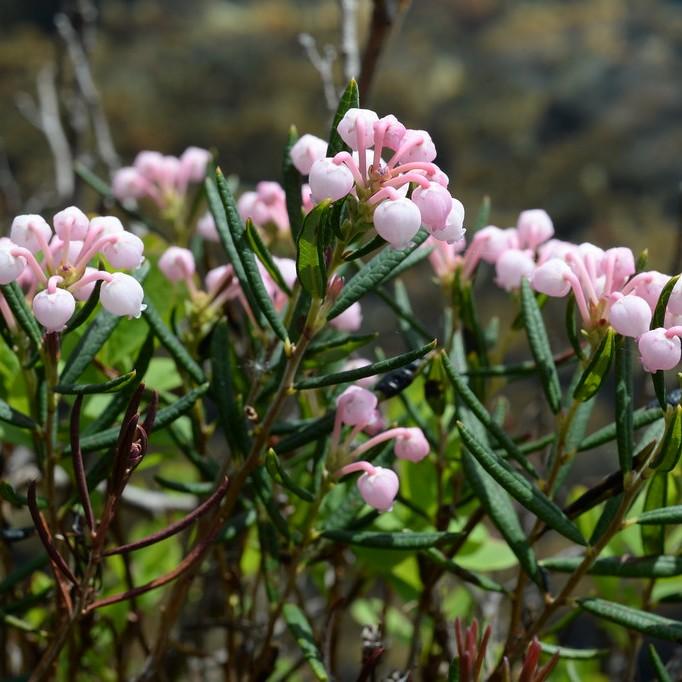
Bog Rosemary
Andromeda polifolia
%22%2F%3E%0A%20%20%20%20%20%20%3Ccircle%20cx%3D%22920%22%20cy%3D%22180%22%20r%3D%2290%22%20fill%3D%22%23cfe8d5%22%2F%3E%0A%20%20%20%20%20%20%3Cpath%20d%3D%22M600%20590c-90-180-215-255-310-280%200%20165%20118%20296%20270%20296h40z%22%20fill%3D%22%2379b88e%22%2F%3E%0A%20%20%20%20%20%20%3Cpath%20d%3D%22M600%20590c80-150%20198-212%20302-228-8%20142-123%20255-270%20255h-32z%22%20fill%3D%22%235c9f73%22%2F%3E%0A%20%20%20%20%20%20%3Cpath%20d%3D%22M600%20610V360%22%20stroke%3D%22%234f8c64%22%20stroke-width%3D%2218%22%20stroke-linecap%3D%22round%22%2F%3E%0A%20%20%20%20%20%20%3Ctext%20x%3D%22600%22%20y%3D%22700%22%20text-anchor%3D%22middle%22%20font-family%3D%22Arial%2C%20sans-serif%22%20font-size%3D%2244%22%20fill%3D%22%23365c45%22%3E%0A%20%20%20%20%20%20%20%20Plant%20image%20coming%20soon%0A%20%20%20%20%20%20%3C%2Ftext%3E%0A%20%20%20%20%3C%2Fsvg%3E%0A%20%20)
Dahurian Rhododendron
Rhododendron dahuricum
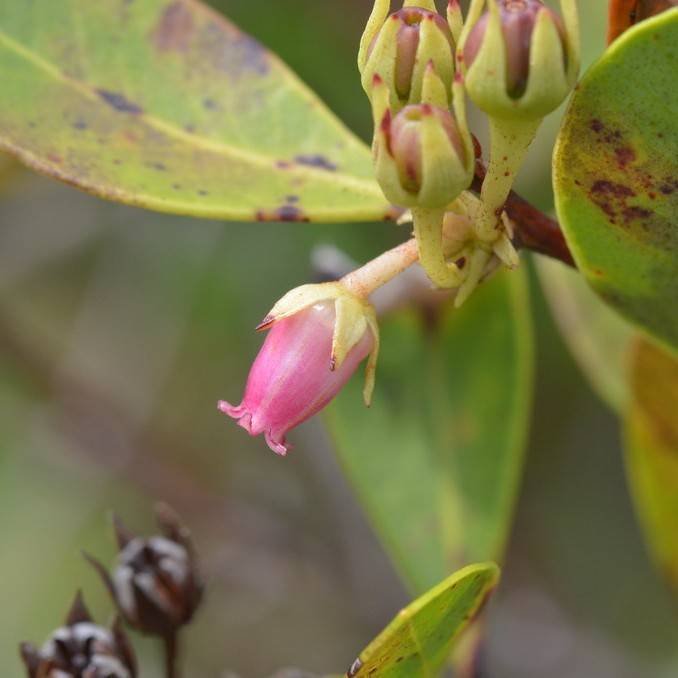
Fetter Bush
Lyonia lucida
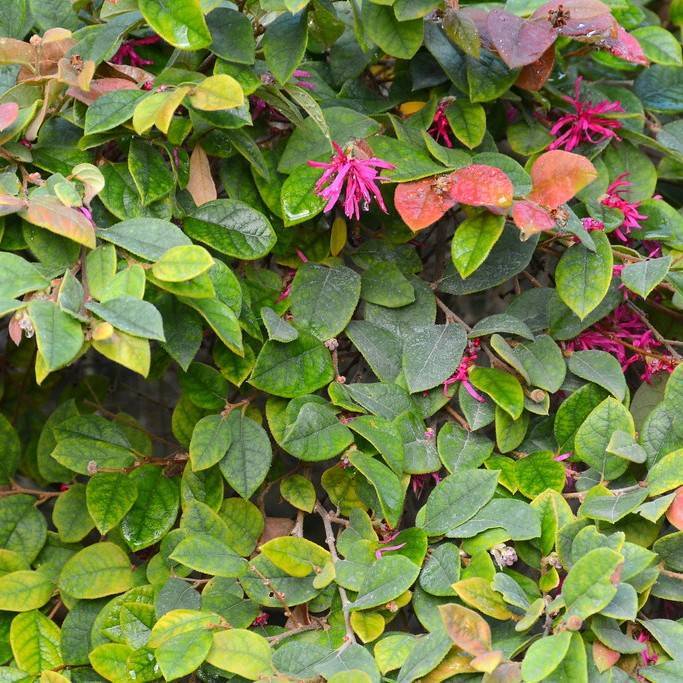
Chinese Fringe Flower
Loropetalum chinense
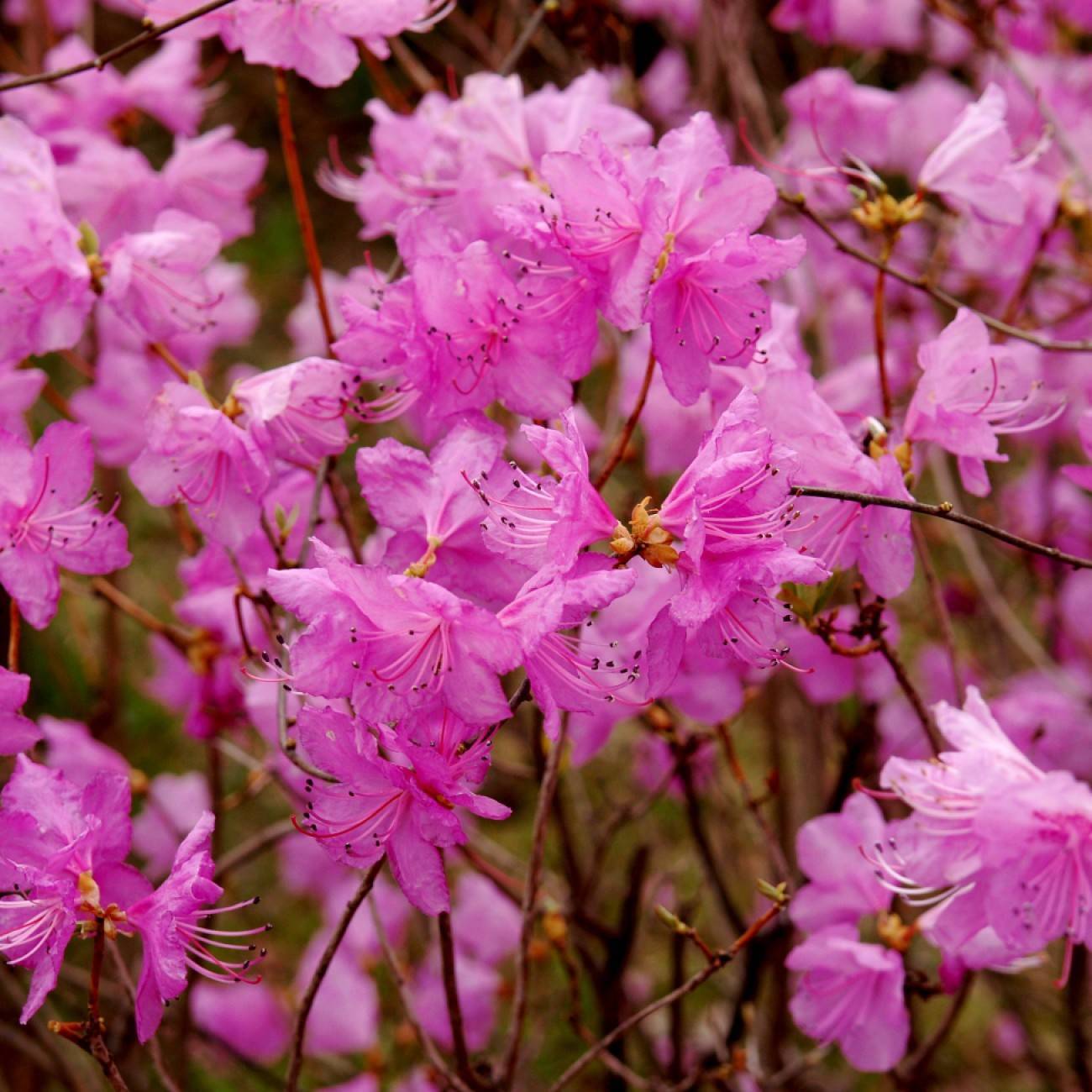
Korean Rhododendron
Rhododendron mucronulatum
Deciduous Azalea
Rhododendron spp. (subgenus Pentanthera)
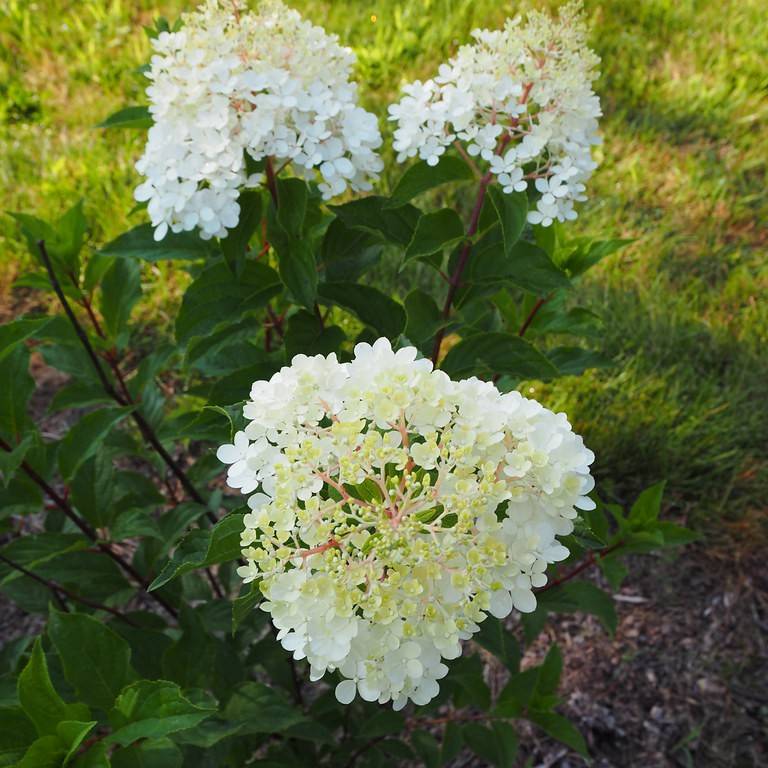
Cascade Hydrangea
Hydrangea seemannii
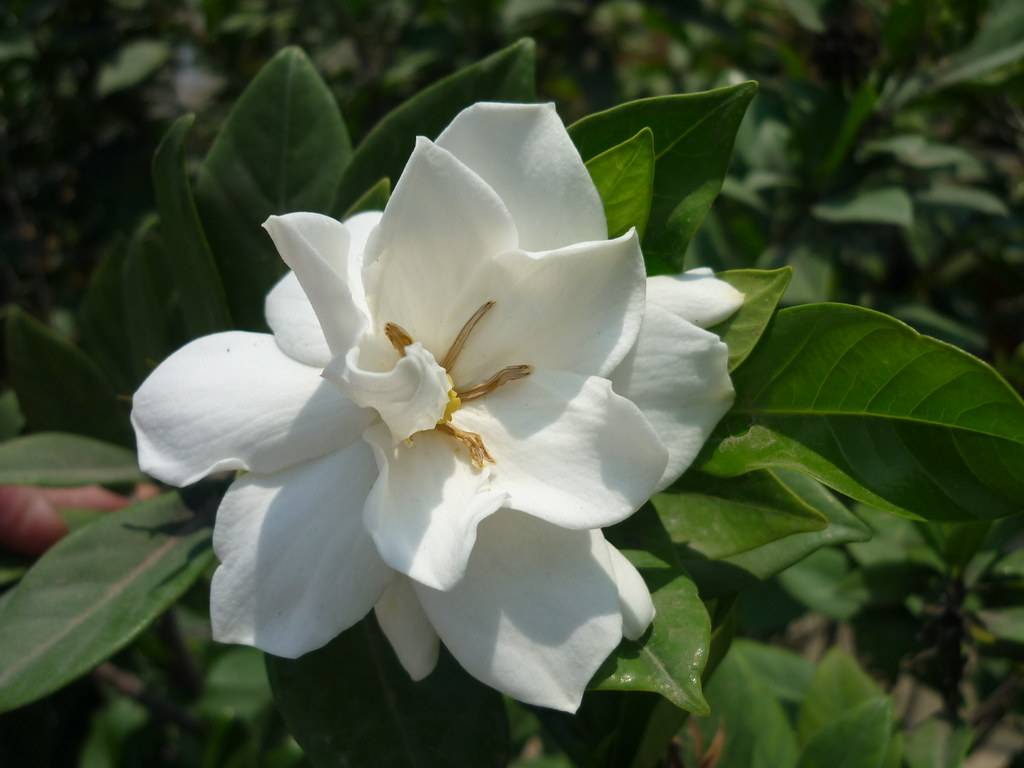
Gardenia
Gardenia jasminoides