Cypress Spurge
Euphorbia cyparissias
Overview
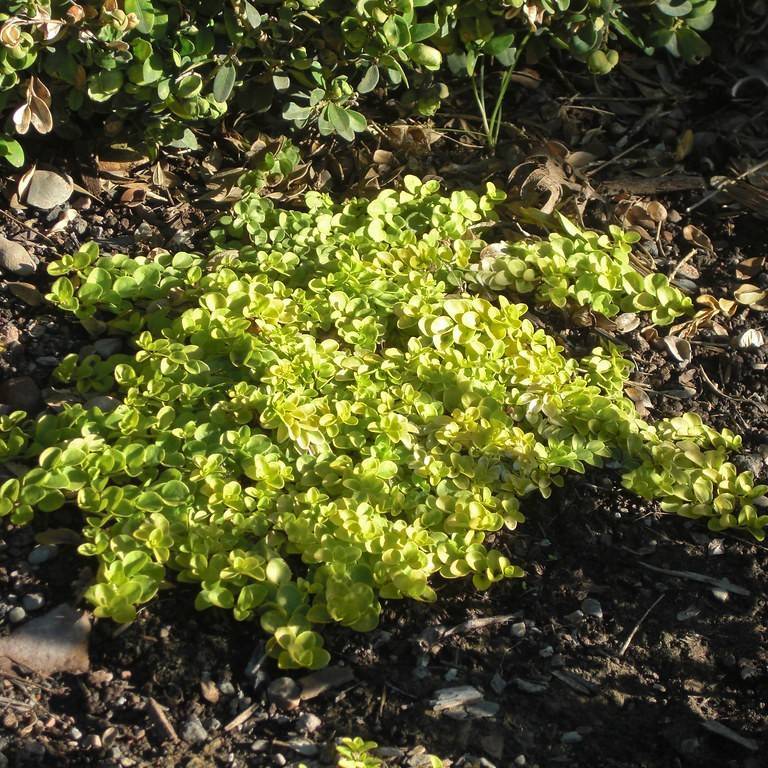
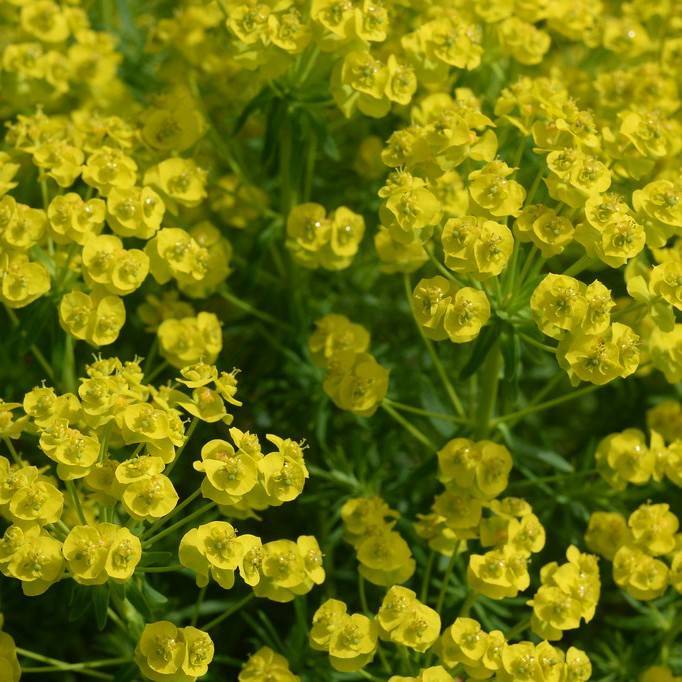
Cypress spurge is a mat-forming perennial distinguished by its dense, needle-like blue-green leaves that resemble cypress foliage, creating a soft, fern-like texture. In spring, it produces clusters of tiny, petal-less flowers surrounded by vivid lime-green bracts that fade to yellow as the season progresses, often re-blooming lightly in fall. It spreads aggressively via both underground rhizomes and self-seeding, making it a popular ground cover for dry, sunny areas where less vigorous plants struggle, though it is classified as invasive in some North American regions.
Care Guide
Watering
Cypress spurge is highly drought-tolerant once established, requiring only occasional deep watering during extended periods of no rainfall; overwatering is the most common cause of health issues, as soggy soil quickly leads to root rot. Newly planted specimens should be watered lightly once a week for the first growing season to help them develop a robust root system, after which they can survive almost entirely on natural precipitation in most temperate climates. Avoid overhead watering to minimize the risk of foliar fungal diseases, watering directly at the base of the plant instead.
Light
This species thrives in full, direct sunlight, requiring a minimum of 6 hours of unobstructed sun per day to produce its characteristic dense foliage and abundant spring bracts. It can tolerate very light, dappled shade for a portion of the day, but growth will become leggy, flowering will be reduced, and the plant may lose its compact, mat-forming habit in low-light conditions. Full sun exposure also helps suppress foliar pathogens by keeping foliage dry after rain or watering.
Soil
Cypress spurge adapts to a wide range of soil types, including poor, rocky, sandy, and low-nutrient soils, as long as the medium has excellent drainage. It is highly tolerant of alkaline soil pH, making it suitable for gravel gardens, rockeries, and areas with limestone-derived substrates that challenge many other ornamental plants. Heavy, clay-rich soils should be amended heavily with coarse sand, grit, or organic matter before planting to improve drainage and prevent waterlogging around the root zone.
Fertilizer
This species does not require regular fertilization, as it thrives in low-nutrient soils; excessive fertilization will lead to lush, weak growth that is more prone to pest infestations and flopping. If planted in extremely poor, depleted soil, a single application of a balanced, slow-release granular fertilizer in early spring, applied at half the manufacturer’s recommended rate, is sufficient to support healthy growth for the entire growing season. Avoid using high-nitrogen fertilizers, as they will encourage excessive foliage production at the expense of flowering and may accelerate the plant’s invasive spread.
Temperature
Cypress spurge is cold-hardy in USDA zones 3 through 9, tolerating winter temperatures as low as -40°F (-40°C) without protection once established. It is highly heat-tolerant, thriving in summer temperatures above 90°F (32°C) as long as it is not overwatered, and it withstands strong winds and salt spray, making it suitable for coastal plantings. Frost will kill back the above-ground foliage in fall, but the root system will remain dormant over winter and produce new growth in early spring as temperatures rise.
Pruning
Prune back faded flower bracts in late spring or early summer after the primary bloom period to tidy the plant’s appearance, encourage denser foliage growth, and prevent self-seeding if you wish to limit its spread. Wear gloves when pruning to avoid contact with the toxic milky sap that oozes from cut stems, which can cause painful skin rashes and eye irritation. In late fall, after the first hard frost kills back the foliage, cut all stems down to 1-2 inches above the soil line to reduce overwintering sites for pests and fungal pathogens.
Propagation
The easiest method of propagation is by division, performed in early spring just as new growth emerges or in early fall after flowering has finished; dig up mature clumps, separate the rhizomatous root systems into smaller sections, each with at least 2-3 growing points, and replant immediately at the same depth as the original plant. Cypress spurge can also be grown from seed, sown directly outdoors in fall for natural cold stratification, or started indoors 8-10 weeks before the last expected frost date, though seed-grown plants will take 2-3 years to reach mature size and bloom reliably. Stem cuttings are not recommended, as the thick, toxic sap often prevents successful rooting, and cuttings are prone to rotting before they can develop root systems.
Humidity
Cypress spurge prefers low to moderate humidity levels between 30% and 50%, which are typical of its native dry meadow and rocky hillside habitats. It does not tolerate high humidity well, especially when combined with warm temperatures and poor air circulation, as these conditions increase the risk of powdery mildew and other foliar fungal diseases. Indoor potted specimens should be kept in well-ventilated areas, and avoid misting or placing the plant near humidifiers, as excess moisture on foliage will quickly lead to health issues.
Repotting
Cypress spurge is rarely grown as a potted plant, but if cultivated in containers, it only needs repotting every 3-4 years, when roots begin to grow out of the drainage holes or the plant becomes root-bound. Use a fast-draining cactus or succulent potting mix, or amend regular potting soil with 50% coarse sand or perlite to ensure adequate drainage, and choose a pot with multiple drainage holes to prevent waterlogging. Wear gloves when handling the plant during repotting to avoid contact with its toxic sap, and water sparingly for the first 2 weeks after repotting to allow roots to recover from disturbance.
Uses & Symbolism
Cypress spurge is most commonly used as a drought-tolerant ground cover for sunny, dry areas such as rock gardens, gravel gardens, sloped banks, and xeriscapes, where its dense mat-forming growth suppresses weeds and reduces soil erosion. It is also planted as a deer-resistant ornamental border plant, as its toxic foliage is unpalatable to deer, rabbits, and most other herbivorous wildlife. Historically, its toxic sap was used in traditional folk medicine to treat warts, skin lesions, and intestinal parasites, though it is no longer recommended for medicinal use due to its high risk of adverse reactions.
Diseases & Pests
Cypress spurge is largely pest-free due to its toxic foliage, though it may occasionally be infested by aphids, spider mites, or mealybugs that feed on the sap of new growth; these can be controlled with insecticidal soap or horticultural oil, applied carefully to avoid contacting skin with the plant’s sap. The most common disease issues are fungal, including powdery mildew, root rot, and rust, which are almost always caused by overwatering, poor drainage, or insufficient air circulation around the plant. In areas where it is classified as invasive, it can outcompete native plant species, and its aggressive rhizomatous spread can make it difficult to eradicate once established in a landscape.
Related plants
Other plants you might like if you grow Cypress Spurge.