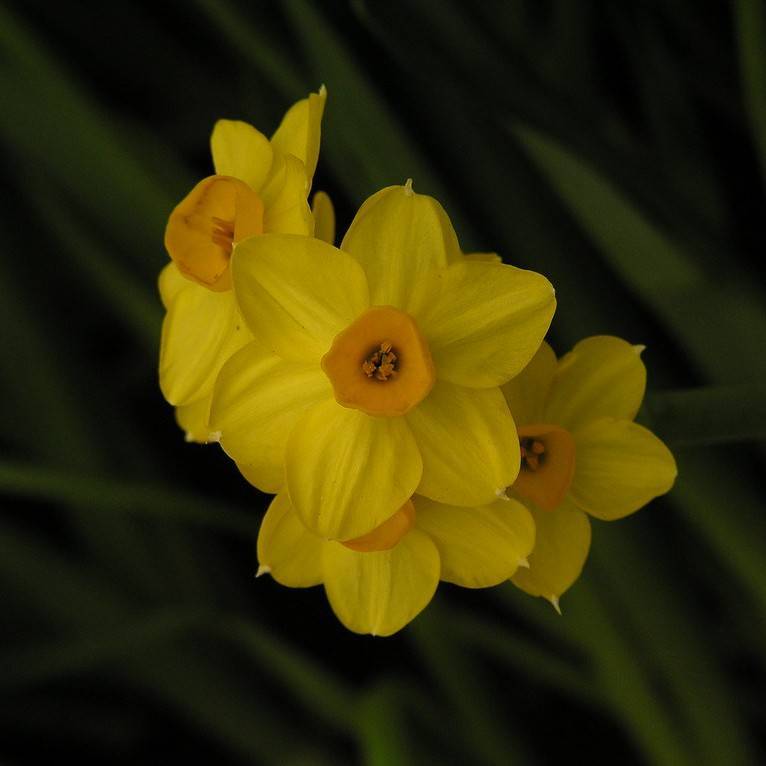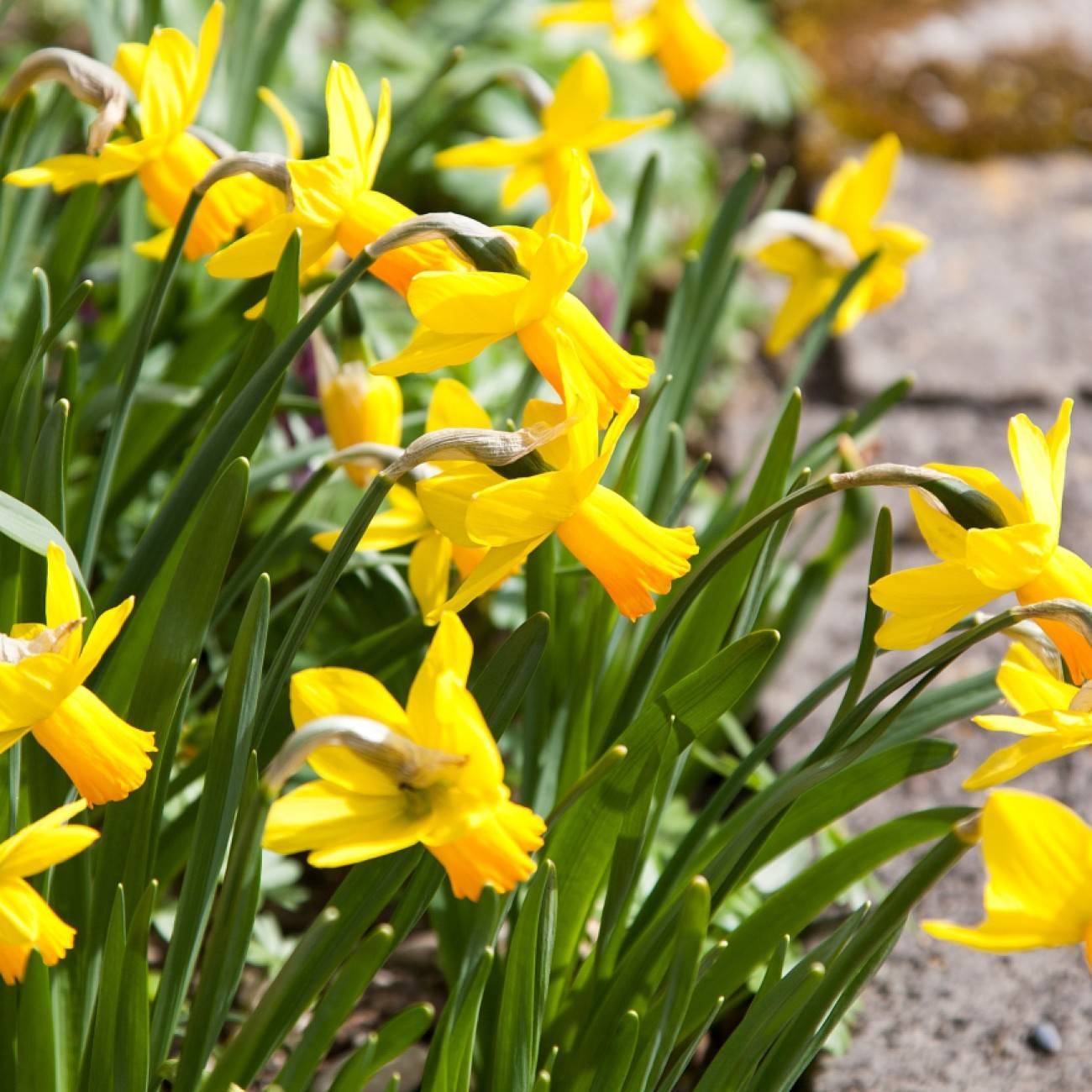
Cyclamineus Daffodil
Narcissus cyclamineus
Overview
Cyclamineus daffodils are compact, charming spring bulbs named for their resemblance to cyclamen flowers, characterized by sharply reflexed perianth petals and slender, elongated central trumpets. They are among the earliest daffodils to bloom, often emerging in late winter to early spring, bringing bright yellow color to gardens before many other plants awaken. These bulbs are highly adaptable, naturalizing readily in appropriate conditions to form dense, colorful drifts over several years.
Care Guide
Watering
Water regularly during active growth in fall and spring, keeping soil consistently moist but not waterlogged to prevent bulb rot. Reduce watering after flowering finishes as foliage begins to yellow and die back, allowing bulbs to enter dormancy in dry soil for summer.
Light
Thrives in full sun to partial shade, with at least 4-6 hours of direct sunlight daily during the growing season to support robust flowering. Partial afternoon shade in warmer climates helps extend bloom duration and prevent premature fading of flowers.
Soil
Prefers well-drained, fertile, loamy soil with a neutral to slightly acidic pH between 6.0 and 7.0. Heavy clay soils should be amended with compost or grit to improve drainage, as soggy conditions will quickly cause bulb decay.
Fertilizer
Apply a balanced, slow-release bulb fertilizer in early spring as new shoots emerge, working it gently into the top layer of soil without disturbing shallow roots. Avoid high-nitrogen fertilizers, which encourage excessive foliage growth at the expense of flower production.
Temperature
Cold-hardy in USDA zones 4 through 9, requiring 12-16 weeks of cold temperatures between 35-45°F (2-7°C) in winter to trigger proper bulb vernalization and spring blooming. Winter temperatures below -20°F (-29°C) may damage bulbs if not protected with a thick layer of mulch.
Pruning
Deadhead spent flowers immediately after blooming to prevent seed formation, which diverts energy from bulb storage for the next year’s growth. Allow foliage to yellow and die back completely, usually 6-8 weeks after flowering, before trimming it away to let the bulbs photosynthesize and store nutrients.
Propagation
Easily propagated by dividing bulb offsets every 3-5 years in late summer once bulbs are fully dormant, separating small baby bulbs from the parent bulb and replanting them at the same depth. Seeds can be sown in fall, but may take 3-5 years to produce flowering-sized bulbs, making division the preferred method for home gardeners.
Humidity
Tolerates average outdoor humidity levels between 40-60% during the growing season, with no special humidity requirements. Excessively high humidity combined with poor air circulation increases the risk of fungal diseases, so space bulbs appropriately when planting.
Repotting
Container-grown cyclamineus daffodils should be repotted every 2-3 years in late summer during dormancy, replacing old potting mix with fresh, well-drained bulb mix and dividing crowded offsets as needed. Plant bulbs at a depth of 3 times their diameter, with the pointed tip facing upward, to ensure proper growth and flowering.
Uses & Symbolism
Cyclamineus daffodils are widely planted in rock gardens, border edges, woodland gardens, and lawn naturalizations, where their small size and early bloom add cheerful pops of yellow late in winter. They make excellent cut flowers for small bouquets, though their sap can irritate skin and shorten the vase life of other flowers if not conditioned separately first. Their deer and rodent resistance makes them a popular choice for areas with heavy wildlife pressure that damage other spring bulbs.
Diseases & Pests
The most common issues are bulb rot, caused by overwatering or poorly drained soil, and fungal leaf spot, which appears as brown spots on foliage during wet, cool spring weather. Pests include narcissus bulb flies, which lay eggs at the base of plants, and their larvae tunnel into bulbs, causing decay, plus slugs and snails that may chew young foliage and flower buds in damp conditions.
Related plants
Other plants you might like if you grow Cyclamineus Daffodil.
%22%2F%3E%0A%20%20%20%20%20%20%3Ccircle%20cx%3D%22920%22%20cy%3D%22180%22%20r%3D%2290%22%20fill%3D%22%23cfe8d5%22%2F%3E%0A%20%20%20%20%20%20%3Cpath%20d%3D%22M600%20590c-90-180-215-255-310-280%200%20165%20118%20296%20270%20296h40z%22%20fill%3D%22%2379b88e%22%2F%3E%0A%20%20%20%20%20%20%3Cpath%20d%3D%22M600%20590c80-150%20198-212%20302-228-8%20142-123%20255-270%20255h-32z%22%20fill%3D%22%235c9f73%22%2F%3E%0A%20%20%20%20%20%20%3Cpath%20d%3D%22M600%20610V360%22%20stroke%3D%22%234f8c64%22%20stroke-width%3D%2218%22%20stroke-linecap%3D%22round%22%2F%3E%0A%20%20%20%20%20%20%3Ctext%20x%3D%22600%22%20y%3D%22700%22%20text-anchor%3D%22middle%22%20font-family%3D%22Arial%2C%20sans-serif%22%20font-size%3D%2244%22%20fill%3D%22%23365c45%22%3E%0A%20%20%20%20%20%20%20%20Plant%20image%20coming%20soon%0A%20%20%20%20%20%20%3C%2Ftext%3E%0A%20%20%20%20%3C%2Fsvg%3E%0A%20%20)