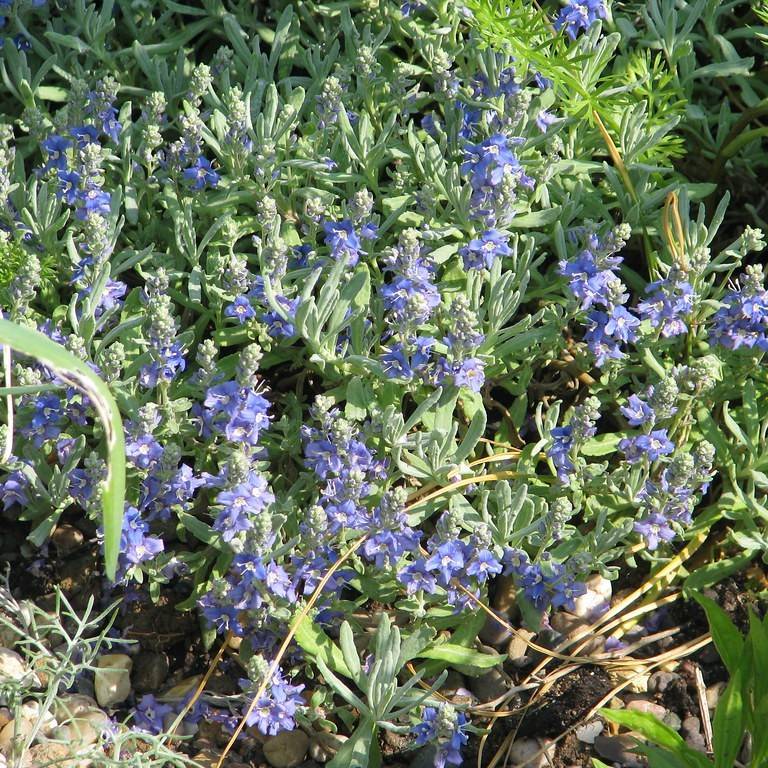
Ash Colored Speedwell
Veronica incana
Overview
Ash colored speedwell, named for its soft, ash-toned foliage, is a hardy, drought-tolerant perennial suited to temperate garden landscapes. It produces dense, upright spikes of tiny, cup-shaped bright blue flowers that bloom from early to mid-summer, attracting pollinators including bees and butterflies. Its compact, mounding growth habit and silver foliage make it a popular contrast plant for pairing with green-leaved perennials in rock gardens, alpine beds, and border fronts.
Care Guide
Watering
Water newly planted ash colored speedwell regularly to establish a strong root system, keeping soil evenly moist but not waterlogged. Once established, it is highly drought tolerant, requiring only occasional watering during extended periods of hot, dry weather. Avoid overwatering, as saturated soil can lead to root rot and fungal issues.
Light
Grow ash colored speedwell in full sun for the most vigorous growth, abundant flowering, and brightest silver foliage color. It can tolerate light partial shade, but too much shade will cause leggy growth, reduced flowering, and fading of the foliage’s characteristic ash-gray hue.
Soil
This plant thrives in well-drained, sandy or loamy soil with a neutral to slightly alkaline pH, though it adapts to most average garden soils as long as drainage is excellent. It tolerates poor, rocky, and low-nutrient soils well, making it ideal for rock gardens and gravel beds. Heavy, poorly draining clay soils should be amended with sand or gravel to improve drainage before planting.
Fertilizer
Ash colored speedwell is a light feeder that requires minimal fertilization to thrive. An application of a balanced, slow-release granular fertilizer in early spring is sufficient for the entire growing season. Avoid overfertilizing, as excess nitrogen will cause lush, soft growth that loses its silver color and makes the plant prone to flopping.
Temperature
It is cold hardy in USDA zones 3 through 8, tolerating winter temperatures as low as -40°F (-40°C) without protection. It prefers moderate summer temperatures between 60 and 80°F (15 and 27°C), and can withstand short periods of high heat as long as it is planted in well-drained soil. In regions with very hot, humid summers, ensure it is planted in a location with good air circulation to prevent fungal disease.
Pruning
Deadhead spent flower spikes after the first bloom to encourage a second, lighter flush of flowers later in the summer. Cut back the entire plant to 2-3 inches above the soil line in late fall after foliage dies back, or in early spring before new growth emerges to keep the clump neat and encourage fresh, dense growth. Thin out overcrowded clumps every 2-3 years to improve air circulation and maintain plant vigor.
Propagation
Ash colored speedwell is most easily propagated by division in early spring or late fall, separating mature clumps into smaller sections with intact roots and replanting immediately. It can also be grown from seed sown directly outdoors in fall or started indoors 6-8 weeks before the last expected frost date. Softwood stem cuttings taken in late spring or early summer will root readily in moist, well-drained growing medium under bright, indirect light.
Humidity
This species prefers moderate to low humidity levels, and is tolerant of dry air common in its native steppe and rocky habitats. High humidity combined with poor air circulation can increase the risk of powdery mildew and other fungal foliage diseases. Ensure plants are spaced adequately to allow airflow around the foliage, especially in humid climates.
Repotting
When grown in containers, ash colored speedwell should be repotted every 2-3 years in early spring, or when roots begin to grow through the drainage holes of the pot. Use a well-drained, gritty potting mix formulated for alpine plants, and select a container with ample drainage holes to prevent waterlogging. After repotting, water lightly and place in full sun to encourage new root growth.
Uses & Symbolism
Ash colored speedwell is widely used as an ornamental plant in rock gardens, alpine beds, border edging, and container plantings, where its silver foliage provides year-round contrast to green and flowering perennials. Its nectar-rich flowers are a valuable food source for native bees, butterflies, and other pollinators, making it a popular addition to wildlife and pollinator gardens. It is also occasionally used as a low-growing groundcover in dry, sunny areas where other plants struggle to establish.
Diseases & Pests
Ash colored speedwell is relatively pest and disease resistant, but can develop powdery mildew and downy mildew in humid conditions or when planted in areas with poor air circulation. Root rot is a common issue in poorly draining, waterlogged soils, so proper soil preparation is critical to prevent this problem. Aphids and spider mites may occasionally infest stressed plants, and can be controlled with insecticidal soap or horticultural oil sprays.
Related plants
Other plants you might like if you grow Ash Colored Speedwell.