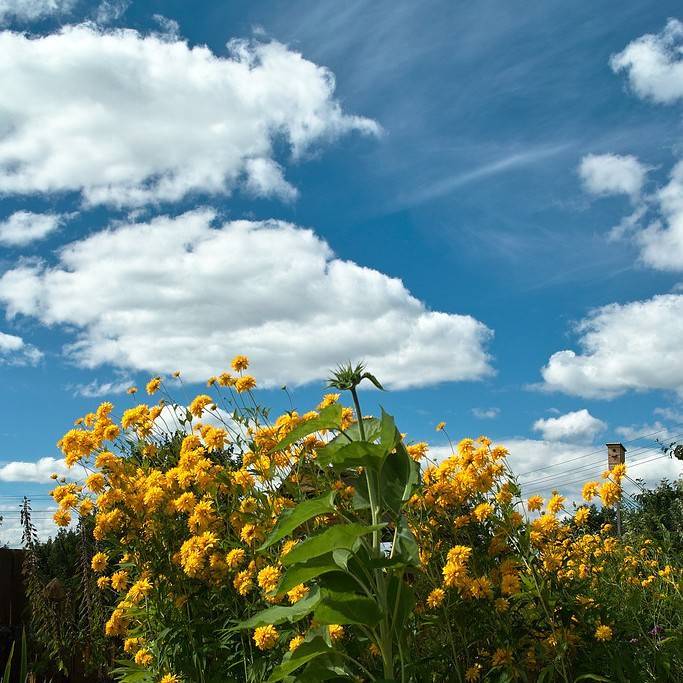
Cutleaf Coneflower
Rudbeckia laciniata
Overview
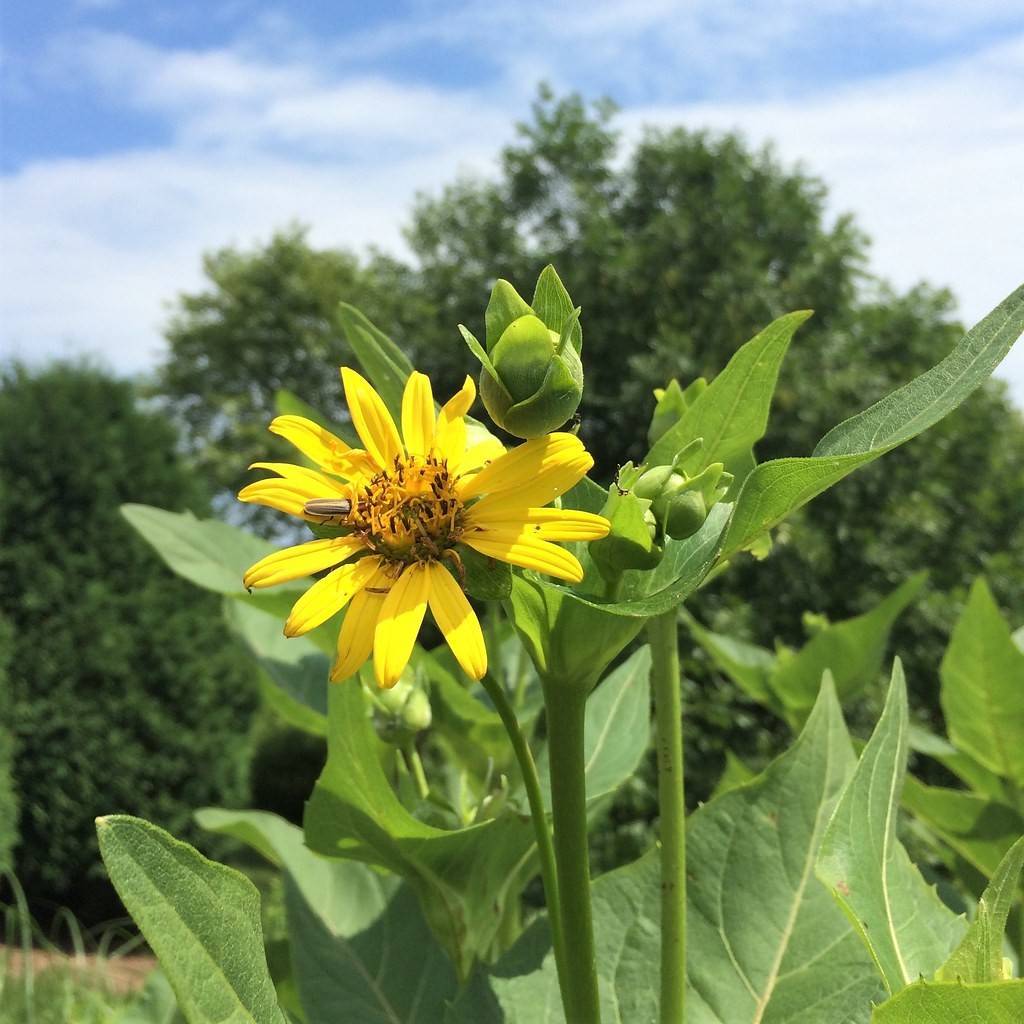
Cutleaf coneflower is a robust herbaceous perennial named for its deeply lobed, fern-like foliage that forms dense, spreading clumps in moist meadows, stream banks, and woodland edges across its native range. From mid-summer to early fall, it produces abundant, long-blooming composite flowers with downward-curving bright yellow ray petals and prominent, rounded green central cones that mature to brown as seeds develop. It spreads readily via rhizomes and self-seeding, making it a popular choice for naturalized landscapes, rain gardens, and wildflower meadows.
Care Guide
Watering
Keep soil consistently moist, especially during the first growing season to establish a deep root system; mature plants tolerate occasional short dry spells but thrive with regular watering in extended drought. Avoid overwatering or waterlogged conditions, which can cause root rot, especially in heavy, poorly draining soils. Water at the base of the plant to keep foliage dry and reduce the risk of foliar diseases.
Light
Grows best in full sun, which encourages strong, upright stems and maximum flower production; it can tolerate partial shade, though plants may become leggy and require staking in low light conditions. In extremely hot, southern climates, provide light afternoon shade to prevent foliage scorch and reduce water stress during the hottest parts of the day.
Soil
Adaptable to a wide range of soil types, including clay, loam, and sandy soils, but prefers fertile, humus-rich, moist but well-draining soils with a neutral to slightly acidic pH between 6.0 and 7.0. It tolerates periodically wet soils, making it suitable for rain gardens and areas near water features, as long as standing water does not persist for more than a few days after rainfall.
Fertilizer
Generally requires minimal fertilization; apply a balanced, slow-release 10-10-10 fertilizer in early spring before new growth emerges if soil is poor or plants show signs of nutrient deficiency such as yellowing foliage or stunted growth. Avoid overfertilizing, especially with high-nitrogen formulas, as this can lead to excessive leaf growth, weak stems that require staking, and reduced flower production.
Temperature
Thrives in USDA hardiness zones 3 through 9, tolerating winter temperatures as low as -40°F (-40°C) and summer highs up to 95°F (35°C) with adequate moisture. Young plants may require a light layer of mulch in their first winter to protect roots from extreme temperature fluctuations, while mature plants are fully cold-hardy and require no special winter protection in their suitable range.
Pruning
Deadhead spent flowers regularly throughout the blooming season to encourage continued flowering and prevent excessive self-seeding if spreading is unwanted. In late fall after flowering ends or early spring before new growth emerges, cut back the entire plant to 4-6 inches above the soil line to remove dead foliage and encourage fresh, healthy new growth in the spring. If plants become leggy in partial shade, pinch back stems in early summer to promote bushier growth and reduce the need for staking.
Propagation
Easily propagated by seed sown directly outdoors in fall or cold-stratified for 30 days and sown indoors 6-8 weeks before the last spring frost, with germination occurring within 14-21 days under warm, moist conditions. Divide mature clumps every 3-4 years in early spring or late fall to control spread, rejuvenate older plants, and produce new specimens; ensure each division has a healthy portion of rhizome and several growth buds for best success. Stem cuttings taken from soft new growth in early summer can also be rooted in moist potting mix with high humidity, though division is the most reliable propagation method.
Humidity
Adaptable to a wide range of humidity levels, thriving in average ambient humidity between 40% and 70% common across its native range. It tolerates high humidity well as long as there is adequate air circulation around the foliage to prevent fungal diseases; avoid overcrowding plants and ensure they are spaced 2-3 feet apart to allow for proper airflow. It has no special humidity requirements and does not need misting or supplemental humidity when grown in garden settings.
Repotting
Primarily grown in outdoor garden beds, but if grown in containers, repot every 1-2 years in early spring before new growth emerges, using a large, deep container to accommodate its extensive root system. Use a well-draining, fertile potting mix amended with compost or well-rotted manure to provide nutrients, and ensure the container has adequate drainage holes to prevent waterlogged soil. Container-grown plants may require more frequent watering and fertilization than those grown in the ground, as soil in pots dries out faster and nutrients leach out with regular watering.
Uses & Symbolism
Cutleaf coneflower is widely used in native plant gardens, pollinator gardens, rain gardens, and naturalized meadows, where its nectar-rich flowers support bees, butterflies, and other beneficial insects, while its mature seed heads provide food for goldfinches and other seed-eating birds through fall and winter. Its tall, showy blooms make it an excellent choice for the back of perennial borders, where it adds vertical interest and long-lasting summer color, and it is often included in erosion control plantings for sloped areas due to its extensive rhizomatous root system that stabilizes soil. Historically, Indigenous peoples used various parts of the plant for medicinal purposes including treating earaches, indigestion, and skin conditions.
Diseases & Pests
Cutleaf coneflower is relatively resistant to most pests and diseases, but can be susceptible to powdery mildew and fungal leaf spots in conditions of high humidity, poor air circulation, or overhead watering, which can be prevented by spacing plants adequately, watering at the base, and removing affected foliage if symptoms appear. Aphids and Japanese beetles may occasionally feed on foliage and flowers, though infestations are rarely severe and can be controlled with insecticidal soap, neem oil, or manual removal for small populations. In poorly draining, waterlogged soils, it may develop root rot, which can be avoided by planting in well-draining soil and avoiding overwatering.
Related plants
Other plants you might like if you grow Cutleaf Coneflower.