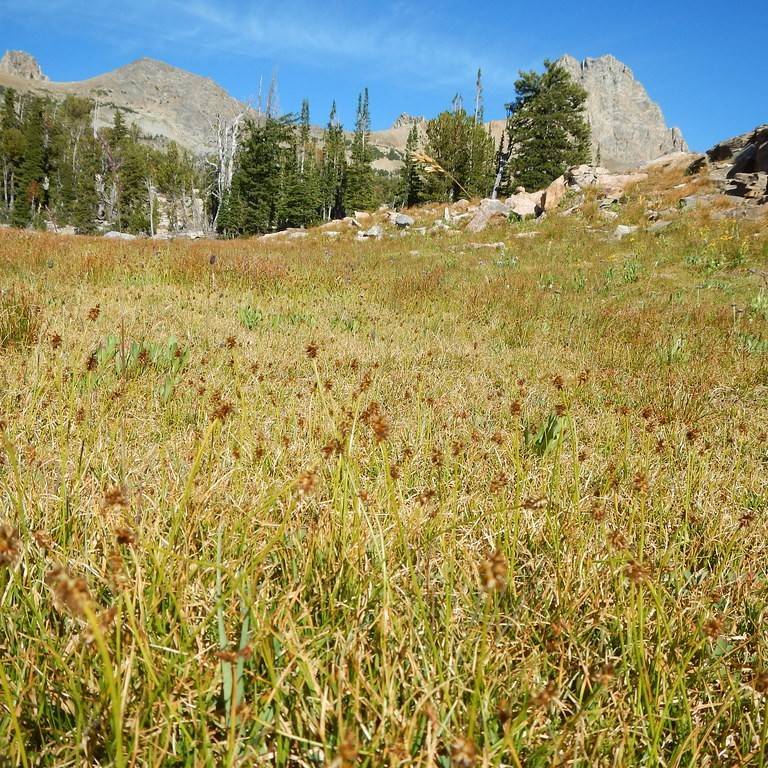
Cusick's Sedge
Carex cusickii
Overview
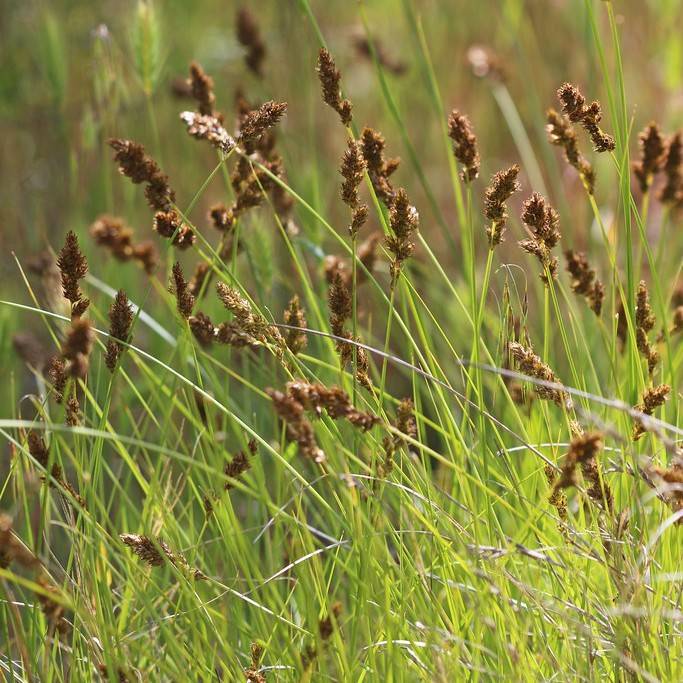
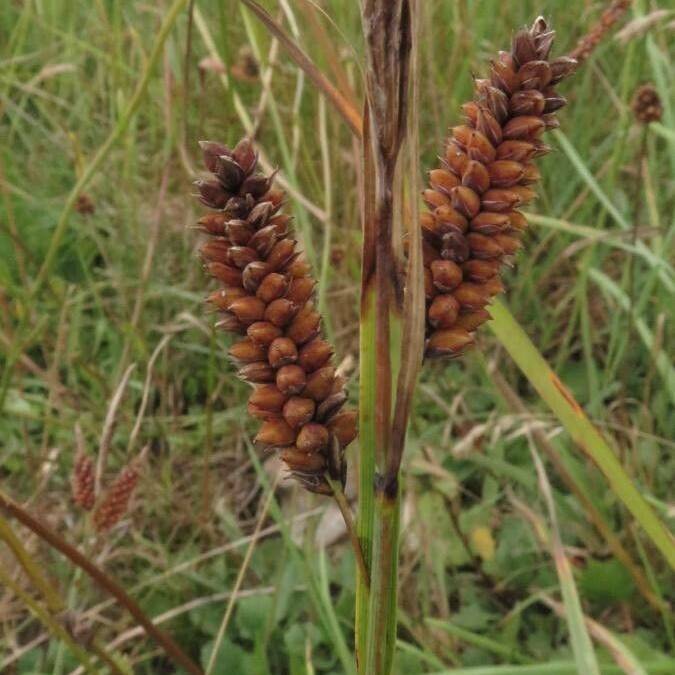
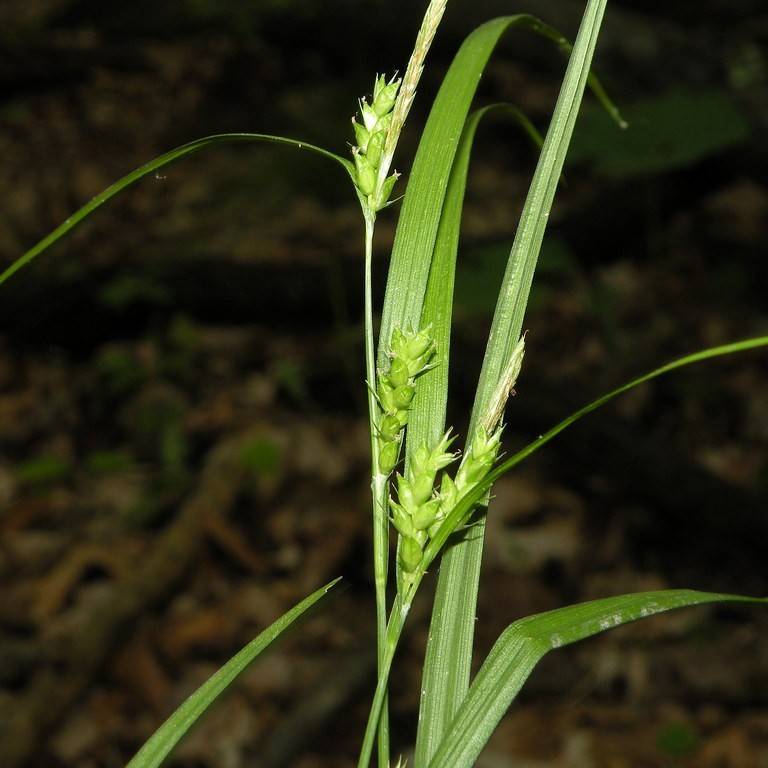
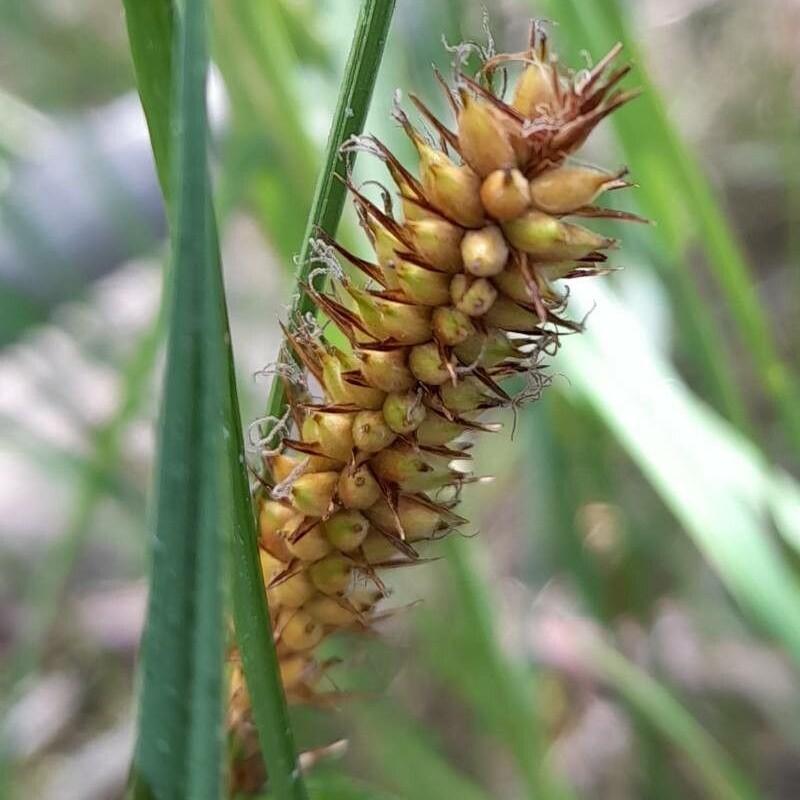
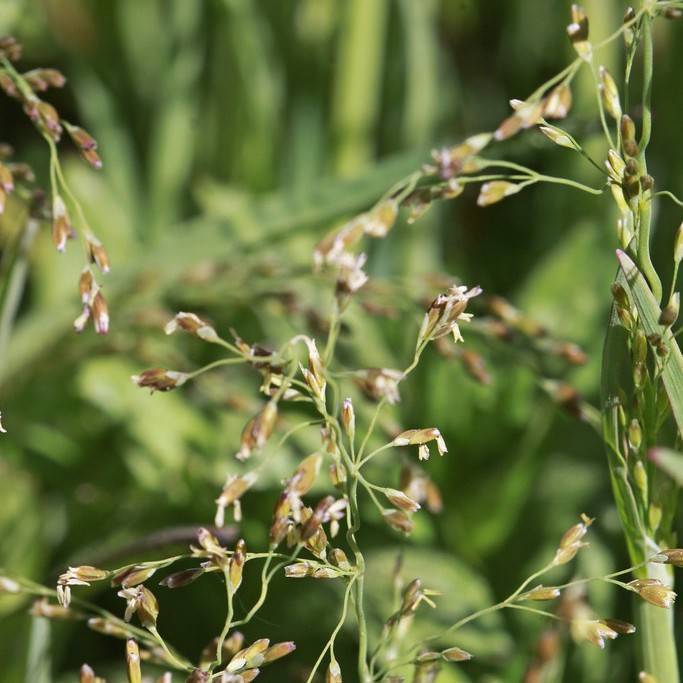
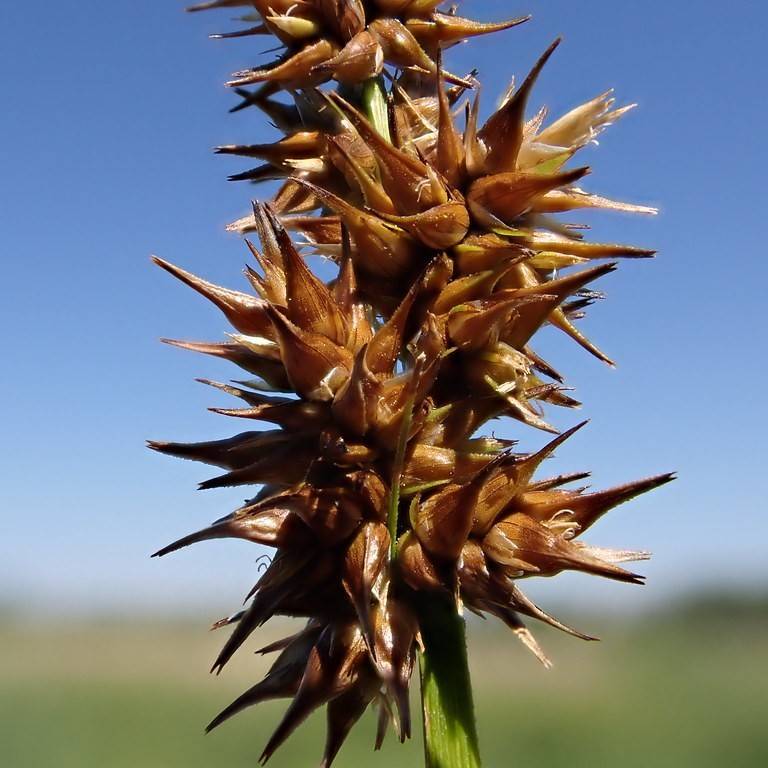
Cusick's Sedge is a tufted, grass-like perennial that thrives in saturated, seasonally flooded soils across western North American wetland, riparian, and meadow habitats. It produces slender, arching green foliage and inconspicuous brown spikelets in late spring, with dense root systems that stabilize wet soils. This species is adapted to both full sun and partial shade, making it a versatile choice for rain gardens, bioswales, and other moisture-retentive landscape features.
Care Guide
Watering
Cusick's Sedge requires consistently moist to wet soil, tolerating seasonal flooding up to 6 inches deep for extended periods. Never allow the root zone to dry out completely; water deeply and frequently during hot, dry periods to maintain saturated conditions in upland plantings. It is well-suited to areas with poor drainage or regular runoff, including the edges of ponds and water features.
Light
This sedge grows best in full sun in cooler parts of its range, but benefits from partial afternoon shade in regions with hot, intense summer sun. It can tolerate deep shade, though growth may be slower and clumps less dense in low-light conditions. For optimal foliage density and flowering, provide a minimum of 4 hours of direct sunlight daily.
Soil
Cusick's Sedge prefers heavy, nutrient-rich loam, clay, or alluvial soils with a neutral to slightly acidic pH between 5.5 and 7.5. It tolerates poorly drained, compacted soils and seasonal anaerobic conditions common in wetland environments. Avoid planting it in fast-draining sandy soils that cannot retain consistent moisture.
Fertilizer
Fertilization is rarely necessary for plants established in nutrient-rich wetland or riparian soils. For plants grown in poor, low-nutrient upland soils, apply a balanced, slow-release 10-10-10 fertilizer once annually in early spring before new growth emerges. Avoid over-fertilizing, which can cause excessive foliar growth and reduce the plant's tolerance for saturated conditions.
Temperature
This hardy sedge thrives in cool to moderate temperatures, with a USDA hardiness range of zones 4 to 9, tolerating winter lows down to -30°F (-34°C). It adapts to summer highs up to 95°F (35°C) if provided with consistent moisture and partial shade in hot climates. Extended periods of high heat without adequate water will cause foliage browning and dormancy.
Pruning
Prune back dead, brown foliage to 2-3 inches above the soil line in late winter or early spring before new growth emerges to maintain a tidy appearance. Remove any damaged or diseased foliage as needed throughout the growing season to promote air circulation within the clump. Avoid cutting back green foliage during active growth, as this can stress the plant and reduce its overall vigor.
Propagation
Cusick's Sedge is most easily propagated by division of established clumps in early spring or late fall, when the plant is dormant. Separate clumps into smaller sections with at least 3-5 healthy shoots and a intact root system, then replant immediately at the same depth as the original plant and water thoroughly. It can also be grown from seed sown directly in moist, cold soil in late fall to allow for natural stratification over winter, though germination rates can be variable.
Humidity
This species tolerates a wide range of humidity levels, from 30% in arid western regions to 80% in coastal Pacific Northwest habitats. It does not require supplemental humidity when grown in appropriate moisture-retentive soil, as its root system accesses sufficient water to support foliage health. In extremely arid climates, regular deep watering will offset low ambient humidity and prevent foliage tip browning.
Repotting
Cusick's Sedge is rarely grown in containers, but if potted for water feature or rain garden use, repot every 2-3 years in early spring to refresh the soil and prevent root binding. Use a heavy, loam-based potting mix with no added perlite or drainage amendments to maintain consistent moisture retention. Ensure the pot has no drainage holes, or place it in a saucer kept constantly filled with 1-2 inches of water to mimic its natural wetland habitat.
Uses & Symbolism
Cusick's Sedge is widely used for riparian restoration, erosion control along stream banks and wetland edges, and in rain gardens and bioswales to filter stormwater runoff. Its dense clumps provide cover and nesting habitat for wetland birds, while its seeds are a food source for small mammals and native songbirds. It is also planted as a low-maintenance ornamental in moist landscape areas, where its fine-textured foliage contrasts well with broad-leaved wetland perennials.
Diseases & Pests
Cusick's Sedge has few serious pest or disease issues, though it can occasionally be affected by fungal leaf spots and rust in humid, poorly ventilated conditions. Aphids and sedge sawfly larvae may feed on foliage, though infestations are rarely severe and usually do not require treatment. Overly dry soil can cause stress that makes the plant more susceptible to root rot pathogens, though this is rare in its preferred saturated growing conditions.
Related plants
Other plants you might like if you grow Cusick's Sedge.