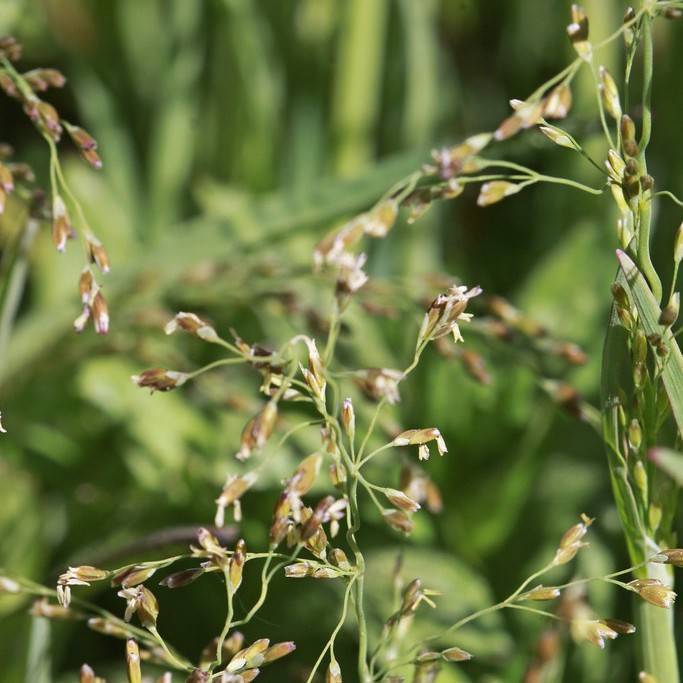
Brook Grass
Catabrosa aquatica
Overview
Brook grass, also called water whorl-grass, is a rhizomatous grass adapted to saturated soils, shallow water, and marshy edges of streams, ponds, and wet meadows. Its soft, flat leaf blades and loose, branching flower panicles appear from late spring to mid-summer, providing food and shelter for aquatic invertebrates and waterfowl. It is highly tolerant of seasonal flooding, making it a staple in riparian habitat restoration projects across its native range.
Care Guide
Watering
Requires consistently moist to saturated soil, and can tolerate being submerged in up to 6 inches of shallow water for extended periods. Never allow the root zone to dry out completely; water frequently to maintain wet conditions, especially during periods of drought. It is well-suited for rain gardens, pond margins, and low-lying areas that collect standing water.
Light
Prefers full sun to partial shade, with optimal growth occurring in locations that receive 4 to 6 hours of direct sunlight daily. It can tolerate deeper shade in cooler climates, but may produce fewer flower panicles and have a more sparse growth habit under low light conditions. Avoid planting in full, deep shade where growth will be stunted.
Soil
Thrives in heavy, organic-rich loam, clay, or muck soils with a neutral to slightly acidic pH between 6.0 and 7.5. It can tolerate poorly drained, compacted soils that are unsuitable for most other grasses, as long as moisture levels remain consistently high. Adding organic matter such as compost or leaf mold at planting time will help retain moisture and support healthy root growth.
Fertilizer
Generally requires minimal fertilization, as it naturally grows in nutrient-rich wetland soils. A light application of balanced, slow-release 10-10-10 fertilizer in early spring can support vigorous growth if planted in poor, low-nutrient soil. Avoid over-fertilizing, as this can lead to excessive leaf growth and increased susceptibility to fungal diseases.
Temperature
Grows best in cool temperate climates, with optimal temperatures between 50°F and 75°F (10°C to 24°C). It is cold hardy to USDA zone 3, tolerating winter temperatures as low as -40°F (-40°C) without damage, as its rhizomes remain dormant under frozen soil or ice. It may go dormant or die back during extended periods of heat above 90°F (32°C), but will regrow when cooler, wetter conditions return.
Pruning
Requires very little pruning; you can cut back dead foliage in late winter or early spring before new growth emerges to keep the planting area tidy. If it spreads beyond its desired area, you can dig up and remove excess rhizomes, as it spreads slowly via underground root systems rather than aggressive self-seeding. Avoid cutting back during the flowering season if you want to support local pollinators and wildlife that feed on its seeds.
Propagation
Easiest to propagate via division of established rhizome clumps in early spring before new growth begins, or in early fall after flowering has finished. Separate clumps into smaller sections with at least 2 to 3 healthy growing points each, and replant immediately in saturated soil at the same depth they were growing previously. It can also be grown from seed, which should be sown directly on the surface of wet, bare soil in late fall or early spring, as seeds require cold stratification to germinate.
Humidity
Tolerates high humidity levels common to wetland and riparian habitats, and thrives in ambient humidity above 50%. It can tolerate average household humidity if grown as a potted marginal aquatic plant, but requires consistent moisture to the root zone to prevent leaf browning. It does not tolerate dry, arid air for extended periods, which will cause leaf tips to brown and growth to slow.
Repotting
If grown as a potted marginal aquatic plant, repot every 2 to 3 years in early spring before new growth emerges, using a heavy loam-based aquatic potting mix to prevent soil from floating away in water. Choose a wide, shallow pot with drainage holes, and set it in a tray or pond so the soil line is covered by 1 to 3 inches of water at all times. Trim back overgrown rhizomes and roots during repotting to contain its size and encourage fresh new growth.
Uses & Symbolism
Brook grass is widely used in wetland and riparian restoration projects to stabilize stream banks, reduce soil erosion, and filter runoff pollutants before they enter waterways. It provides valuable habitat and food for aquatic invertebrates, waterfowl, and small mammals, and its dense root system helps improve water quality by trapping sediment and excess nutrients. It is also planted in ornamental rain gardens and around backyard ponds to add soft, natural texture and support local biodiversity.
Diseases & Pests
Brook grass is relatively disease-resistant, but can be susceptible to fungal leaf spots and rust in overly warm, humid conditions with poor air circulation. Common pests include aphids and grasshoppers, which may feed on young leaf blades, though damage is rarely severe enough to require treatment. Root rot can occur if the plant is grown in stagnant, oxygen-poor water for extended periods, so ensure mild water flow or regular water replacement if grown in a contained pond setting.
Related plants
Other plants you might like if you grow Brook Grass.