Awl Fruited Sedge
Carex stipata
Overview
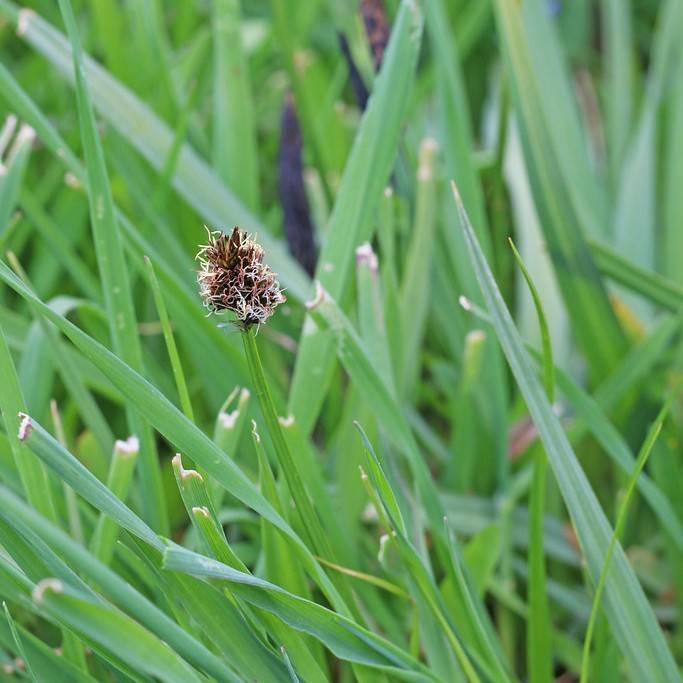
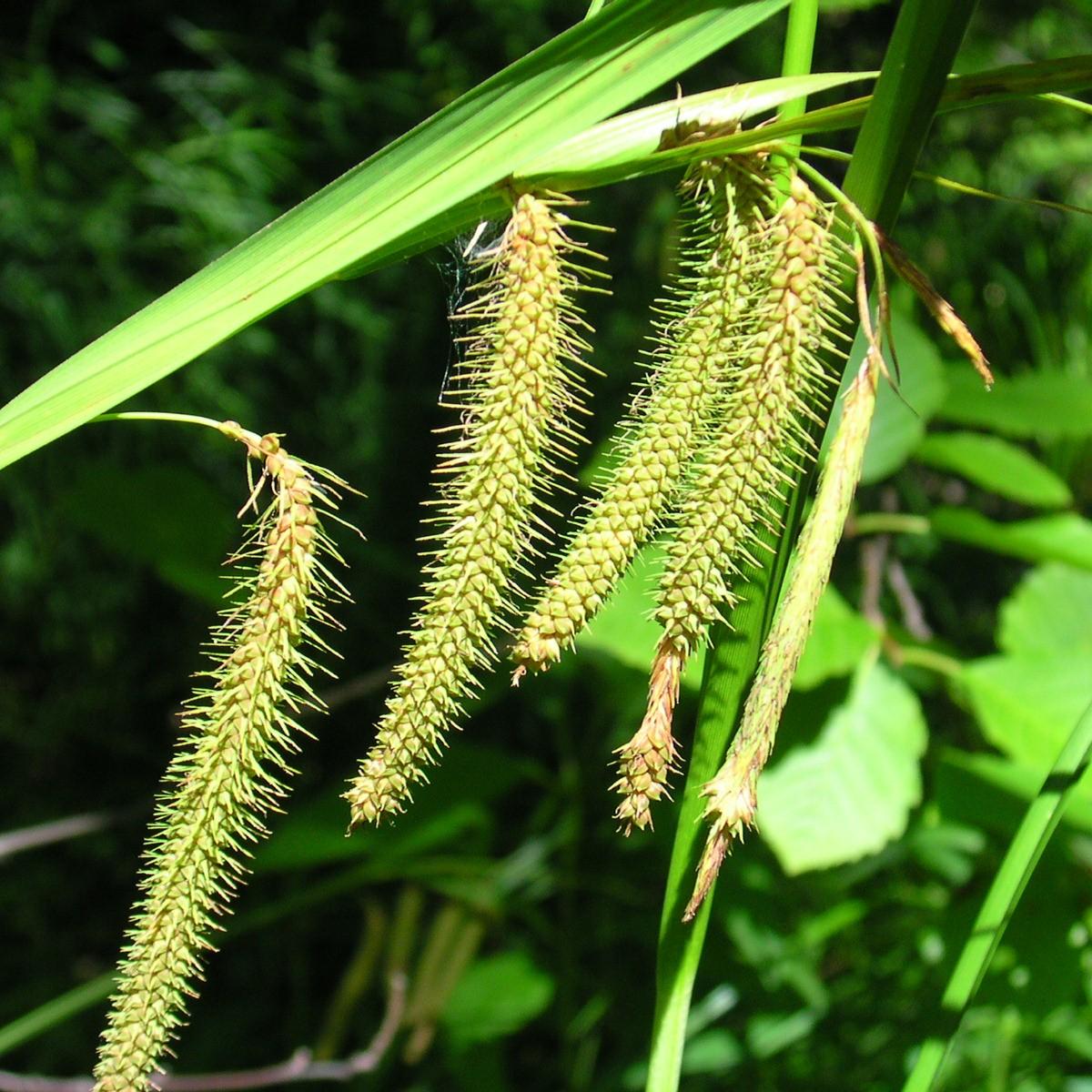
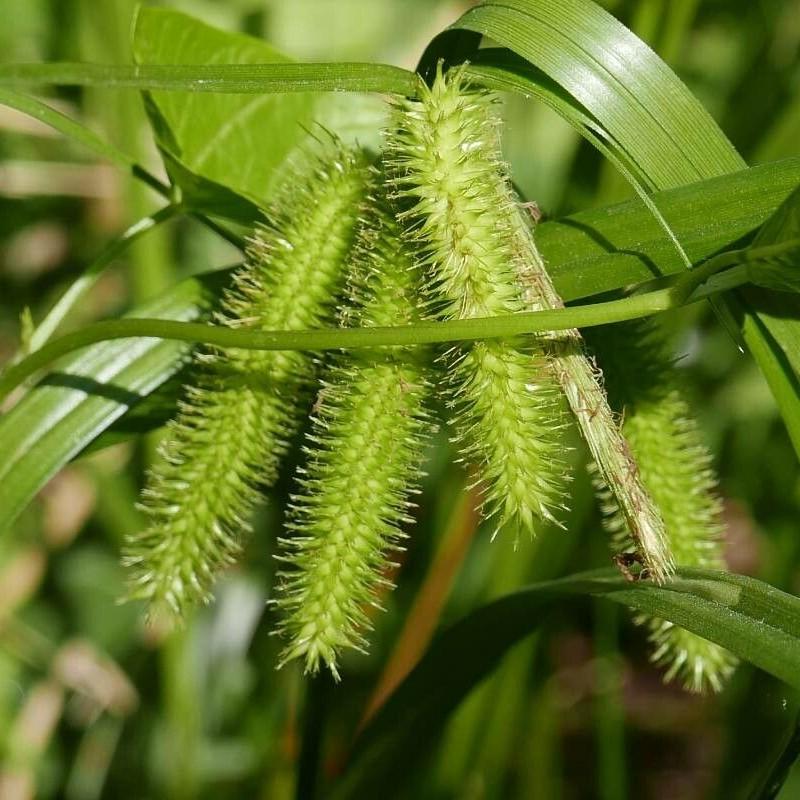
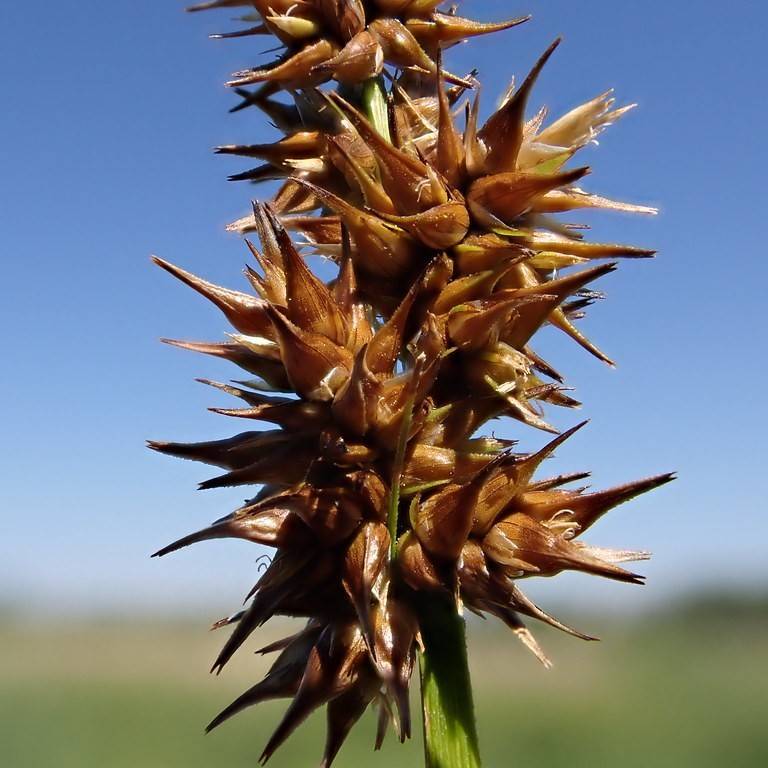
Awl Fruited Sedge, also called owlfruit sedge, is a herbaceous perennial native to North America’s wetland, riparian, and moist meadow habitats. It is characterized by its sharp triangular stems, narrow grass-like green leaves, and dense clusters of small, spiky seed heads that taper to a sharp, awl-like point from which it gets its common name. It spreads slowly via short rhizomes to form dense clumps, making it a useful stabilizing plant for moist, erosion-prone sites, and it supports a wide range of native pollinators, waterfowl, and small mammal species that feed on its seeds and use its foliage for shelter.
Care Guide
Watering
Awl Fruited Sedge thrives in consistently moist to wet soil, and tolerates periodic flooding of up to 6 inches for several weeks at a time. It should be watered regularly to prevent the soil from drying out completely, especially during hot, dry summer months, as prolonged drought can cause foliage to brown and die back. It is well suited to low-lying areas of the landscape that collect rainwater, where most other plants would suffer from overwatering.
Light
This sedge grows best in full sun to partial shade, with optimal growth and seed production occurring in sites that receive at least 4 hours of direct sunlight daily. It can tolerate full shade, though growth will be slower, clumps will be less dense, and it may produce fewer seed heads. In hotter southern portions of its range, it benefits from afternoon shade to prevent leaf scorch during periods of extreme heat.
Soil
Awl Fruited Sedge adapts to a wide range of soil types, including clay, loam, sandy, and silty soils, as long as moisture levels are consistent. It tolerates poorly drained, waterlogged soils and even seasonal inundation, making it ideal for bog gardens, rain gardens, and the edges of ponds or streams. It prefers a neutral to slightly acidic soil pH between 5.5 and 7.2, but can survive in slightly alkaline conditions as well.
Fertilizer
This native sedge is adapted to low-nutrient soils and rarely requires supplemental fertilization, especially when planted in its native habitat range. If growth appears stunted in poor quality garden soil, a light application of balanced, slow-release organic fertilizer can be applied once in early spring as new growth emerges. Over-fertilization can cause excessive, leggy growth that is prone to flopping, and may reduce its tolerance for wet conditions.
Temperature
Awl Fruited Sedge is cold hardy in USDA zones 3 through 9, tolerating winter temperatures as low as -40°F (-40°C) without protection. It thrives in average summer temperatures between 60°F and 85°F (15°C to 29°C), and can tolerate short periods of temperatures above 95°F (35°C) as long as soil moisture remains adequate. Frost will kill back its above-ground foliage in late fall, but the root system remains dormant and will produce new growth in early spring once soil temperatures rise above 50°F (10°C).
Pruning
Pruning requirements are minimal for Awl Fruited Sedge; dead or brown foliage can be trimmed back in late winter or early spring before new growth emerges to keep clumps looking neat. It does not require deadheading, as the seed heads provide food for wildlife and add visual interest to the landscape through the fall and winter months. Overgrown clumps can be cut back entirely to 2-3 inches above the soil line every 3-4 years to encourage fresh, dense growth.
Propagation
Awl Fruited Sedge is most easily propagated by division in early spring just as new growth begins, or in early fall before the first frost. Clumps can be dug up, gently separated into smaller sections with intact root systems, and replanted immediately at the same depth they were growing, then watered thoroughly to establish. It can also be grown from seed, which should be sown outdoors in fall to undergo natural cold stratification over winter, or stratified indoors for 60 days before spring sowing for optimal germination rates.
Humidity
This sedge tolerates a wide range of humidity levels, thriving in the moderate to high humidity of its native wetland habitats, but adapting well to average garden humidity as long as soil moisture is consistent. It does not require supplemental humidity when grown in appropriate outdoor conditions, and is not suited to dry indoor environments. It tolerates occasional periods of low humidity as long as its root zone remains consistently moist.
Repotting
Awl Fruited Sedge is almost exclusively grown in outdoor landscape settings, and rarely requires repotting unless it is being temporarily held in a container before planting. If grown in a container for water garden use, it should be repotted every 2-3 years in early spring into a larger pot with fresh, loamy potting mix to prevent root binding. When repotting, crowded clumps can be divided to produce new plants and reduce overcrowding in the container.
Uses & Symbolism
Awl Fruited Sedge is widely planted in rain gardens, bioswales, and riparian restoration projects to absorb excess stormwater, filter pollutants, and stabilize soil to prevent erosion along stream banks and shorelines. Its dense clumps provide cover for ground-nesting birds and small amphibians, while its abundant seed heads are a valuable food source for waterfowl, songbirds, and small mammals throughout the fall and winter months. It is also used in native plant landscaping as a low-maintenance, deer-resistant alternative to ornamental grasses in moist, partially shaded sites.
Diseases & Pests
Awl Fruited Sedge has very few serious pest or disease issues, though it can occasionally develop fungal leaf spot or rust in conditions of very high humidity and poor air circulation between clumps. Aphids and spittlebugs may feed on its new foliage in spring, but infestations are rarely severe and can be controlled with a strong spray of water or insecticidal soap if necessary. Prolonged periods of dry soil can make the plant more susceptible to spider mite infestations, which cause yellow stippling on leaves, but these are easily avoided by maintaining consistent soil moisture.
Related plants
Other plants you might like if you grow Awl Fruited Sedge.