Curry Plant
Helichrysum italicum
Overview
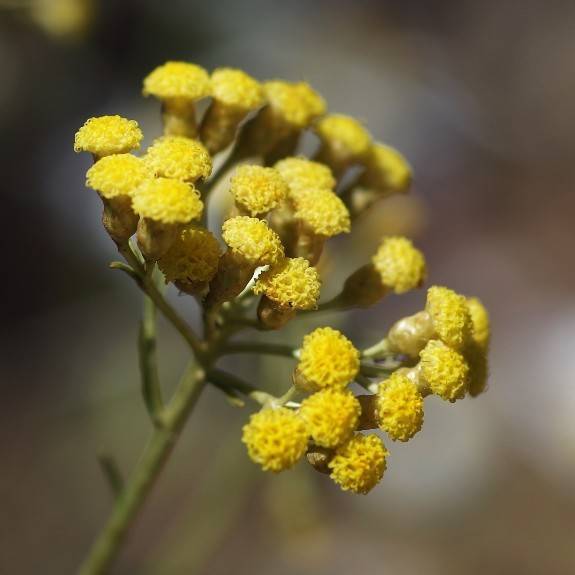
The curry plant is a woody, shrubby perennial distinguished by its narrow, silvery-gray leaves and clusters of small, bright yellow button flowers that bloom in summer. Its foliage emits a strong, distinct curry-like scent when crushed, though it is not botanically related to the curry leaf tree (Murraya koenigii) used in South Asian cuisine. Adapted to dry, sunny Mediterranean climates, it is drought-tolerant once established and thrives in poor, well-drained soils.
Care Guide
Watering
Water young curry plants regularly to keep the soil lightly moist but never waterlogged, as excess moisture causes root rot. Once established, reduce watering significantly, allowing the top 2-3 inches of soil to dry out completely between waterings. In winter, water only sparingly to prevent the root ball from drying out entirely, especially if grown in containers.
Light
The curry plant requires full, direct sunlight for a minimum of 6 hours per day to maintain its compact growth habit and strong aromatic foliage. Insufficient light will lead to leggy, sparse growth and a reduced production of the essential oils that create its characteristic scent. When grown indoors, place it in a south-facing window or supplement with grow lights to meet its light needs.
Soil
Plant curry plant in sharply draining, low-nutrient soil with a neutral to slightly alkaline pH, between 6.5 and 8.0. Avoid heavy, clay-rich soils that retain moisture, as these will quickly cause root rot in this drought-adapted species. For container growth, use a cactus or succulent potting mix amended with perlite or coarse sand to improve drainage further.
Fertilizer
Curry plants are adapted to low-nutrient soils and require very little fertilization to thrive. Apply a balanced, slow-release fertilizer diluted to half strength once per year in early spring, just as new growth begins to emerge. Over-fertilization will cause excessive, soft growth that is more prone to pest damage and reduces the intensity of the foliage’s curry scent.
Temperature
This species prefers warm, temperate conditions between 60-85°F (15-29°C) during its active growing season. It is moderately frost-tolerant, surviving short dips down to 20°F (-7°C) if planted in well-drained soil, but prolonged freezing temperatures will kill the above-ground growth. In regions with harsh winters, grow curry plant in containers and move it indoors to a cool, sunny spot for the cold months.
Pruning
Prune curry plant in early spring to remove any dead, damaged, or leggy growth from the winter, and to shape the plant to your desired size. Deadhead spent yellow flower clusters throughout the summer to encourage continuous blooming and prevent the plant from putting energy into seed production. A hard prune by up to one-third of the plant’s size every 2-3 years will help maintain a dense, bushy habit and prevent woody, sparse lower growth.
Propagation
The curry plant is most commonly propagated from semi-hardwood cuttings taken in late summer or early fall, from healthy, non-flowering stems. Dip the cut end in rooting hormone, plant it in a well-drained propagating mix, and keep it warm and lightly moist until roots develop in 3-4 weeks. It can also be grown from seed sown in spring, though seed germination rates are often low, and seed-grown plants may have more variable scent intensity than cutting-grown specimens.
Humidity
Curry plant is adapted to the low to moderate humidity levels of its native Mediterranean range, thriving in humidity between 40-60%. It does not tolerate high, stagnant humidity well, which increases the risk of fungal leaf spots and root rot. Avoid placing it in overly humid locations such as bathrooms, and ensure good air circulation around the plant at all times to prevent moisture-related issues.
Repotting
Container-grown curry plants only need repotting every 2-3 years, when roots begin to emerge from the drainage holes at the bottom of the pot. Repot in early spring, selecting a container only 1-2 inches larger than the previous one to avoid excess soil that retains unnecessary moisture. Refresh the potting mix with a well-drained cactus or succulent blend during repotting, and avoid watering for 3-4 days after repotting to allow damaged roots to heal.
Uses & Symbolism
While not used as a culinary substitute for curry leaves, the curry plant’s dried foliage is sometimes added to potpourris, sachets, and wreaths for its long-lasting, warm scent. It is also planted as an ornamental in rock gardens, xeriscapes, and border edges, where its silvery foliage provides a striking contrast to green-leaved plants and its yellow flowers attract pollinators such as bees and butterflies. The essential oil extracted from its foliage is used in aromatherapy and some natural skincare products for its anti-inflammatory and antioxidant properties.
Diseases & Pests
Curry plants are largely pest-resistant, but they may attract aphids and spider mites, especially when grown indoors or in conditions with insufficient air circulation. Root rot is the most common disease, caused by overwatering or poorly draining soil, and can be prevented by allowing the soil to dry out thoroughly between waterings. Fungal leaf spots may occur in high-humidity conditions, which can be avoided by watering at the base of the plant and ensuring good air flow around the foliage.
Related plants
Other plants you might like if you grow Curry Plant.