Butcher's Broom
Ruscus aculeatus
Overview
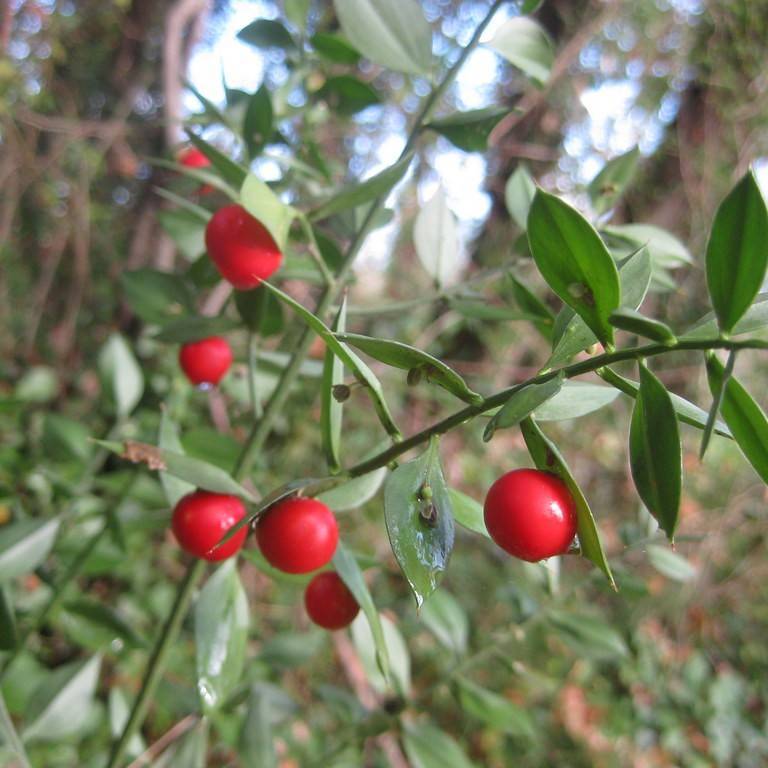
Butcher's Broom is a tough, woody evergreen recognizable by its sharp, pointed cladodes (flattened stem structures that resemble leaves) and small, white spring flowers that develop into bright red berries on female plants. Its common name derives from its historical use by butchers to scrub cutting boards, as its stiff spines effectively removed debris and its natural compounds had mild antimicrobial properties. It thrives in shaded, dry areas where many other plants struggle, making it a popular choice for low-effort ground cover in challenging garden spots.
Care Guide
Watering
Butcher's Broom is highly drought-tolerant once established, requiring only occasional deep watering during extended dry periods. Overwatering, especially in poorly draining soil, is the most common cause of root rot, so allow the top several inches of soil to dry out completely between waterings. Potted specimens need slightly more frequent watering than outdoor plants, but still avoid keeping the soil consistently moist.
Light
This plant adapts well to full shade to partial sun, making it ideal for shaded garden beds or low-light indoor spaces. It can tolerate brief periods of direct morning sun, but harsh midday or afternoon sun will scorch its cladodes and cause discoloration. For indoor growth, place it near a north-facing window or in a spot with filtered ambient light.
Soil
Butcher's Broom prefers well-draining, slightly alkaline to neutral soil, though it will adapt to most soil types including sandy, loamy, or clay soils as long as they do not stay waterlogged. It thrives in poor, low-nutrient soils that would be unsuitable for more demanding ornamental plants. For potted specimens, use a standard potting mix amended with a small amount of perlite or sand to improve drainage.
Fertilizer
This low-feeding plant rarely needs fertilizer when grown in outdoor garden beds, as it can extract sufficient nutrients from even poor soil. Potted plants can be given a diluted balanced liquid fertilizer once per year in early spring to support new growth, but over-fertilization will lead to leggy, weak growth and reduced berry production. Avoid applying fertilizer in fall or winter when the plant is dormant.
Temperature
Butcher's Broom is cold-hardy to USDA zones 6-9, tolerating winter temperatures as low as -10°F (-23°C) without significant damage. It adapts well to a wide range of temperatures, from cool Mediterranean winters to warm summer highs up to 90°F (32°C), as long as it is shaded from intense heat. Indoor specimens thrive in standard household temperatures between 60-75°F (15-24°C) and do not require special winter cooling unless grown specifically to encourage berry production.
Pruning
Pruning is minimal for Butcher's Broom, limited to removing dead, damaged, or yellowed cladodes in early spring to maintain a tidy appearance. Older, overgrown clumps can be cut back entirely to the ground every 3-5 years to stimulate fresh, dense new growth. Wear thick gloves when pruning, as the sharp pointed tips of the cladodes can easily puncture skin.
Propagation
Butcher's Broom is most easily propagated by dividing mature clumps in early spring before new growth emerges, separating the woody root rhizomes into sections with at least one growing point each. It can also be grown from seed, though seeds require cold stratification for 3-4 months to germinate, and plants grown from seed take 2-3 years to reach maturity and produce berries. Cuttings are rarely successful, as the woody stems do not root readily.
Humidity
This plant tolerates a very wide range of humidity levels, from dry indoor heating conditions to the higher humidity of outdoor Mediterranean climates. No extra humidity is required for indoor specimens, making it ideal for dry home or office environments. Excessively high humidity combined with poor air circulation can increase the risk of fungal leaf spots, so ensure good airflow around potted plants.
Repotting
Potted Butcher's Broom has a slow growth rate and only needs repotting every 3-4 years, when roots begin to emerge from the drainage holes of the container. Repot in early spring, moving to a container only 1-2 inches larger than the previous one to avoid excess soil that holds unnecessary moisture. Use a well-draining potting mix, and avoid disturbing the root ball more than necessary to reduce transplant shock.
Uses & Symbolism
Butcher's Broom has a long history of medicinal use, with extracts from its roots and rhizomes used to support circulatory health, reduce swelling, and alleviate symptoms of varicose veins and hemorrhoids. It is a popular ornamental plant for shaded garden beds, rock gardens, and low-maintenance ground cover, with its evergreen foliage and bright red berries providing year-round interest, especially in winter. The stiff, spiny stems are also cut and used in dried floral arrangements, as they retain their shape and color for months after harvesting.
Diseases & Pests
Butcher's Broom is remarkably resistant to most pests and diseases, with only occasional infestations of aphids or spider mites on indoor potted specimens, which can be treated with insecticidal soap or neem oil. Root rot is the most common issue, caused by overwatering or poorly draining soil, and can be prevented by allowing the soil to dry out fully between waterings. Fungal leaf spots may occur in extremely humid, poorly ventilated conditions, and can be managed by removing affected foliage and improving airflow around the plant.
Related plants
Other plants you might like if you grow Butcher's Broom.