Baby Sage
Salvia microphylla
Overview
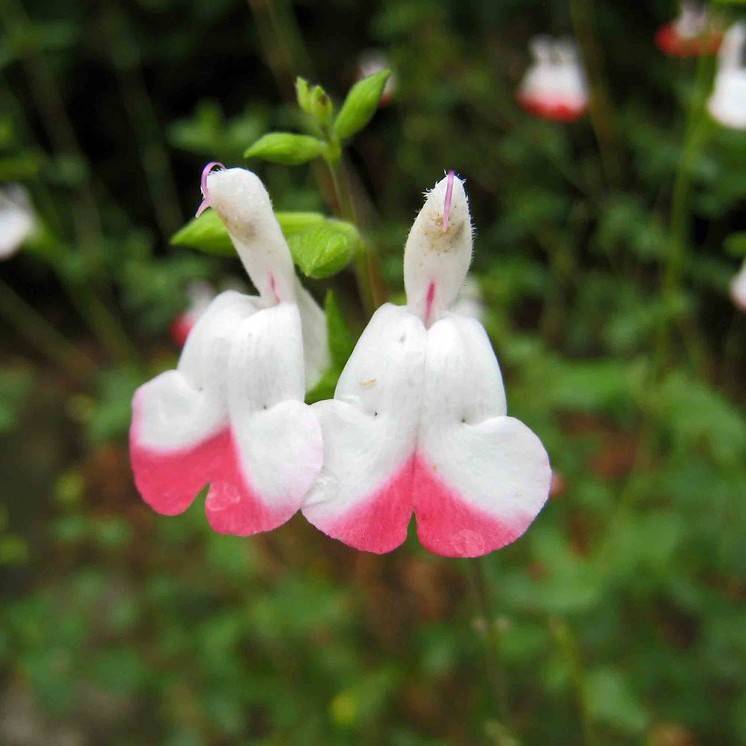
Baby sage, also called Graham’s sage or blackcurrant sage, is a compact woody subshrub prized for its small, glossy, fragrant foliage and profusion of brightly colored tubular flowers in shades of red, pink, purple, or white. Native to arid and semi-arid regions of the southwestern U.S. and Mexico, it thrives in warm, dry conditions and blooms repeatedly from late spring through fall if spent blooms are removed. Its leaves emit a mild, fruity, blackcurrant-like scent when crushed, distinguishing it from common garden sage.
Care Guide
Watering
Baby sage is highly drought-tolerant once established, requiring only infrequent, deep watering during prolonged dry spells. Overwatering, especially in cool, poorly drained soil, is the most common cause of root rot, so allow the top 2 to 3 inches of soil to dry out completely between waterings. Reduce watering significantly in winter when the plant is semi-dormant.
Light
This species requires full sun, meaning a minimum of 6 hours of direct sunlight per day, to produce dense foliage and abundant blooms. It can tolerate very light partial shade, but too much shade will lead to leggy growth, reduced flowering, and increased susceptibility to pest infestations. Indoor specimens should be placed in a south-facing window with unobstructed sunlight.
Soil
Baby sage prefers well-draining, low-fertility, sandy or loamy soil with a neutral to slightly alkaline pH between 6.5 and 8.0. It cannot tolerate heavy, water-retentive clay soils, so amend garden beds with coarse sand or gravel to improve drainage if needed. Potted specimens do best in a cactus or succulent potting mix with added perlite for extra aeration.
Fertilizer
This low-maintenance plant requires very little fertilization, as excessive nutrients will promote weak, leggy growth and reduce flowering and essential oil production. A single light application of balanced, slow-release fertilizer in early spring is sufficient for outdoor specimens. Potted baby sage can be fed once per growing season with a diluted, all-purpose liquid fertilizer at half the recommended strength.
Temperature
Baby sage thrives in warm temperatures between 60 and 90°F (15 and 32°C) and is hardy in USDA zones 7 through 10. It can tolerate light frost down to 10°F (-12°C) if planted in a sheltered location, but prolonged freezing temperatures will kill above-ground growth; cut back damaged stems in early spring to encourage new growth. Indoor specimens should be kept away from cold drafts and heating vents.
Pruning
Prune baby sage in early spring before new growth emerges to remove dead, damaged, or woody stems and maintain a compact, bushy shape. Deadhead spent flower spikes regularly throughout the blooming season to encourage continuous flowering and prevent the plant from expending energy on seed production. You can also harvest up to one-third of the plant’s foliage at a time for culinary use during the growing season.
Propagation
Baby sage is most easily propagated from softwood cuttings taken in late spring or early summer, before the plant blooms. Cut 4 to 6 inch (10 to 15 cm) stem tips, remove the lower leaves, dip the cut end in rooting hormone, and plant in a well-draining, moist potting mix; roots will form in 2 to 3 weeks. It can also be grown from seed, though seed-grown plants may not retain the exact flower color or growth habit of the parent plant.
Humidity
Baby sage is adapted to low to moderate humidity levels between 30% and 50%, making it well-suited to dry indoor environments and arid outdoor climates. It does not tolerate high humidity well, so ensure good air circulation around the plant to prevent fungal leaf spots and powdery mildew in humid regions. Avoid misting the foliage, as excess moisture on leaves can encourage disease.
Repotting
Potted baby sage should be repotted every 2 to 3 years in early spring, when it outgrows its current container or the soil becomes compacted. Choose a pot that is 1 to 2 inches larger in diameter than the previous one, with ample drainage holes to prevent waterlogging. Refresh the potting mix with a well-draining cactus or succulent blend during repotting, and avoid planting too deep to prevent stem rot.
Uses & Symbolism
Baby sage leaves are used fresh or dried in culinary applications, adding a mild, fruity, sage-like flavor to meats, sauces, teas, and herbal blends. Its nectar-rich flowers are highly attractive to bees, butterflies, and hummingbirds, making it a popular addition to pollinator gardens, xeriscapes, and rock gardens. It is also grown as an ornamental container plant for patios and windowsills, and its aromatic foliage is sometimes used in potpourri and natural pest-repellent blends.
Diseases & Pests
Baby sage is relatively pest and disease resistant when grown in proper conditions, but overwatering and poor drainage can lead to root rot, the most common and serious issue affecting this plant. In high humidity or with poor air circulation, it may develop fungal issues such as powdery mildew or leaf spot, which can be treated with neem oil or copper fungicide and by removing affected foliage. Common occasional pests include aphids, spider mites, and whiteflies, which can be controlled with insecticidal soap or regular sprays of water to dislodge them.
Related plants
Other plants you might like if you grow Baby Sage.