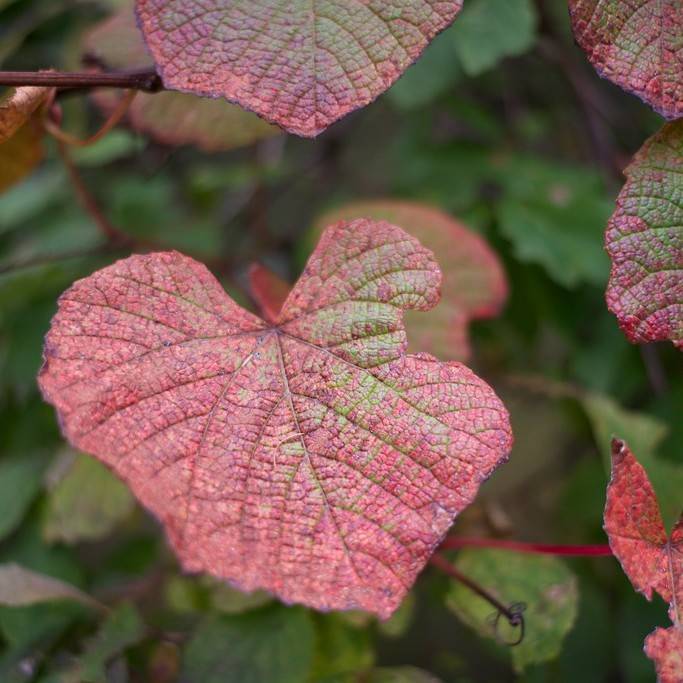
Crimson Glory Vine
Vitis coignetiae
Overview
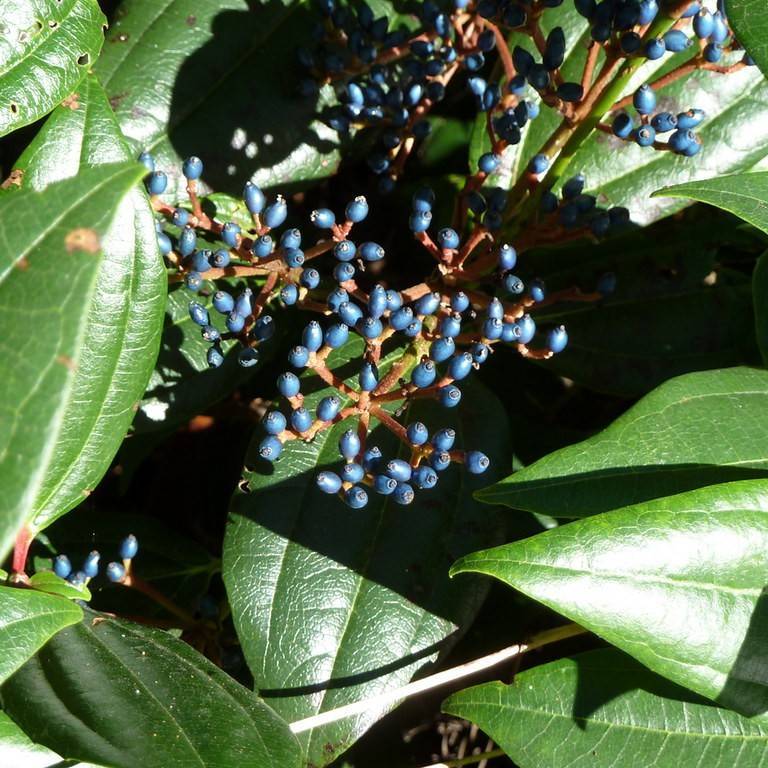
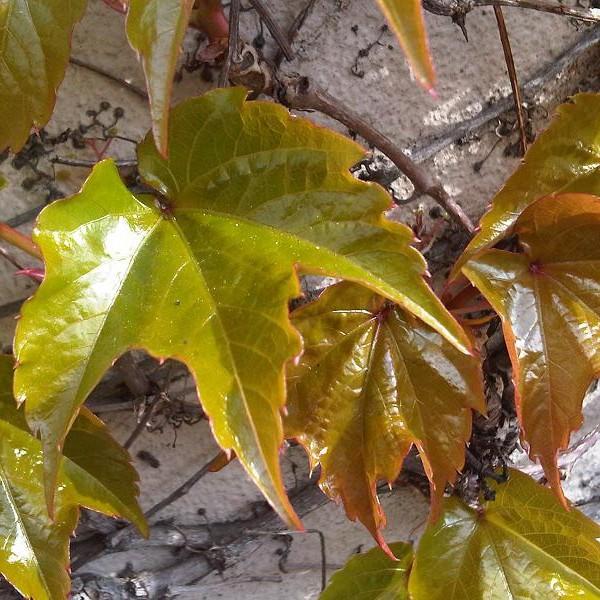
Crimson Glory Vine is a fast-growing, woody deciduous climber that adheres to surfaces via twisting tendrils, making it ideal for covering large structural features. Its broad, heart-shaped leaves can reach up to 12 inches across, with a fuzzy, felt-like underside and deep green upper surface that shifts to vibrant scarlet, burgundy, and orange in autumn. It produces small, bitter, dark purple grapes in late summer that are not palatable raw but can be used to make jellies or wine.
Care Guide
Watering
Water young vines regularly to keep the soil consistently moist but not waterlogged, especially during periods of prolonged drought. Once established, Crimson Glory Vine is fairly drought-tolerant, requiring only occasional deep watering during extended dry spells to support healthy foliage and growth. Avoid overwatering in heavy, poorly draining soils to prevent root rot.
Light
Plant in full sun to partial shade for the most vibrant fall foliage color; full sun exposure intensifies the characteristic crimson hues of autumn leaves. It can tolerate deep shade, but growth may be slower, and fall color will be less vivid, with leaves tending to turn yellow rather than bright red. In extremely hot climates, provide light afternoon shade to prevent leaf scorch during peak summer heat.
Soil
Crimson Glory Vine adapts to a wide range of soil types, including clay, loam, and sandy soils, as long as the site offers good drainage. It thrives in slightly acidic to neutral soil with a pH between 5.5 and 7.0, but can tolerate mildly alkaline conditions as well. Amending poor soils with organic matter such as compost at planting time will support stronger root development and faster establishment.
Fertilizer
Feed young vines in early spring with a balanced, slow-release 10-10-10 fertilizer to support vigorous vegetative growth in their first few years. Mature, established vines only require light fertilization once every 1-2 years in early spring, as excessive nitrogen can lead to overly lush foliage that is more susceptible to pest damage and reduced fall color intensity. Avoid fertilizing after mid-summer, as this can stimulate tender new growth that will be damaged by early fall frosts.
Temperature
This vine is cold-hardy in USDA zones 4 through 8, tolerating winter temperatures as low as -30°F (-34°C) without significant damage when dormant. It prefers temperate summer conditions with average temperatures between 60-85°F (16-29°C), and can tolerate short periods of higher heat if provided with adequate moisture. Late spring frosts can damage newly emerged young leaves, so site vines in areas protected from harsh, cold spring winds if possible.
Pruning
Prune annually during the dormant winter season to control size, remove dead or damaged wood, and improve air circulation throughout the vine structure. This species flowers and grows on new wood, so you can cut back up to two-thirds of the previous year’s growth without reducing foliage production or fall color. Remove any suckers that emerge at the base of the vine to direct growth toward the desired support structure.
Propagation
The most reliable method for home gardeners is hardwood cuttings taken in late winter from dormant, 1-year-old wood, planted in moist, well-draining potting mix and kept in a cool, bright location until roots develop in spring. It can also be propagated from seed, but seeds require 3-4 months of cold stratification to germinate, and seed-grown plants may not retain the exact fall color characteristics of the parent plant. Softwood cuttings taken in early summer can also root successfully if kept under high humidity and out of direct sun for 4-6 weeks.
Humidity
Crimson Glory Vine tolerates a wide range of humidity levels, thriving in both moderately dry and humid temperate climates, with no specific humidity requirements for healthy growth. In areas with very high humidity, ensure the vine has good air circulation around its foliage to reduce the risk of fungal leaf diseases such as powdery mildew. It does not perform well in constantly saturated, high-humidity soil conditions, so proper drainage is critical to avoid root issues.
Repotting
Crimson Glory Vine is rarely grown in containers long-term, as its large, vigorous root system and climbing growth habit require significant space to thrive. If grown in a container for the first 1-2 years before transplanting to the landscape, repot annually in early spring before new growth emerges, moving to a container one size larger each time, using a well-draining, loamy potting mix. Once planted in the ground, it does not require transplanting, as it will quickly establish a deep, extensive root system that does not respond well to disturbance.
Uses & Symbolism
Crimson Glory Vine is primarily grown as an ornamental landscape plant, used to cover arbors, pergolas, walls, fences, and unsightly outbuildings, providing dense summer shade and spectacular fall color. Its small, bitter grapes are not eaten raw, but can be cooked down to make jellies, jams, or bold, fruity wine, and the dense foliage provides shelter and food for birds and small wildlife. In its native range, it has also been used in traditional folk medicine for its anti-inflammatory and antioxidant properties.
Diseases & Pests
Crimson Glory Vine is relatively resistant to common grape diseases, but can occasionally be affected by powdery mildew, downy mildew, and fungal leaf spots, especially in areas with poor air circulation and high humidity. Common pests include Japanese beetles, which feed on the foliage in summer, and grape phylloxera, which can damage root systems in susceptible populations, though this species is generally more phylloxera-resistant than common table grape varieties. Providing good air circulation through regular pruning, avoiding overhead watering, and removing fallen leaf debris in autumn will reduce the risk of most disease and pest issues.
Related plants
Other plants you might like if you grow Crimson Glory Vine.
%22%2F%3E%0A%20%20%20%20%20%20%3Ccircle%20cx%3D%22920%22%20cy%3D%22180%22%20r%3D%2290%22%20fill%3D%22%23cfe8d5%22%2F%3E%0A%20%20%20%20%20%20%3Cpath%20d%3D%22M600%20590c-90-180-215-255-310-280%200%20165%20118%20296%20270%20296h40z%22%20fill%3D%22%2379b88e%22%2F%3E%0A%20%20%20%20%20%20%3Cpath%20d%3D%22M600%20590c80-150%20198-212%20302-228-8%20142-123%20255-270%20255h-32z%22%20fill%3D%22%235c9f73%22%2F%3E%0A%20%20%20%20%20%20%3Cpath%20d%3D%22M600%20610V360%22%20stroke%3D%22%234f8c64%22%20stroke-width%3D%2218%22%20stroke-linecap%3D%22round%22%2F%3E%0A%20%20%20%20%20%20%3Ctext%20x%3D%22600%22%20y%3D%22700%22%20text-anchor%3D%22middle%22%20font-family%3D%22Arial%2C%20sans-serif%22%20font-size%3D%2244%22%20fill%3D%22%23365c45%22%3E%0A%20%20%20%20%20%20%20%20Plant%20image%20coming%20soon%0A%20%20%20%20%20%20%3C%2Ftext%3E%0A%20%20%20%20%3C%2Fsvg%3E%0A%20%20)