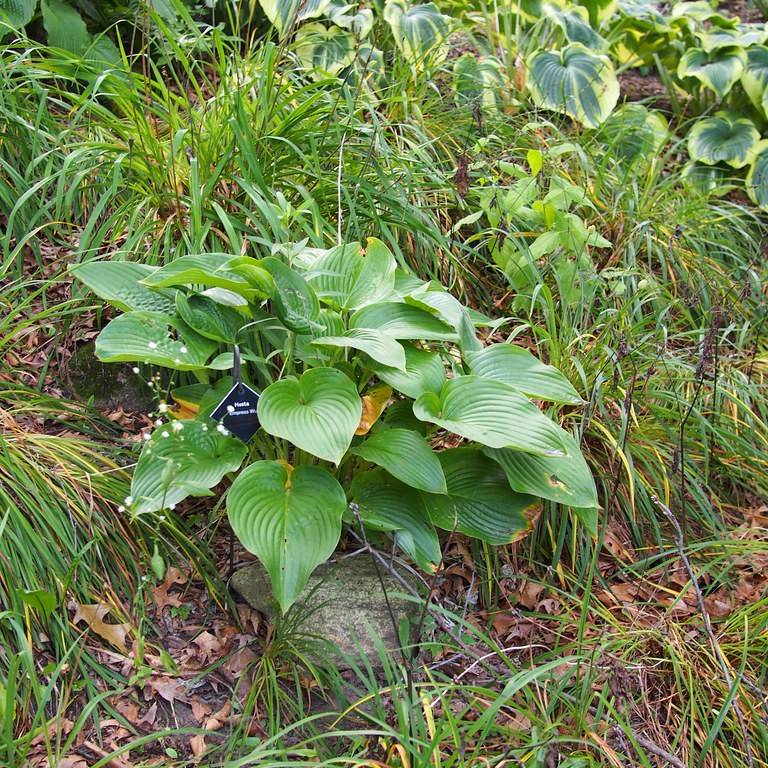
Chinese Hosta
Hosta plantaginea
Overview
Chinese Hosta, also called the fragrant plantain lily, is distinct among hosta species for its pure white, trumpet-shaped flowers that emit a sweet, jasmine-like fragrance in late summer, unlike the typically unscented purple or pale blue blooms of most other hostas. Its large, glossy, heart-shaped bright green leaves form dense, low mounds that serve as lush ground cover in low-light landscapes. Adaptable to both outdoor shaded gardens and indoor container cultivation, it is a popular low-maintenance choice for gardeners of all skill levels.
Care Guide
Watering
Water Chinese Hosta regularly to keep the soil consistently moist but not waterlogged, especially during active spring and summer growth; reduce watering frequency in fall and winter once the plant goes dormant. Avoid watering directly onto the center of the leaf rosette to minimize the risk of crown rot, and use well-draining containers to prevent excess moisture buildup around the roots. Outdoor plants may only need supplemental watering during extended dry periods, as they can draw moisture from deep soil layers once established.
Light
Thrives in partial to full shade, with dappled indirect light being ideal for optimal foliage health and flower production; direct midday sun will scorch the leaves, causing brown, crispy edges and faded color. When grown indoors, place it near a north or east-facing window that receives gentle, filtered light throughout the day, avoiding unobstructed south-facing windows that deliver harsh afternoon sun. Outdoor plantings should be sited under tree canopies or on the shaded side of structures to provide consistent low-light conditions.
Soil
Grows best in rich, moisture-retentive, well-draining soil with a slightly acidic to neutral pH between 6.0 and 7.5, amended with compost or well-rotted leaf mold to boost organic content. Heavy clay soils should be loosened and amended with perlite and organic matter to improve drainage, while sandy soils will benefit from added peat moss or coconut coir to retain moisture. For indoor container growing, use a high-quality potting mix formulated for shade-loving perennials, with added perlite to prevent compaction.
Fertilizer
Feed established plants in early spring just as new growth emerges with a balanced, slow-release granular fertilizer (10-10-10 NPK) worked into the top layer of soil around the base of the plant, avoiding direct contact with tender new shoots. A second light application of liquid, diluted all-purpose fertilizer can be applied in early summer to support flower bud development, but avoid fertilizing after mid-summer to prevent stimulating tender new growth that will be damaged by fall frost. Over-fertilization will cause leaf tip burn and reduce flower production, so always follow label dosage rates and skip fertilizing newly planted specimens for their first growing season.
Temperature
Prefers cool to moderate temperatures between 50–75°F (10–24°C) during the active growing season, and requires a 6–8 week cold dormancy period in winter with temperatures between 35–45°F (2–7°C) to trigger healthy new growth the following spring. It is cold hardy in USDA zones 3–9, able to survive winter temperatures as low as -30°F (-34°C) when planted outdoors, as long as the root zone is mulched to insulate it from extreme temperature fluctuations. Indoor-grown plants should be moved to a cool, unheated room or garage during their winter dormancy period, as consistent warm indoor temperatures will prevent them from entering the required rest phase.
Pruning
Remove yellowed, damaged, or diseased leaves at any time during the growing season by cutting them off at the base of their stem with clean, sharp shears to improve air circulation and maintain a tidy appearance. After blooms fade in late summer, snip off spent flower stalks at their base to redirect the plant’s energy back to root and foliage growth, rather than seed production. In late fall after the first frost kills back the foliage, cut all above-ground growth down to 1–2 inches above the soil line to remove overwintering pest and disease habitat, and discard the cuttings rather than composting them to avoid spreading pathogens.
Propagation
The most reliable method of propagation is division, performed in early spring just as new shoots emerge or in early fall 4–6 weeks before the first expected frost, as Chinese Hosta does not grow true from seed. Dig up the entire mature clump, gently tease apart the root mass into smaller sections, each with at least 2–3 healthy growth buds and a portion of intact roots, then replant the divisions at the same soil depth they were growing originally, spacing them 1–2 feet apart. Cuttings are not a viable propagation method for this species, and seed-grown plants will take 3–5 years to reach flowering maturity and may not retain the fragrant flower trait of the parent plant.
Humidity
Tolerates average ambient humidity levels between 40–60%, which is sufficient for healthy growth in most outdoor and indoor environments. If grown indoors in dry, heated spaces during winter, occasional misting of the surrounding air (not the leaves directly) or placing the pot on a tray of pebbles filled with water will help raise local humidity levels to prevent leaf tip dryness. Extremely high humidity paired with poor air circulation can increase the risk of foliar fungal diseases, so ensure the planting site has good airflow around the foliage.
Repotting
Indoor container-grown Chinese Hosta should be repotted every 2–3 years in early spring before new growth emerges, when the roots have filled the current pot and begin to grow through the drainage holes. Choose a new pot that is 2–3 inches wider in diameter than the previous one, with multiple drainage holes, and refresh the potting mix with new, nutrient-rich organic mix to support healthy growth. Outdoor potted specimens can be repotted at the same interval, or planted directly into the garden once they outgrow their container, as long as the site provides suitable shade and soil conditions.
Uses & Symbolism
Widely planted as a lush ground cover in shaded perennial gardens, woodland landscapes, and under tree canopies, where its dense foliage suppresses weed growth and adds bright green color to low-light areas. Its fragrant, showy white blooms make it a popular addition to cut flower arrangements, as the scent lingers indoors for several days after cutting. It is also grown as a low-maintenance houseplant for shaded indoor spaces, bringing year-round (seasonal dormancy aside) foliage interest to areas with limited natural light.
Diseases & Pests
The most common pest is the hosta slug, which feeds on the leaves at night, leaving irregular, ragged holes in the foliage; control measures include handpicking, setting out beer traps, or applying organic slug bait around the base of the plant. Fungal diseases such as anthracnose and leaf spot may occur in overly wet, humid conditions with poor air circulation, causing brown, spotted lesions on the leaves; treat by removing affected foliage, improving airflow around the plant, and applying a fungicide if the infection is severe. Crown rot can develop if the plant is grown in poorly draining soil or overwatered, causing the base of the plant to turn mushy and black; prevent this by ensuring proper soil drainage and avoiding overwatering, especially during the dormant season.
Related plants
Other plants you might like if you grow Chinese Hosta.