Creeping Jenny
Lysimachia nummularia
Overview
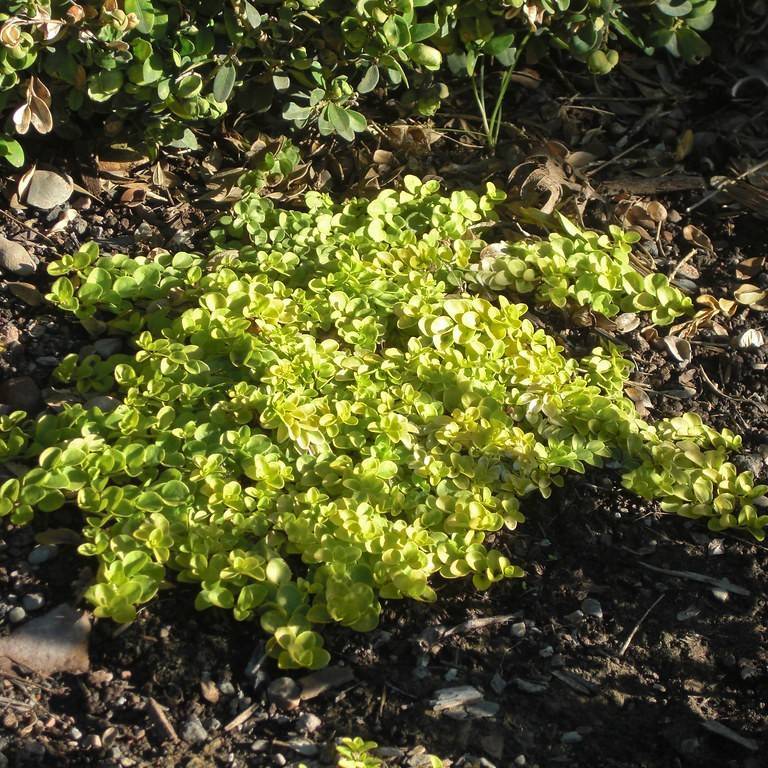
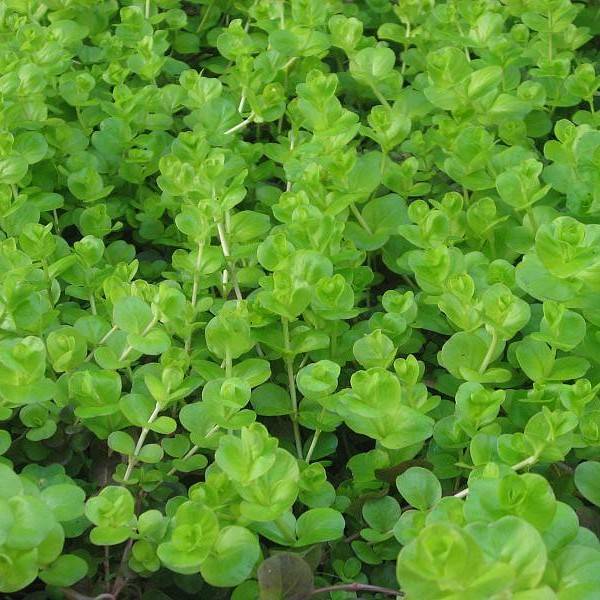
Creeping Jenny, also called moneywort, is a versatile, mat-forming perennial recognized for its small, rounded, coin-shaped leaves that range from bright lime-green to golden yellow depending on light exposure. It produces tiny, cup-shaped yellow flowers in summer, adding subtle contrast to its vivid foliage. Widely cultivated as a ground cover, spiller plant in container gardens, or trailing accent in hanging baskets, it adapts well to both moist garden beds and partially submerged aquatic settings.
Care Guide
Watering
Creeping Jenny prefers consistently moist, even damp soil, and will wilt quickly if allowed to dry out completely. Water regularly, especially during hot, dry periods, to maintain even moisture; it tolerates occasional shallow flooding, making it suitable for pond edges. Reduce watering slightly in winter when growth slows, but never let the root ball dry out entirely.
Light
This plant thrives in full sun to partial shade, with golden-leaf cultivars developing their brightest yellow color when grown in full sun. In regions with intense, scorching afternoon sun, provide partial shade to prevent leaf burn and avoid excessive wilting. Too much shade will cause golden varieties to fade to a dull green and reduce flowering.
Soil
Creeping Jenny adapts to a wide range of soil types, from sandy loam to clay, as long as the medium retains moisture well. It prefers a slightly acidic to neutral pH between 6.0 and 7.0, but tolerates mildly alkaline conditions too. For container plantings, use a peat-based potting mix with added perlite to improve drainage while retaining adequate moisture.
Fertilizer
Feed creeping Jenny sparingly, as over-fertilization can cause excessive, leggy growth and reduce foliage vibrancy. Apply a balanced, slow-release fertilizer once in early spring at half the recommended strength for outdoor plants. Indoor container specimens can be given a diluted liquid fertilizer once every 4-6 weeks during the growing season, skipping fertilization entirely in winter.
Temperature
Creeping Jenny grows best in temperatures between 60-75°F (15-24°C), and is hardy in USDA zones 3-9, tolerating winter lows down to -40°F (-40°C) when planted outdoors. In regions with harsh winters, a light layer of mulch will help protect the root system from extreme temperature fluctuations. Indoor plants should be kept away from cold drafts and heating vents to prevent leaf drop.
Pruning
Prune creeping Jenny as needed to control its spread, as it can become invasive in favorable growing conditions. Trim back overgrown or straggly stems in early spring to encourage bushier, denser new growth, and remove any dead or yellowed foliage throughout the growing season to keep the plant looking tidy. If grown as a ground cover, mow it to a height of 2-3 inches once a year after flowering to rejuvenate the mat.
Propagation
Creeping Jenny is extremely easy to propagate via stem cuttings, which root readily in moist soil or water at any point during the growing season. Snip a 3-4 inch section of healthy stem, remove the lower leaves, and place it in damp potting mix or a glass of water; roots will form in 1-2 weeks. It can also be propagated by division in early spring or fall: simply dig up a section of the rooted mat, separate it into smaller clumps, and replant immediately.
Humidity
This plant tolerates average ambient humidity levels between 40-60%, which is typical for most indoor and outdoor growing environments. In very dry, arid climates, mist indoor specimens occasionally or place a tray of pebbles filled with water under the pot to boost surrounding humidity. Outdoor plants rarely require extra humidity as long as their soil moisture needs are met.
Repotting
Container-grown creeping Jenny should be repotted every 1-2 years in early spring, or when roots begin to grow out of the drainage holes. Choose a pot that is 1-2 inches larger than the current container, with adequate drainage holes to prevent waterlogging. When repotting, gently loosen any tangled roots and refresh the potting mix to provide new nutrients for the growing season.
Uses & Symbolism
Creeping Jenny is most widely used as a fast-spreading ground cover for moist garden beds, pond edges, and rock gardens, where it forms a dense mat that suppresses weeds. It is also a popular spiller plant in container gardens and hanging baskets, where its trailing stems cascade over the edges to add vibrant color contrast. In some traditional herbal practices, it was historically used to treat minor wounds and digestive issues, though it is not commonly used for medicinal purposes today.
Diseases & Pests
Creeping Jenny is relatively pest and disease resistant, but may be susceptible to fungal issues such as root rot and leaf spot if grown in waterlogged, poorly draining soil. Common pests include aphids and spider mites, which can be controlled with regular insecticidal soap sprays or a strong jet of water to dislodge the insects. In overly shaded, damp conditions, slugs and snails may feed on the tender foliage, so use organic slug baits or diatomaceous earth to deter these pests.
Related plants
Other plants you might like if you grow Creeping Jenny.