Common Corncockle
Agrostemma githago
Overview
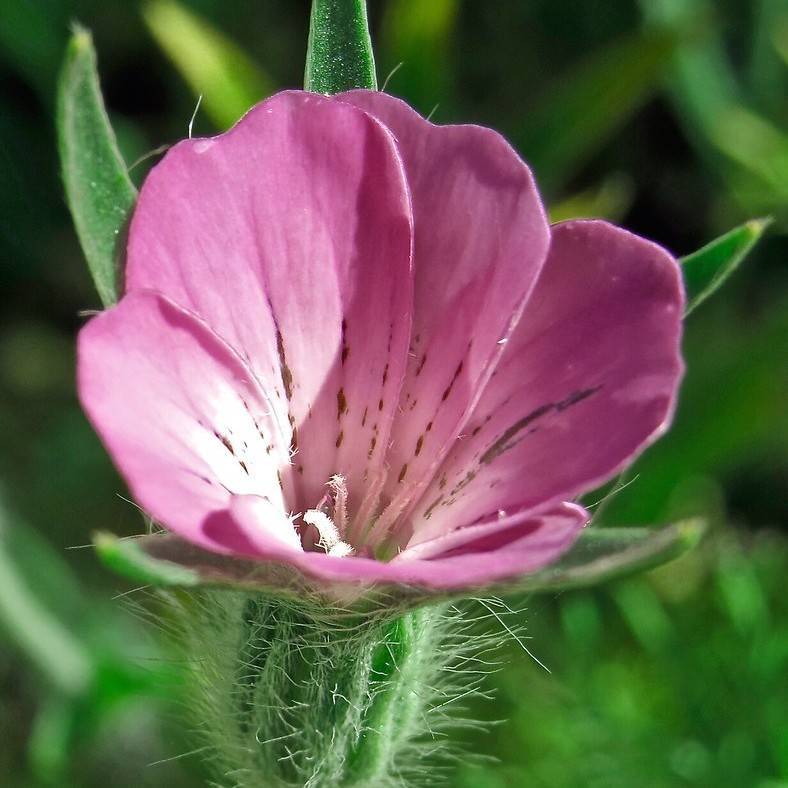
Common corncockle is a slender, upright annual with soft, hairy gray-green lanceolate leaves and striking five-petaled magenta-pink blooms marked with darker central veins. Historically a widespread weed of wheat and rye crops, modern agricultural seed cleaning has reduced its wild prevalence, though it remains a popular ornamental for wildflower and cottage garden plantings. Each flower produces a ribbed, urn-shaped seed capsule filled with dozens of small, black toxic seeds at maturity. It self-seeds readily in suitable growing conditions, often forming gentle, naturalized drifts over successive growing seasons.
Care Guide
Watering
Common corncockle is drought-tolerant once established, requiring only occasional watering during extended dry periods to support steady growth and flowering. Overwatering or waterlogged soil will quickly cause root rot, so allow the top 2 inches of soil to dry out completely between waterings. Seedlings need consistent, light moisture to germinate and establish, but reduce watering frequency as plants mature.
Light
This species thrives in full sun, requiring a minimum of 6 hours of direct, unfiltered sunlight daily to produce abundant blooms and sturdy, upright stems that do not require staking. It can tolerate very light partial shade, but plants grown in low light will become leggy, produce fewer flowers, and be more prone to flopping over as they mature.
Soil
Common corncockle adapts to a wide range of soil types, including poor, sandy, or gravelly soils that are low in nutrients, as long as the medium is well-draining. It prefers neutral to slightly alkaline soil pH between 6.5 and 8.0, and will struggle in heavy, clay-rich soils that retain moisture for long periods. Amending heavy soil with coarse sand or grit before planting will improve drainage and support healthier root development.
Fertilizer
This plant is adapted to low-nutrient environments and rarely requires supplemental fertilization, as excess nitrogen will promote lush foliage growth at the expense of flowers and cause stems to become weak and floppy. If grown in extremely poor soil, a single application of balanced, slow-release 10-10-10 fertilizer at half the recommended rate can be applied at the time of planting in early spring. Avoid fertilizing once flower buds begin to form, as this will shorten the bloom period.
Temperature
Common corncockle is a cool-season annual that germinates best in soil temperatures between 55 and 65°F (13 and 18°C), and can tolerate light spring and fall frosts without damage. It grows optimally in air temperatures between 60 and 75°F (16 and 24°C), and will begin to decline and set seed once sustained temperatures rise above 85°F (29°C) in mid to late summer. It is hardy in all temperate growing zones, and will complete its full life cycle in a single growing season regardless of winter low temperatures.
Pruning
Pruning is rarely required for common corncockle, though spent flowers can be deadheaded regularly to encourage additional bloom production and prevent unwanted self-seeding in formal garden settings. If plants become leggy or floppy mid-season, stems can be cut back by one-third to promote bushier, more compact growth. At the end of the growing season, pull up and discard entire plants to prevent toxic seeds from dropping and spreading into adjacent agricultural areas or forage fields.
Propagation
Common corncockle is almost exclusively propagated from seed, which can be sown directly outdoors in early spring 2 to 3 weeks before the last expected frost date, or in late fall for overwintering and earlier spring germination. Seeds require light to germinate, so sow them on the soil surface and press lightly to secure, do not cover with additional soil. Germination typically occurs within 10 to 14 days under optimal moisture and temperature conditions, and seedlings do not transplant well due to their delicate taproot, so direct sowing is strongly recommended over starting seeds indoors.
Humidity
This species tolerates a wide range of humidity levels, thriving in both dry and moderately humid temperate climates with no special humidity requirements. High humidity combined with poor air circulation can increase the risk of foliar fungal diseases such as powdery mildew, so space plants 12 to 18 inches apart to allow for adequate airflow around foliage. It does not perform well in tropical or subtropical regions with consistently high humidity above 70%, as this will shorten its lifespan and reduce flowering.
Repotting
Repotting is not relevant for common corncockle, as it is a fast-growing annual typically grown directly in garden soil or in outdoor container plantings for a single growing season. If grown in containers, use a well-draining potting mix with added perlite or grit to improve drainage, and ensure the pot has multiple drainage holes to prevent waterlogging. At the end of the growing season, discard the entire plant and refresh the potting mix before reusing the container for other plants, to remove any residual toxic seeds that may have fallen into the soil.
Uses & Symbolism
Common corncockle is primarily grown as an ornamental plant in cottage gardens, wildflower meadows, and cut flower arrangements, where its long-lasting, vibrant pink blooms add a soft, naturalistic touch to displays. Historically, its seeds were accidentally harvested with grain crops, leading to widespread contamination of flour and associated cases of poisoning in human and livestock populations before modern seed cleaning practices were adopted. It is also occasionally used in ecological restoration projects to support pollinator populations, as its nectar-rich flowers attract bees, butterflies, and other beneficial insects.
Diseases & Pests
Common corncockle is relatively pest and disease resistant, though it can be susceptible to aphid infestations on new growth, which can be controlled with a strong spray of water or application of insecticidal soap if populations become large. Fungal diseases including powdery mildew and root rot can occur in overly moist, poorly drained conditions or when plants are spaced too closely with inadequate air circulation. Slugs and snails may occasionally feed on young seedlings, so use organic slug bait or copper barriers around planting areas to protect vulnerable young plants if damage is observed.
Related plants
Other plants you might like if you grow Common Corncockle.