Corsican Hellebore
Helleborus argutifolius
Overview
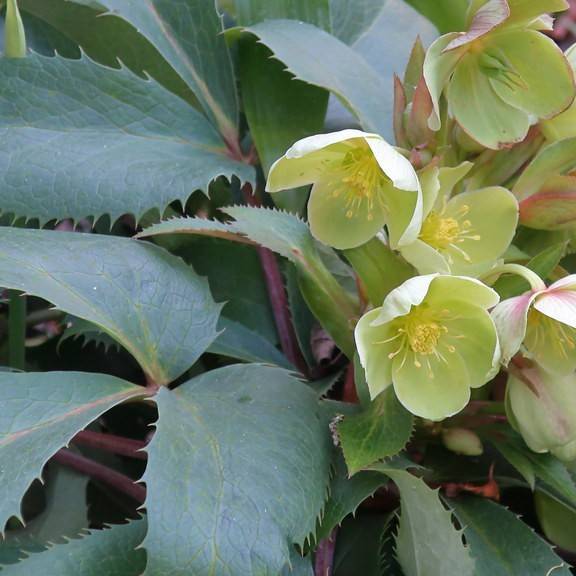
Corsican hellebore is a robust, clump-forming evergreen perennial valued for its year-round foliage and late winter to early spring blooms, when few other garden plants flower. Its thick, glossy, dark green leaves have sharp, serrated edges that give it its species name, 'argutifolius' meaning sharp-leaved, and its upright stems bear large clusters of cup-shaped, pale green to chartreuse flowers that persist for 2-3 months. It is one of the largest hellebore species, tolerating more sun than many related varieties, and is a low-maintenance staple for shaded or partially shaded temperate gardens.
Care Guide
Watering
Water Corsican hellebore regularly during its first growing season to establish a deep root system, keeping soil consistently moist but not waterlogged. Once established, it is moderately drought tolerant, requiring supplemental water only during extended dry periods, and is highly sensitive to overwatering that can cause root rot. Avoid overhead watering to reduce fungal disease risk, directing water at the base of the plant instead.
Light
Thrives in partial to full shade, particularly in regions with hot summer sun that can scorch its leaves. It can tolerate mild, filtered morning sun if provided with afternoon shade, but performs best in dappled light under tree canopies or on the north side of structures. Excessive full sun will cause leaf yellowing and browning, while too deep shade will reduce flowering output.
Soil
Requires well-drained, fertile, humus-rich soil with a neutral to slightly alkaline pH, though it can adapt to mildly acidic conditions if organic matter is amended. Heavy clay soils should be improved with compost or coarse sand to enhance drainage, as standing water will quickly kill the plant’s fleshy root system. It prefers soil that retains moderate moisture without becoming soggy, and benefits from a 2-inch layer of organic mulch applied annually in fall to maintain soil quality and moisture levels.
Fertilizer
Feed Corsican hellebore in early spring, just as new growth begins to emerge, with a balanced, slow-release granular fertilizer or a top dressing of well-rotted compost. Avoid high-nitrogen fertilizers, which can encourage excessive leaf growth at the expense of flowering and make the plant more susceptible to pest damage. No additional fertilization is needed during the growing season, as overfeeding can lead to weak, leggy growth.
Temperature
Hardy in USDA zones 6-9, tolerating winter temperatures as low as -10°F (-23°C) when established, and thrives in cool, temperate Mediterranean climates. It can withstand light frosts without damage, and its evergreen foliage remains intact through most winter conditions, though severe, prolonged freezes may cause leaf browning that can be trimmed back in spring. It struggles in regions with consistently high summer temperatures above 90°F (32°C), requiring extra shade and moisture during heatwaves to prevent stress.
Pruning
Prune old, tattered, or browned foliage in late winter or early spring, just before new flower stalks emerge, to improve air circulation and showcase the emerging blooms. Cut back spent flower stalks to the base of the plant after flowering finishes in late spring, unless you want the plant to self-seed freely around the garden. Remove any damaged or diseased leaves promptly throughout the year to prevent the spread of fungal pathogens.
Propagation
Corsican hellebore is most easily propagated by seed, which should be sown fresh in late summer or early fall, as dried seed has very low germination rates and may take 2-3 years to reach flowering size. It can also be propagated by division in early spring immediately after flowering, though it resents root disturbance and may take 1-2 years to re-establish and bloom again after division. Self-sown seedlings are common around mature plants and can be transplanted to new locations when they have 2-3 true leaves.
Humidity
Prefers moderate humidity levels between 40-60%, typical of its native Mediterranean island habitat, and adapts well to average outdoor humidity in temperate growing regions. It does not tolerate high, stagnant humidity for extended periods, which increases the risk of fungal leaf spot and crown rot, so ensure proper spacing between plants for air flow. Low humidity is rarely an issue for this hardy species, as its thick, waxy leaves retain moisture effectively.
Repotting
If grown in containers, repot Corsican hellebore every 2-3 years in early spring, before new growth begins, using a well-drained potting mix amended with compost and perlite. Choose a pot with ample drainage holes that is 2-3 inches larger in diameter than the current container, as the plant develops a deep, spreading root system that needs room to grow. Avoid repotting during the flowering period, as this can cause bloom drop and stress the plant, and water thoroughly after repotting to settle the soil around the roots.
Uses & Symbolism
Corsican hellebore is a popular ornamental plant for shade gardens, woodland borders, and underplanting around deciduous trees, where its evergreen foliage provides year-round interest and its early spring blooms brighten up drab winter landscapes. Its long-lasting cut flowers are prized for floral arrangements, both fresh and dried, though stems should be seared at the cut end to prolong vase life. Historically, it was used in small, carefully measured doses in traditional herbal medicine to treat paralysis and gout, though its high toxicity makes it unsafe for any modern medicinal use.
Diseases & Pests
The most common diseases affecting Corsican hellebore are fungal leaf spot, downy mildew, and crown rot, all caused by excessive moisture, poor drainage, or lack of air circulation around the plant. Common pests include aphids, which feed on new growth and flower buds, and slugs and snails, which can chew holes in young leaves and tender stems, particularly in damp, shaded conditions. Hellebore black spot, a specific fungal pathogen, causes dark, spreading lesions on leaves and can be managed by removing infected foliage and avoiding overhead watering, with fungicidal sprays only needed for severe, recurring infections.
Related plants
Other plants you might like if you grow Corsican Hellebore.