Banksian Rose
Rosa banksiae
Overview
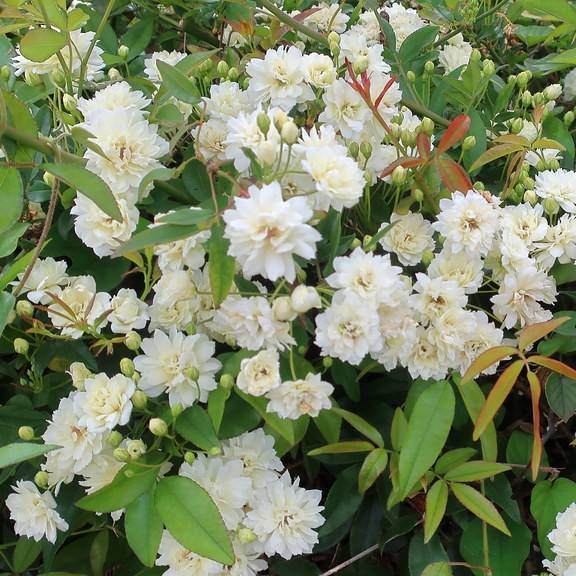
The Banksian Rose is a deciduous to semi-evergreen climbing rose named for Lady Dorothea Banks, wife of 18th-century botanist Sir Joseph Banks. It produces dense clusters of tiny, 1-inch (2.5 cm) double or single blooms in white, pale yellow, or cream, with a subtle violet or vanilla fragrance. A fast-growing, low-thorn cultivar, it is widely trained over arbors, pergolas, fences, and walls in temperate and warm climates, where it can live for decades with minimal care.
Care Guide
Watering
Water newly planted Banksian Roses deeply once or twice a week to establish a strong root system, keeping the soil consistently moist but not waterlogged. Once established, the plant is moderately drought tolerant, requiring supplemental water only during extended dry periods to prevent leaf drop and support new growth. Avoid overhead watering to reduce the risk of fungal diseases, directing water at the base of the plant instead.
Light
Banksian Roses thrive in full sun, requiring at least 6 hours of direct, unfiltered sunlight daily to produce abundant blooms and healthy foliage. They can tolerate light partial shade, but too much shade will reduce flowering, make the plant more susceptible to pests, and encourage leggy, sparse growth. In very hot, arid climates, light afternoon shade can help prevent leaf scorch during the hottest summer months.
Soil
This rose grows best in fertile, well-drained loamy soil with a slightly acidic to neutral pH between 6.0 and 7.0. It can adapt to a range of soil types, including clay and sandy soils, as long as excess water drains quickly to prevent root rot. Amend heavy or poor soils with compost, well-rotted manure, or leaf mold before planting to improve structure, nutrient content, and drainage.
Fertilizer
Feed established Banksian Roses in early spring, just as new growth begins, using a balanced, slow-release rose fertilizer to support foliage development and bud formation. Apply a second light feeding of a phosphorus-rich fertilizer immediately after flowering to encourage strong root growth and prepare the plant for the following year’s bloom cycle. Avoid fertilizing after mid-summer, as this can stimulate tender new growth that is vulnerable to cold damage in winter.
Temperature
Banksian Roses grow best in USDA hardiness zones 6 through 9, tolerating winter temperatures as low as -10°F (-23°C) when planted in a sheltered location. In cooler zones, provide winter protection such as mulching around the base of the plant and wrapping tender canes in burlap to prevent cold injury. The plant tolerates high summer temperatures well, as long as it receives adequate moisture and is not exposed to prolonged, scorching winds.
Pruning
Prune Banksian Roses immediately after they finish flowering in late spring or early summer, as they produce blooms on old wood from the previous year’s growth. Remove dead, damaged, or crossing canes first to improve air circulation, then trim back overgrown shoots to maintain the desired shape and size against their support structure. Avoid heavy pruning in fall or winter, as this will remove the wood that produces next year’s flowers, leading to little to no bloom the following spring.
Propagation
The most common method of propagating Banksian Roses is through softwood cuttings taken in late spring or early summer, from healthy, new growth that has just begun to harden. Remove leaves from the lower half of 4–6 inch (10–15 cm) cuttings, dip the cut end in rooting hormone, and plant in a well-drained, sterile rooting medium, keeping it consistently moist until roots develop in 4–8 weeks. It can also be propagated by grafting onto hardy rose rootstock for improved disease resistance and cold tolerance, though this method is more common for commercial production.
Humidity
Banksian Roses prefer moderate humidity levels between 40% and 60%, which supports healthy foliage and bloom development without encouraging fungal growth. They can tolerate lower humidity levels common in arid climates, as long as they receive regular water and are not exposed to harsh, drying winds. In high-humidity regions, ensure the plant has good air circulation around its canes and foliage to reduce the risk of powdery mildew and black spot.
Repotting
Banksian Roses are rarely grown in containers long-term due to their large, vigorous growth habit, but young specimens can be grown in large pots for 1–2 years before being planted in the ground. Repot container-grown plants in early spring before new growth emerges, using a slightly larger pot with drainage holes and a high-quality, well-drained potting mix formulated for roses. Once the plant outgrows its container, transplant it to a permanent outdoor location, as its extensive root system will become pot-bound quickly in even the largest containers.
Uses & Symbolism
Banksian Roses are primarily grown as ornamental climbers, trained over arbors, pergolas, walls, and fences to create dramatic, fragrant floral displays in spring gardens. Their nearly thornless canes make them popular for use in cut flower arrangements, where their small, clustered blooms add delicate texture and subtle scent to bouquets. In traditional Chinese medicine, extracts from the plant have been used to treat minor digestive issues and inflammation, though these uses are not widely adopted in Western herbalism.
Diseases & Pests
Banksian Roses are relatively resistant to common rose diseases, but they can be susceptible to powdery mildew, black spot, and rust in humid, poorly ventilated conditions, which can be prevented by ensuring good air circulation and avoiding overhead watering. Common pests include aphids, spider mites, and Japanese beetles, which feed on new growth and foliage; these can be controlled with insecticidal soap, neem oil, or natural predators such as ladybugs. Root rot can occur in heavy, waterlogged soils, so ensuring proper drainage at planting time is critical to preventing this fatal condition.
Related plants
Other plants you might like if you grow Banksian Rose.