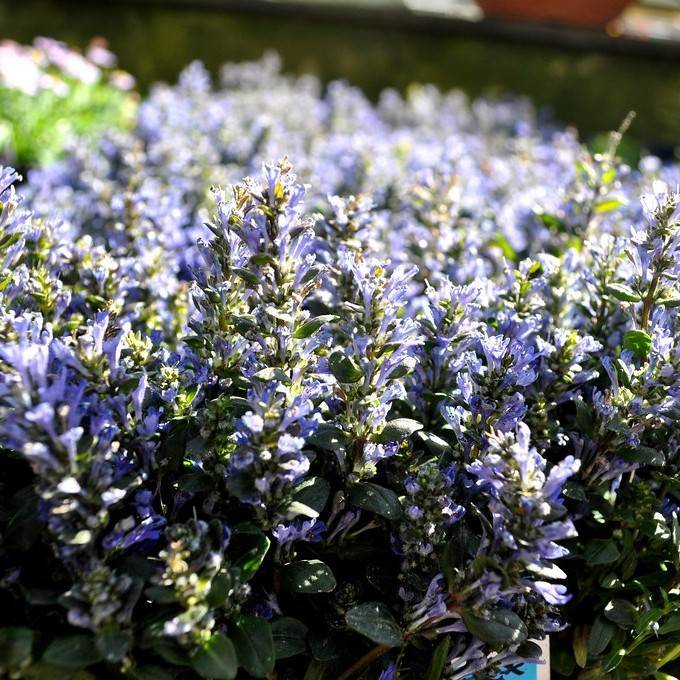
Chocolate Chip Carpet Bugle
Ajuga reptans 'Chocolate Chip'
Overview
Chocolate Chip Carpet Bugle is a compact, dwarf cultivar of common bugle, valued for its dense, spreading growth habit and year-round colorful foliage. Its tiny, oval leaves hold a rich deep bronze-chocolate hue that deepens in full sun, making it a striking contrast for border edges, rock gardens, or underplanting around taller shrubs. In mid to late spring, it produces short, upright spikes of small, tubular pale blue to lavender flowers that attract pollinators like bees and butterflies.
Care Guide
Watering
Water newly planted specimens regularly to keep soil evenly moist for the first growing season until roots are established. Once established, it is moderately drought tolerant, requiring supplemental water only during extended periods of dry, hot weather. Avoid overwatering or saturated soil, which can lead to root rot, especially in dense, poorly draining locations.
Light
Thrives in partial to full shade, but can tolerate full sun in cooler climates if provided with consistent moisture. Too much direct intense sun in warm regions can scorch foliage and fade its distinctive chocolate coloration. Dense, deep shade may cause foliage to turn more green and reduce flowering density.
Soil
Prefers moist, well-drained, humus-rich soil with a slightly acidic to neutral pH range of 6.0 to 7.0. It adapts well to a wide range of soil types, including clay, loam, and sandy soils, as long as standing water does not accumulate around the root zone. Amending heavy soil with compost or leaf mold improves drainage and provides organic matter for healthy growth.
Fertilizer
Generally requires minimal fertilization, as it thrives in average to moderately fertile soils. Apply a thin layer of compost or a balanced, slow-release granular fertilizer in early spring before new growth emerges if soil is particularly poor. Overfertilization can lead to leggy growth and reduce the density of its carpeting habit.
Temperature
Hardy in USDA zones 3 through 9, tolerating winter temperatures as low as -40°F (-40°C) and summer heat up to 90°F (32°C) with adequate moisture. It goes semi-dormant in the coldest winter months, retaining most of its foliage in milder winter regions. Extreme, unseasonable temperature swings without snow cover may benefit from a light layer of mulch for root protection.
Pruning
Trim back spent flower spikes after blooming to encourage denser foliage growth and prevent unwanted self-seeding in garden beds. If the mat becomes overly thick or develops bare patches, mow or shear the entire planting to a height of 2-3 inches in early spring to stimulate fresh new growth. Remove any green, non-variegated shoots that appear, as these are reversions to the parent species and may outgrow the slower chocolate-colored foliage.
Propagation
Easily propagated by division of established mats in early spring or fall, as the plant spreads via aboveground runners (stolons) that root wherever they touch soil. Dig up small sections of the rooted mat, separate individual clumps with attached roots, and replant at the same soil depth 6-12 inches apart. It can also be grown from stem cuttings taken in late spring or early summer, rooted in moist potting mix without the need for rooting hormone.
Humidity
Tolerates average outdoor humidity levels well, with no special humidity requirements for garden growth. High humidity combined with poor air circulation can increase the risk of fungal leaf spot, so ensure plants are not overcrowded and have space for air flow around foliage. Indoor container specimens benefit from occasional misting if indoor humidity drops below 40% for extended periods.
Repotting
When grown in containers, repot every 2-3 years in early spring, moving to a slightly larger pot with fresh, well-draining potting mix. Trim back overgrown runners and root bound sections during repotting to keep the plant compact and contained. Ensure containers have adequate drainage holes to prevent waterlogged soil, which is a common cause of decline in potted bugle plants.
Uses & Symbolism
Widely used as a low-growing groundcover for shady areas, border edges, rock gardens, slope stabilization, and underplanting around trees and shrubs where lawn grass struggles to grow. Its compact size and colorful foliage make it a popular choice for container gardens, hanging baskets, and as a filler plant in mixed perennial arrangements. The flowers are attractive to pollinators, making it a useful addition to wildlife and native pollinator gardens.
Diseases & Pests
The most common issues are fungal leaf spots and crown rot, caused by overly wet, poorly drained soil or high humidity with poor air circulation. Aphids and spider mites may occasionally infest foliage, especially on plants stressed by drought or excessive heat. Slugs and snails may feed on young, tender foliage in damp, shaded locations, particularly during cool spring and fall months.
Related plants
Other plants you might like if you grow Chocolate Chip Carpet Bugle.