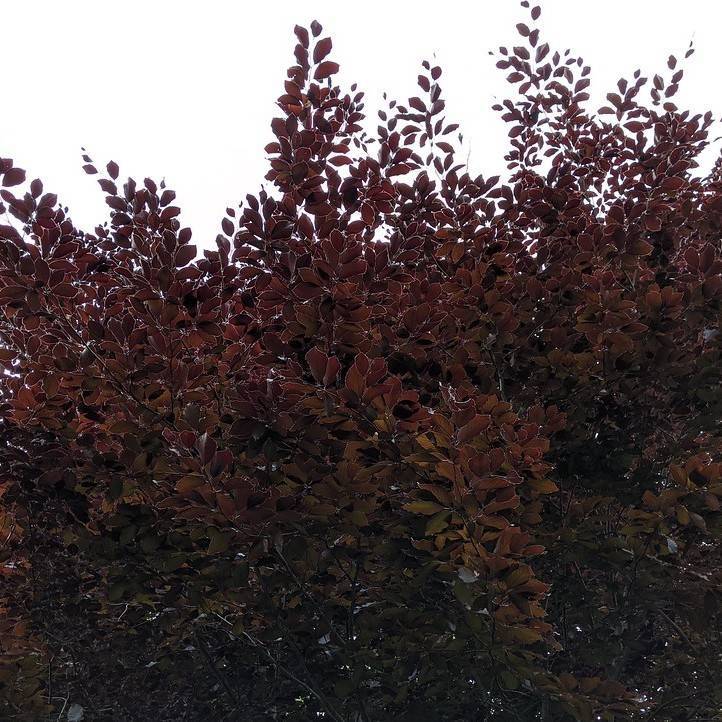
Copper Beech
Fagus sylvatica 'Purpurea'
Overview
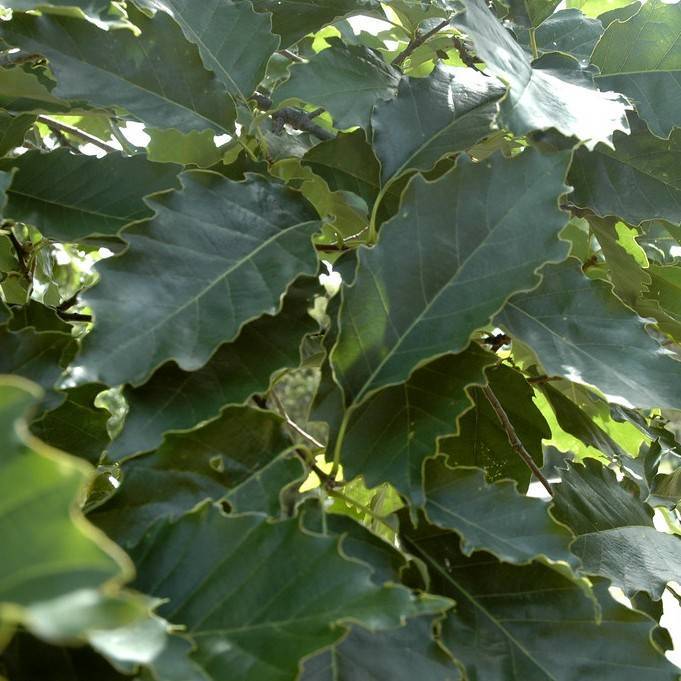
Copper beech is a popular cultivar of European beech distinguished by its vibrant purple young leaves that emerge in spring, gradually deepening to a rich copper hue before fading to dark green in late summer. It has a broad, dense, rounded canopy and smooth, gray bark that remains attractive year-round, making it a standout specimen tree for parks, large estates, and open residential yards. This slow-growing, long-lived tree can survive for over 300 years under optimal growing conditions, serving as a permanent, iconic landscape feature.
Care Guide
Watering
Water newly planted copper beech trees deeply once or twice per week for the first two growing seasons to establish a robust root system, keeping soil consistently moist but not waterlogged. Mature trees are relatively drought-tolerant, only requiring supplemental watering during extended periods of extreme heat or prolonged dry spells to prevent leaf scorch. Avoid overwatering in heavy, poorly draining soils, as this can lead to root rot and long-term health decline.
Light
Copper beech thrives in full sun, which encourages the richest, most vibrant purple-copper leaf coloration throughout the growing season. It can tolerate partial shade, though foliage may appear greener and less intensely pigmented in shadier locations, losing its signature copper hue. Young saplings can be damaged by intense, direct midday sun in very hot climates, so light dappled shade during the hottest parts of the day is beneficial for immature specimens.
Soil
This tree prefers well-drained, loamy, slightly acidic to neutral soil with a pH between 5.0 and 7.0, though it can adapt to a wide range of soil types including clay, sand, and chalky soils as long as drainage is adequate. It does not tolerate waterlogged or compacted soils, which restrict root growth and increase the risk of fungal root diseases. Amending heavy clay soils with organic matter such as compost or well-rotted leaf mold at planting time will improve drainage and provide essential nutrients for early growth.
Fertilizer
Feed young copper beech trees annually in early spring with a balanced, slow-release granular fertilizer formulated for trees and shrubs to support healthy foliage and root development. Mature established trees rarely require regular fertilization, as they obtain sufficient nutrients from surrounding soil and leaf litter decomposition. Avoid over-fertilizing, especially with high-nitrogen products, as this can promote excessive, weak new growth that is susceptible to storm damage and pest infestations.
Temperature
Copper beech is hardy in USDA zones 4 through 7, tolerating winter temperatures as low as -30°F (-34°C) without significant cold damage. It prefers cool, temperate climates and may struggle in regions with consistently high summer temperatures above 90°F (32°C), which can cause leaf scorch and stress the tree. Young saplings benefit from a thick layer of organic mulch around their base in winter to insulate roots and protect against extreme temperature fluctuations.
Pruning
Prune copper beech only during the dormant season between late fall and early winter, as pruning during active growth can cause excessive sap bleeding that weakens the tree. Remove only dead, damaged, diseased, or crossing branches to maintain the tree’s natural rounded form and improve air circulation through the canopy; avoid heavy pruning, as beech trees heal slowly and are slow to regrow foliage after major cuts. If grown as a formal hedge, trim once per year in late summer to maintain a dense, uniform shape, taking care not to cut back into old, bare wood which will not resprout.
Propagation
Copper beech is most commonly propagated by grafting cuttings of the purple-leaved cultivar onto rootstock of the common European beech (Fagus sylvatica) to ensure consistent leaf color and growth traits. It can also be grown from seed, though seedlings will not reliably retain the signature purple foliage of the parent plant, often producing standard green leaves. Softwood cuttings taken in early summer can root under controlled misting conditions, but this method has a low success rate and is rarely used for home propagation.
Humidity
Copper beech adapts well to average ambient humidity levels common in its preferred temperate growing regions, requiring no special humidity adjustments. It can tolerate moderate levels of air pollution, making it suitable for planting in suburban and lightly urban areas, though very dry, windy conditions can cause leaf edge scorch during hot summer months. Misting is unnecessary for both indoor-grown saplings and outdoor mature specimens, as natural humidity levels are sufficient for healthy growth.
Repotting
Copper beech is rarely grown in containers long-term, as its large, extensive root system requires significant space to develop, and it quickly outgrows even large planters. Young saplings intended for outdoor planting can be kept in containers for 1 to 2 years before transplanting, repotting once per year in late winter into a slightly larger container with well-drained, loamy potting mix. Once planted in the landscape, copper beech should not be transplanted, as it has a sensitive taproot that is easily damaged during moving, often leading to transplant shock or tree death.
Uses & Symbolism
Copper beech is primarily used as a large specimen tree in parks, large residential landscapes, and estates, where its dramatic foliage and imposing size create a striking focal point year-round. It is also frequently pruned and shaped into dense, formal hedges or windbreaks, as its thick, leafy canopy provides excellent privacy and noise reduction when planted in rows. Its hard, strong wood is valued for furniture making, flooring, and tool handles, while its beech nuts are an important food source for wild birds, squirrels, and other small wildlife.
Diseases & Pests
Copper beech is relatively resistant to most pests and diseases, but can be susceptible to beech bark disease, a fungal infection spread by scale insects that attacks the tree’s smooth bark, leading to cankers, dieback, and eventual tree death if left untreated. Powdery mildew, a fungal disease that appears as a white powdery coating on leaves, can occur in humid, poorly ventilated conditions, though it is rarely fatal and can be managed by improving air circulation through the canopy. Aphids, caterpillars, and beech scale insects may also infest foliage, causing leaf curling, stunted growth, and honeydew secretion that leads to sooty mold growth; infestations can be controlled with horticultural oil or insecticidal soap applications for small trees, or systemic insecticides for large mature specimens.
Guides that mention Copper Beech
Related plants
Other plants you might like if you grow Copper Beech.