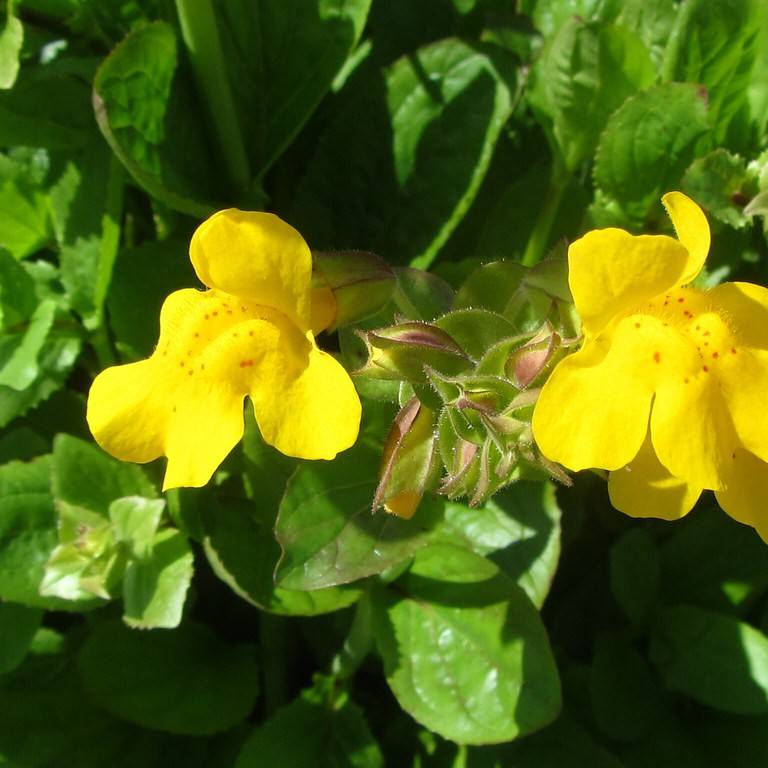
Common Yellow Monkey Flower
Erythranthe guttata
Overview
Common Yellow Monkey Flower, formerly classified under the genus Mimulus, is a cheerful herbaceous perennial named for its blooms that resemble a grinning monkey’s face. It naturally grows in stream banks, wet meadows, and seeps, making it well-adapted to consistently moist soils. It is a popular choice for rain gardens, pond edges, and wildlife-friendly landscapes, supporting native pollinators including bees and hummingbirds.
Care Guide
Watering
Keep soil consistently moist to saturated at all times, as this species is adapted to wet habitats and will wilt quickly if allowed to dry out. In garden settings, water deeply 2-3 times per week in warm weather, and reduce watering only in cool, rainy periods to avoid standing water around root crowns in freezing conditions. Potted specimens require frequent checks to ensure the growing medium never dries out completely.
Light
Thrives in full sun (6+ hours of direct sunlight daily) in cooler climates, but benefits from partial afternoon shade in regions with hot, intense summer sun to prevent leaf scorch. When grown indoors, place in a south or west-facing window that receives bright, direct light for most of the day, supplementing with grow lights if natural light is insufficient. Too much shade will result in leggy growth and reduced flowering.
Soil
Prefers nutrient-rich, loamy, slightly acidic to neutral soil with excellent moisture retention, though it tolerates heavier clay soils as long as they stay wet. Avoid fast-draining, sandy soils that dry out quickly, amending them with compost or well-rotted leaf mold to boost water-holding capacity before planting. For potted specimens, use a peat-free potting mix blended with perlite and coco coir to retain moisture while preventing compaction.
Fertilizer
Fertilize sparingly once per month during the active growing season (spring to early fall) with a balanced, diluted liquid fertilizer formulated for flowering plants. Avoid over-fertilizing, as excessive nutrients will promote lush foliage growth at the expense of blooms, and may also cause root burn in this sensitive wetland species. No fertilizer is needed during the dormant winter months.
Temperature
Grows best in cool to moderate temperatures between 55-75°F (13-24°C), and can tolerate short dips down to 20°F (-7°C) when planted outdoors in its hardiness zones (3 to 9). Hot temperatures above 85°F (29°C) may cause stress, so provide extra shade and more frequent watering during summer heatwaves to keep plants healthy. Indoor specimens should be kept away from hot, dry heating vents and cold drafty windows in winter.
Pruning
Deadhead spent blooms regularly throughout the flowering season to encourage continuous blooming and prevent unwanted self-seeding if you wish to limit spread. Cut back entire stems to 2-3 inches above the soil line in late fall after foliage dies back, to tidy the plant and promote healthy new growth in the following spring. Trim back leggy, overgrown stems by up to one-third in mid-summer to encourage bushier, more compact growth.
Propagation
Easily propagated from seed sown directly on the soil surface in fall or early spring, as seeds require light to germinate and no cold stratification to sprout. Softwood stem cuttings taken in late spring or early summer root readily when placed in moist potting mix or even standing water, with roots forming in 1-2 weeks without the need for rooting hormone. It can also be divided in early spring before new growth emerges, by carefully separating clumps of root crowns and replanting immediately in moist soil.
Humidity
Prefers moderate to high humidity levels between 50-70%, which mimics its native wetland habitat. Indoor specimens may benefit from regular misting, placement on a pebble tray filled with water, or the use of a small humidifier if household air is dry, especially during winter heating months. Low humidity can cause leaf edges to brown and reduce flowering output.
Repotting
Potted specimens should be repotted every 1-2 years in early spring, just before new growth begins, to refresh the growing medium and accommodate expanding root systems. Choose a pot that is 1-2 inches larger in diameter than the current one, with ample drainage holes to prevent excess water buildup around the roots. Avoid repotting during the active flowering season, as this can cause stress and lead to bloom drop.
Uses & Symbolism
Common Yellow Monkey Flower is widely planted in rain gardens, bioswales, and pond edge landscapes to manage stormwater runoff and support native pollinators, including bumblebees and hummingbirds. It has a long history of use in traditional Indigenous medicine for treating minor skin irritations, burns, and sore throats, though modern medicinal use is limited. It also makes a cheerful, long-blooming addition to cut flower arrangements, with stems lasting up to a week in fresh water.
Diseases & Pests
The most common pests include aphids, spider mites, and whiteflies, which tend to infest plants growing in overly hot, dry conditions, and can be controlled with insecticidal soap or neem oil sprays. Root rot may occur if plants are grown in poorly drained, waterlogged soil in cold conditions, so ensure proper drainage in garden beds and avoid overwatering during winter dormancy. Fungal leaf spot and powdery mildew can develop in humid, poorly ventilated areas, which can be prevented by spacing plants to allow for good air circulation and avoiding overhead watering.
Related plants
Other plants you might like if you grow Common Yellow Monkey Flower.